

An Ambition That Defies the Waves
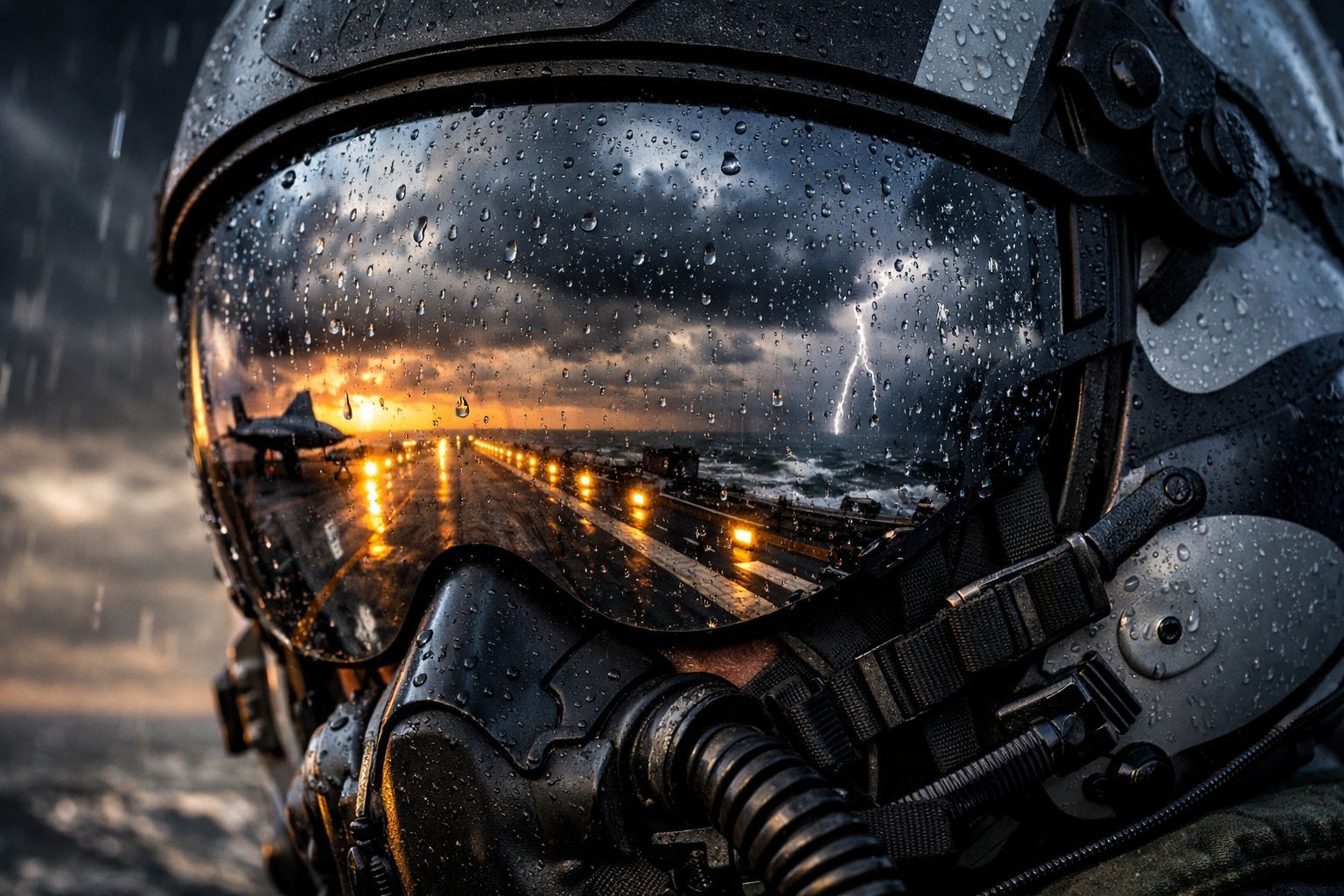
We often think of naval aviation as a perfectly orchestrated dance. But the reality is far more brutal, especially when the sea gets involved. It is in this hostile environment that China is making its moves with a boldness that, let’s face it, inspires a certain anxious curiosity.
The J-36. Remember that name. It’s not just another fighter jet; it’s what engineers are touting as a sixth-generation aircraft. The goal? To operate from an aircraft carrier while remaining invisible—or nearly so—to radar. But here’s the catch. A big one. Landing a technological marvel on a moving runway in the middle of the ocean is a logistical nightmare. Yet Chinese researchers seem to have found an innovative solution to ensure a safe landing, even when the weather decides to throw a wrench in the works.
A radical design: three engines and no tail
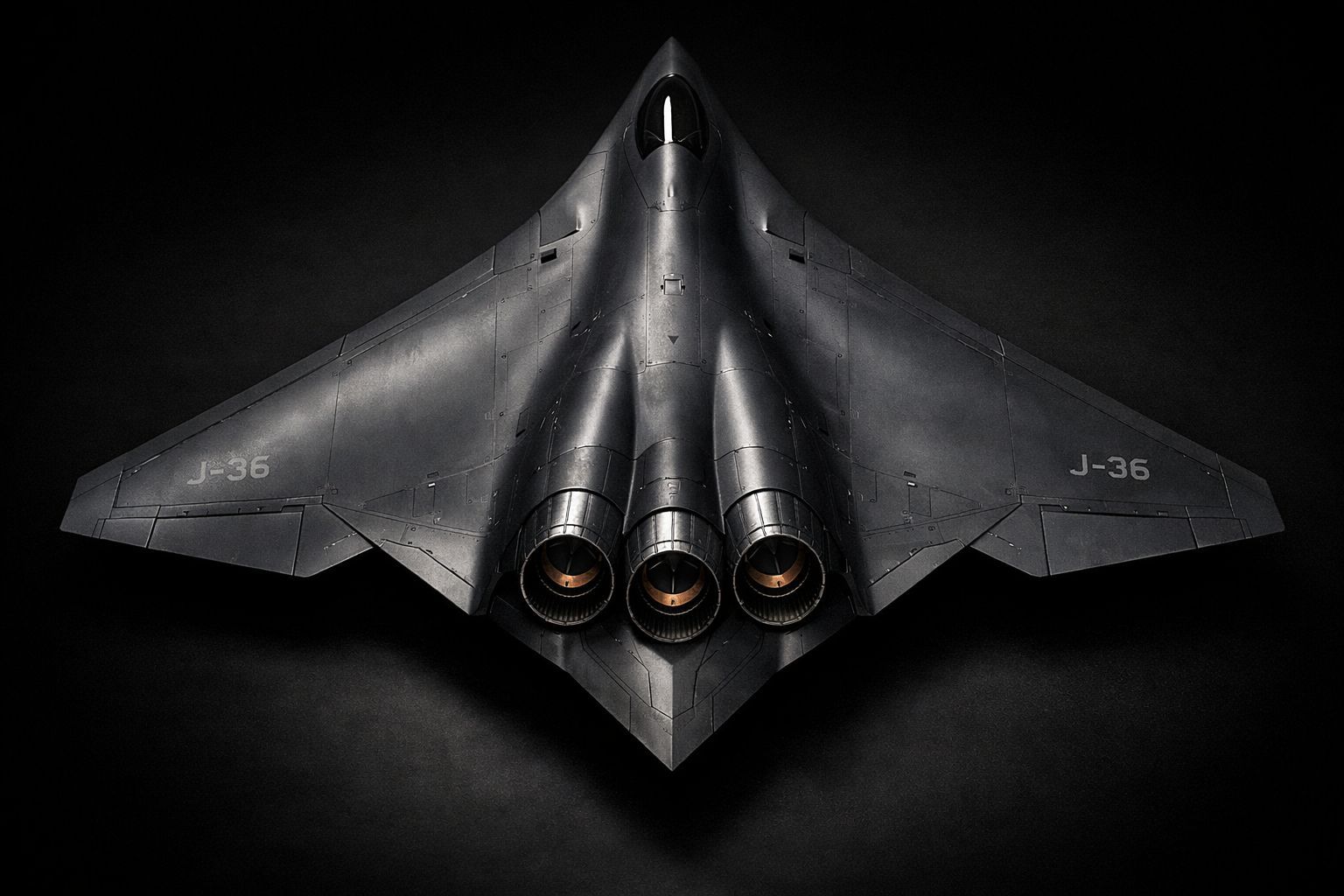
Honestly, when you look at the J-36, it feels like you’re seeing something straight out of a science-fiction movie. It doesn’t resemble anything “conventional.” Its shape adopts a configuration known as a flying wing. In short? It doesn’t have a traditional tail section. This is great for stealth, as this design drastically reduces its radar signature—a vital asset for survival in modern conflicts. But flying it… that’s another story.
And that’s not all. There’s one detail that’s raising eyebrows among many experts: the J-36 is said to have three engines. Yes, three. That’s a truly rare configuration for a fighter jet, as you’ll agree. It suggests some pretty phenomenal raw power and, I suppose, a substantial weapons payload capacity.
Size-wise, this isn’t a small player. According to circulating estimates, the beast could be over 20 meters long. Its weight? It would be greater than that of the J-20, which is, after all, the current flagship of the Chinese Air Force. As an article in SciencePost points out, this aircraft symbolizes the Chinese Navy’s transition toward a force capable of projecting its power far, very far from its shores. But adapting such a behemoth for naval use is a technical challenge bordering on madness.
The Nightmare of Landing Without a Tail
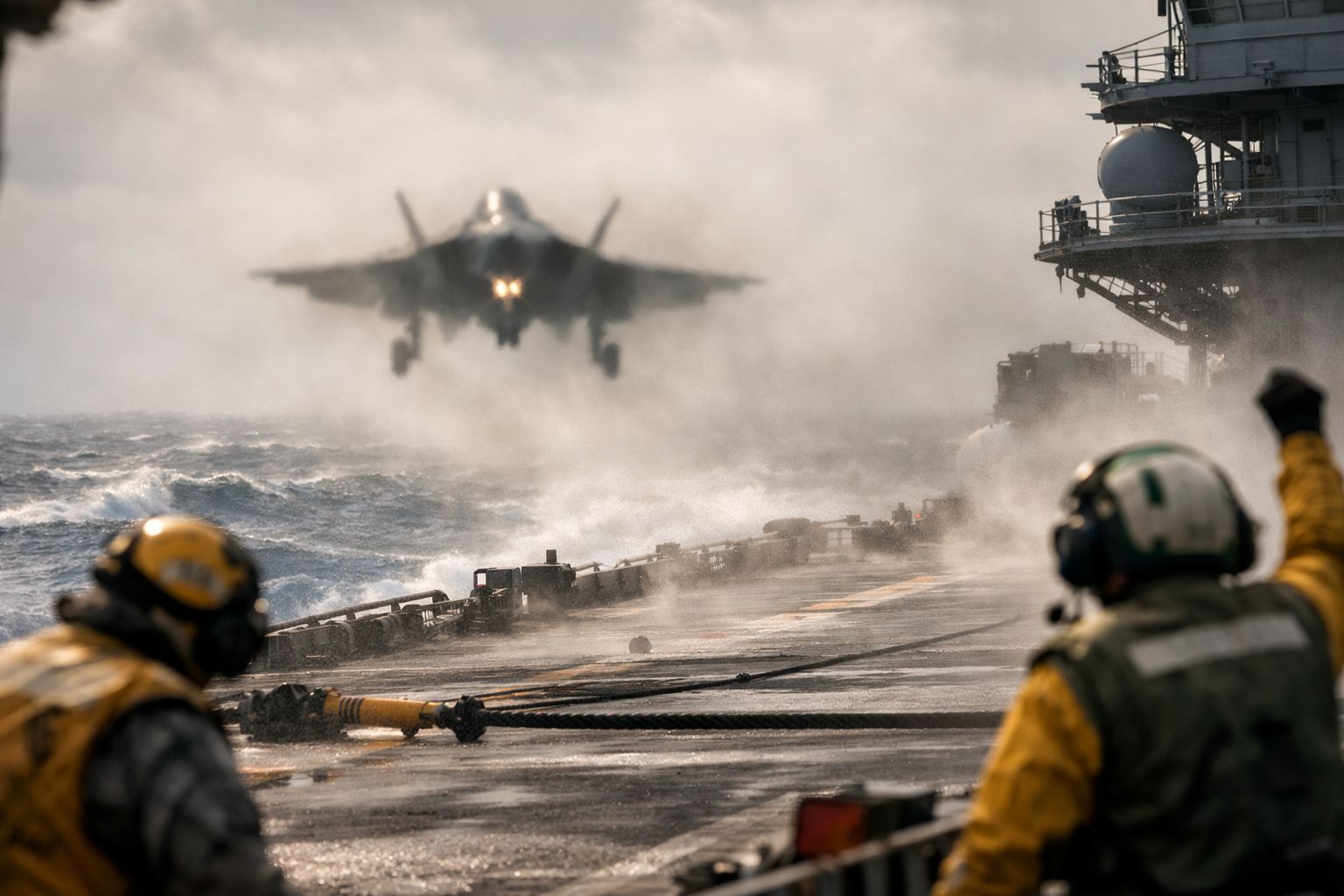
Imagine trying to park a sports car on a ferry… during a storm. That’s kind of the idea. Landing an airplane on an aircraft carrier has always been an extreme maneuver. The runway is ridiculously short, the deck sways in all directions with the waves, and the wind does whatever it wants. But for the J-36, it’s even worse.
Why? Because it has no tail. These rear surfaces normally serve to stabilize the aircraft. Without them, control becomes… tricky, to say the least. At low speeds—precisely at the moment of landing—the risk of losing stability becomes critical. The plane could simply stall or go into a spin.
Add to that a treacherous phenomenon: the wake of the aircraft carrier itself. The ship disturbs the air behind it, creating unpredictable turbulence capable of destabilizing the aircraft just seconds before it touches down on the deck. According to an analysis by the South China Morning Post, Chinese engineers make no secret of their concern: they consider this phase particularly risky. Conventional assistance methods? They’re outdated when faced with such a radical design.
The solution: “direct force control”
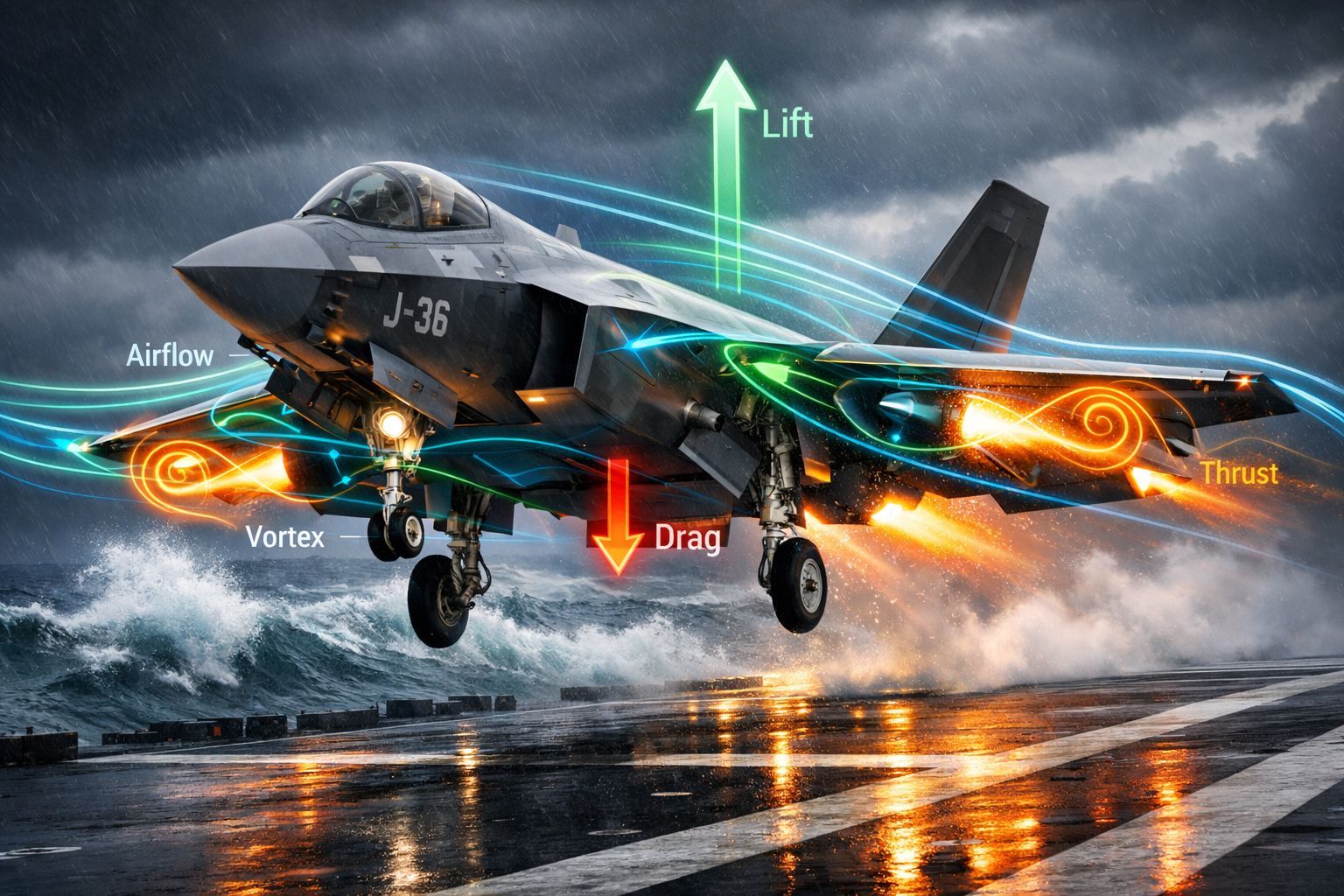
Faced with this obstacle, innovation was necessary. For the J-36, landing is the final boss—the critical technological challenge. So, what did the researchers do? They’re testing an approach inspired by advanced robotics. They call it direct force control.
The idea is quite brilliant: instead of trying to correct the aircraft’s overall attitude (its nose, its wings) as one would normally do, the system acts directly on the aerodynamic forces. The onboard computer takes over. It calculates in real time—we’re talking milliseconds here—the necessary micro-adjustments. It distributes these corrections across several movable surfaces hidden within the wings and adjusts the engines’ thrust.
The result? The pilot remains in control but benefits from a kind of “super-assistance” that eliminates the aircraft’s unpredictable reactions. And this isn’t just theory on paper. During simulations, the system was pushed to its limits under extreme conditions. Brace yourselves: the scenarios included waves as high as six meters and violent wind gusts. Despite these hellish weather conditions, the aircraft managed to land with remarkable precision.
This achievement is a game-changer. A stealth aircraft capable of operating from an aircraft carrier in heavy weather significantly expands China’s naval reach. That means long-range strikes and increased survivability against enemy defenses.
Conclusion: A New Balance of Power?
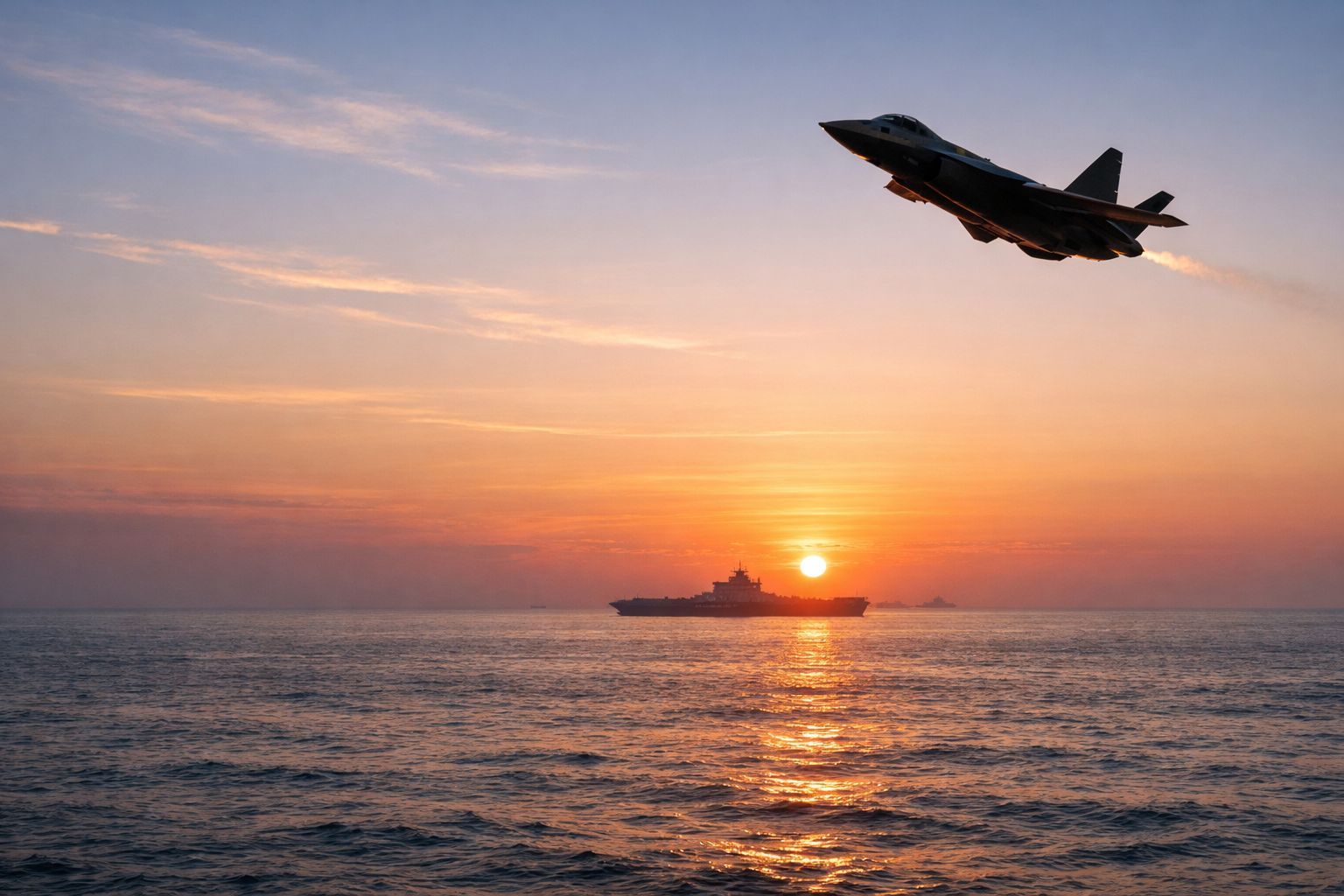
Ultimately, by combining these digital innovations with the brutal constraints of the sea, China appears to be charting a new course. Of course, the J-36 is still only a prototype—we shouldn’t count our chickens before they’re hatched. However, these tests suggest rapid progress.
Modern naval warfare could soon rely on these more stealthy, more autonomous aircraft—and, above all, ones capable of operating in areas where, until recently, such operations were considered suicidal. The balance of power at sea may be shifting, silently, to the rhythm of onboard computers.
36 Days to Go: Why Will This Three-Engine Chinese Behemoth Revolutionize Naval Warfare?
This content was created with the help of AI.


