

When Trade Routes Bypass Washington
Have you noticed this diplomatic dance? On Thursday, British Prime Minister Keir Starmer arrived in China for a four-day visit, accompanied by a massive trade delegation. He’s not the only one: in December and January, French President Emmanuel Macron and Canadian Prime Minister Mark Carney had already made the trip to Beijing. And that’s not all: on Monday, the European Union finalized a historic free-trade agreement with India.
The message is clear: the paths of international trade no longer run through the White House. Why? Because the ongoing trade war waged by Donald Trump has finally worn everyone down. His “mood swings,” threats, and outbursts have pushed his long-standing partners to look elsewhere. Keir Starmer summed it up simply on his way to Asia: “What happens abroad has repercussions for our countries: from supermarket prices to our sense of security.”
It’s a world turned upside down: while the United States is perceived as unstable, even dangerous, China—despite being a dictatorship in the midst of an internal purge—is stepping into the role of a stabilizing force. Ironic, isn’t it?
Davos and the Greenland Affair: A Blueprint for Making Trump Back Down
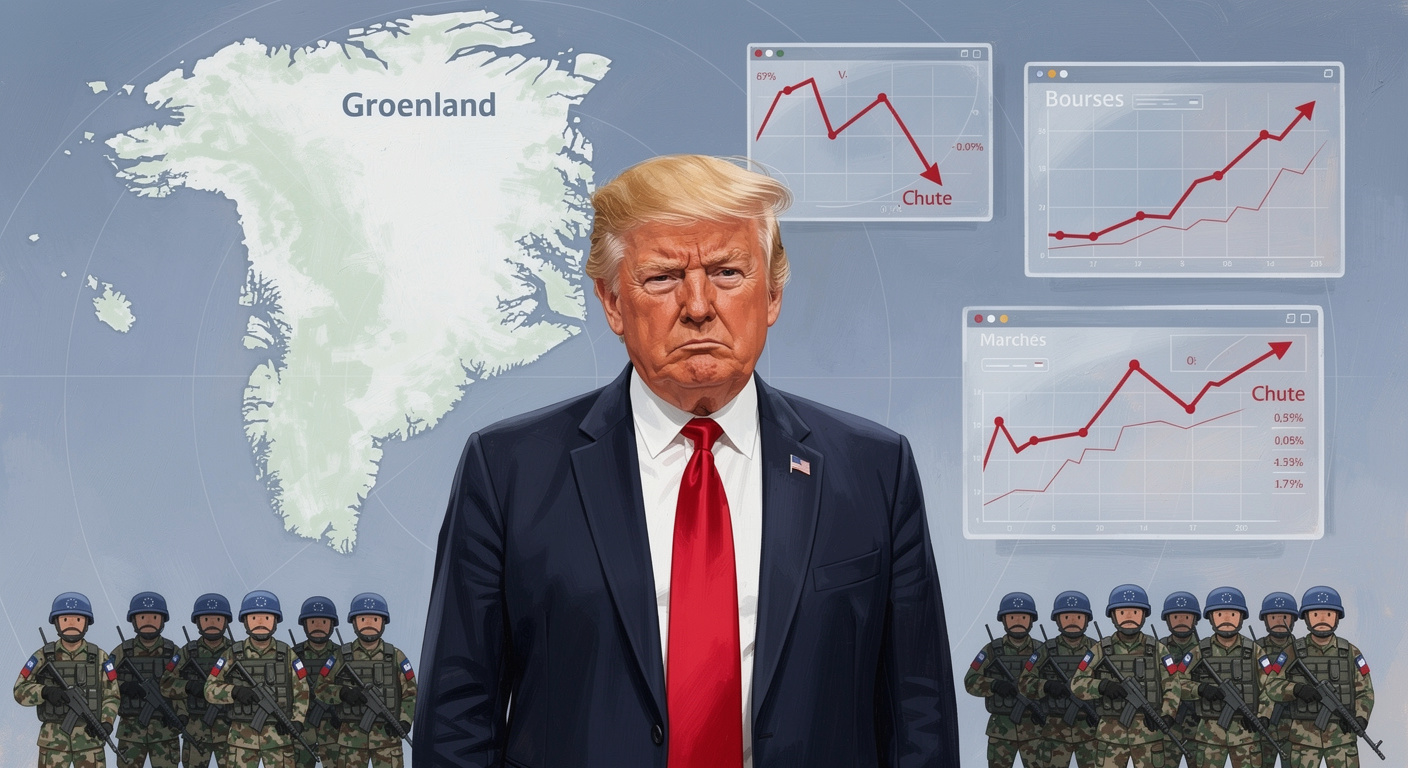
The tipping point came at Davos. That’s where the “resistance” began to take shape. Remember: Donald Trump wanted to annex Greenland and wrest it from Denmark. In the end, he backed down. But why? We have the answer.
First, there was widespread outcry. Then, the reality on the ground: a conquest by force would have meant physically confronting French or German soldiers—an unthinkable symbolic breach. Add to that the stock markets, which began to waver dangerously in the face of American obstinacy. Finally, diplomacy played its part: Mark Rutte, the NATO Secretary General, proposed a somewhat vague alternative plan regarding U.S. bases, which allowed Trump to say “yes” and save face.
In Davos, the tone shifted. Mark Carney called on middle powers to unite. Emmanuel Macron was scathing: “We prefer respect to thugs, science to conspiracy theories, and the rule of law to brutality.” Donald Trump wasn’t named, but everyone got the message.
From Eastern Europe to Brazil: The End of Fear
What’s fascinating is seeing who’s joining this rebellion. China had kicked things off as early as the spring of 2025, retaliating tit-for-tat with tariffs and blocking rare earth exports, forcing Washington into a truce. Then Brazil followed suit: in September 2025, when former President Bolsonaro was sentenced to prison for attempting a coup, Trump threatened to impose 50% tariffs. President Lula didn’t bat an eye; he played the soybean card and capitalized on the rivalry with Beijing, and Trump, once again, backed down.
But the surprise comes from Europe. Long divided and timid (we recall the humiliating trade agreement signed by Ursula von der Leyen in July 2025 with one-sided tariffs), the Old Continent is waking up. Even America’s most loyal allies are changing their tune. On January 20, 2026, Donald Tusk, the Polish prime minister, uttered this telling statement: “Appeasement is always a sign of weakness […] Europe cannot afford weakness.”
Even more surprising: Europe’s far right is distancing itself. Bart de Wever in Belgium, Marine Le Pen and Jordan Bardella in France, and Alice Weidel in Germany have all opposed Trump on the issue of Greenland. For these nationalists, sovereignty is sacred. As De Wever put it: “Being a happy vassal is one thing; being an unhappy slave is quite another.”
Source: ici.radio-canada.ca
Created by humans, assisted by AI.
A "resistance" is emerging against Trump
This content was created with the help of AI.


