

Beneath Our Feet, a Vital Network: How Intensive Agriculture Is Secretly Sealing Off Our Soils


The True Nature of the Earth Beneath Our Feet
The Invisible Architecture: A Vital Transport Network
Agro-seismology, or the art of listening to water flow
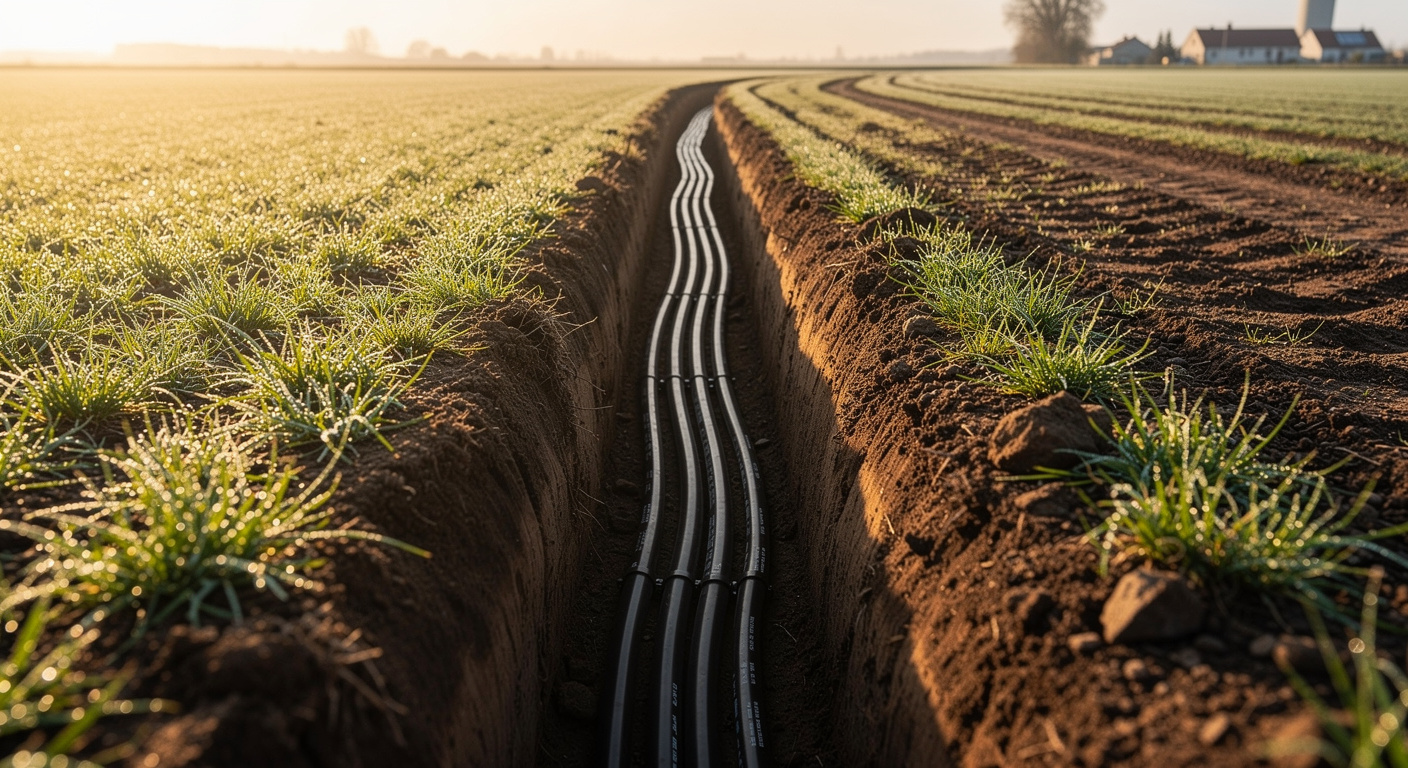
To overcome this obstacle, the team transformed fiber-optic cables into a massive underground sensor. They installed standard cables—identical to those used for high-speed internet—across an experimental farm at Harper Adams University in the United Kingdom. Choosing this site allowed them to conduct observations under real-world agricultural conditions.
These cables were used as a distributed sensing network, capable of detecting the minute vibrations in the soil generated by water flowing through it. This technology made it possible to track the movement of water minute by minute, literally listening to how rainfall travels through the earth. The researchers have dubbed this approach “agrosismology”: the use of vibrational signals to assess soil- and water-related processes on farmland, without any excavation.
Direct impacts on soil moisture and crops
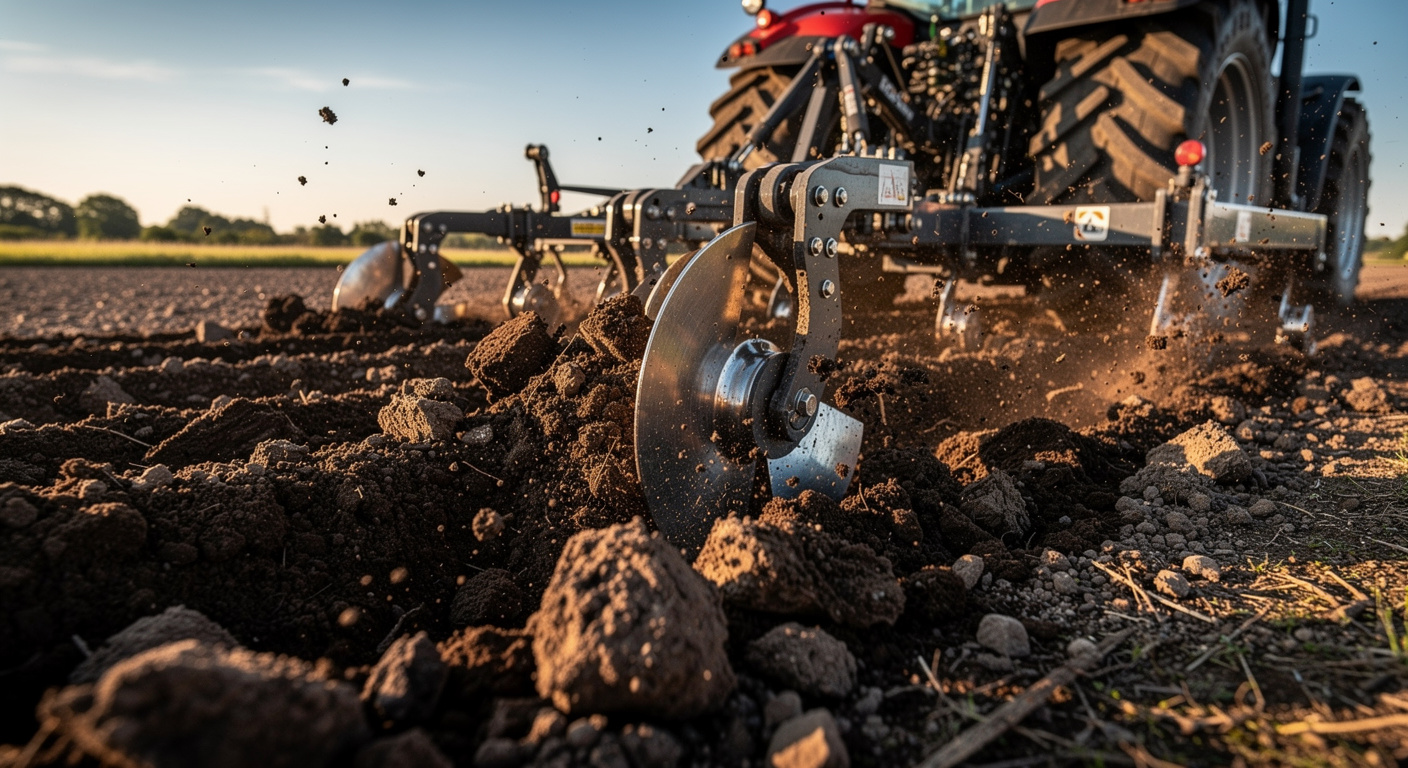
Thanks to the high-resolution data provided by the optical fiber, the team observed a striking difference between heavily cultivated soils and those that remained intact. In heavily tilled or compacted soil, rainfall tends to remain trapped near the surface. This shallow water then evaporates very quickly under the sun’s heat, while the lower soil layers remain desperately dry. Crops thus suffer a double blow: excess surface water immediately after a storm, followed by a lack of reserves when conditions become arid.
To analyze these measurements, the team developed a dynamic model of capillary stress based on the ink-in-a-bottle effect. The principle is simple: water easily enters certain pore shapes but has great difficulty escaping from them. Pore geometry and capillary forces create a form of one-way resistance. Thus, soil resistance and water movement do not depend solely on the soil’s overall moisture content. The same volume of water can behave differently depending on whether the soil is in a wetting or drying phase.
Traditional soil mechanics often links resistance to total water content, but this new model indicates that structure and capillary dynamics are far more important. “Rather than a simple collection of particles, soil is a porous medium in which the structure functions like capillary vessels within the water cycle,” said the study’s lead author, Dr. Qibin Shi of the Chinese Academy of Sciences. Disrupting this functional architecture alters not only the soil’s texture but also the way the entire system manages water.
The Climate Emergency and the Resilience of Agricultural Ecosystems
Continuous monitoring to safeguard the future

Source: earth.com
Beneath Our Feet, a Vital Network: How Intensive Agriculture Is Secretly Sealing Off Our Soils
