

A Tragic Accident Leads to a Sobering Realization
You know, an accident is always a tragedy. But when it happens under circumstances we’re all too familiar with here in Quebec—and when it might perhaps have been prevented—it really makes you think, don’t you agree? That’s the sentiment that emerges from Coroner Nancy Bouchard’s recent report.
Following a terrible accident that occurred in January of last year, she’s sounding the alarm. Her message is clear: the Société de l’assurance automobile du Québec (SAAQ) must do a much better job of preparing newcomers for the pitfalls of winter driving. The death of a 29-year-old man from Mexico is at the heart of this recommendation—an event that, according to her, could have been prevented.
The accident occurred on the afternoon of January 27, 2025, on Route 116 in Princeville, in the Centre-du-Québec region. The conditions that day were simply… appalling. There were gusts of wind, blowing snow, very limited visibility, and a snow-covered, slippery road surface. Despite all this, witnesses reported that vehicles were still traveling at the maximum speed limit of 90 km/h. The man succumbed to his injuries in May 2025. This tragic outcome led the coroner to raise crucial questions about the preparedness of foreign drivers.
The driver’s journey and a double-edged sword
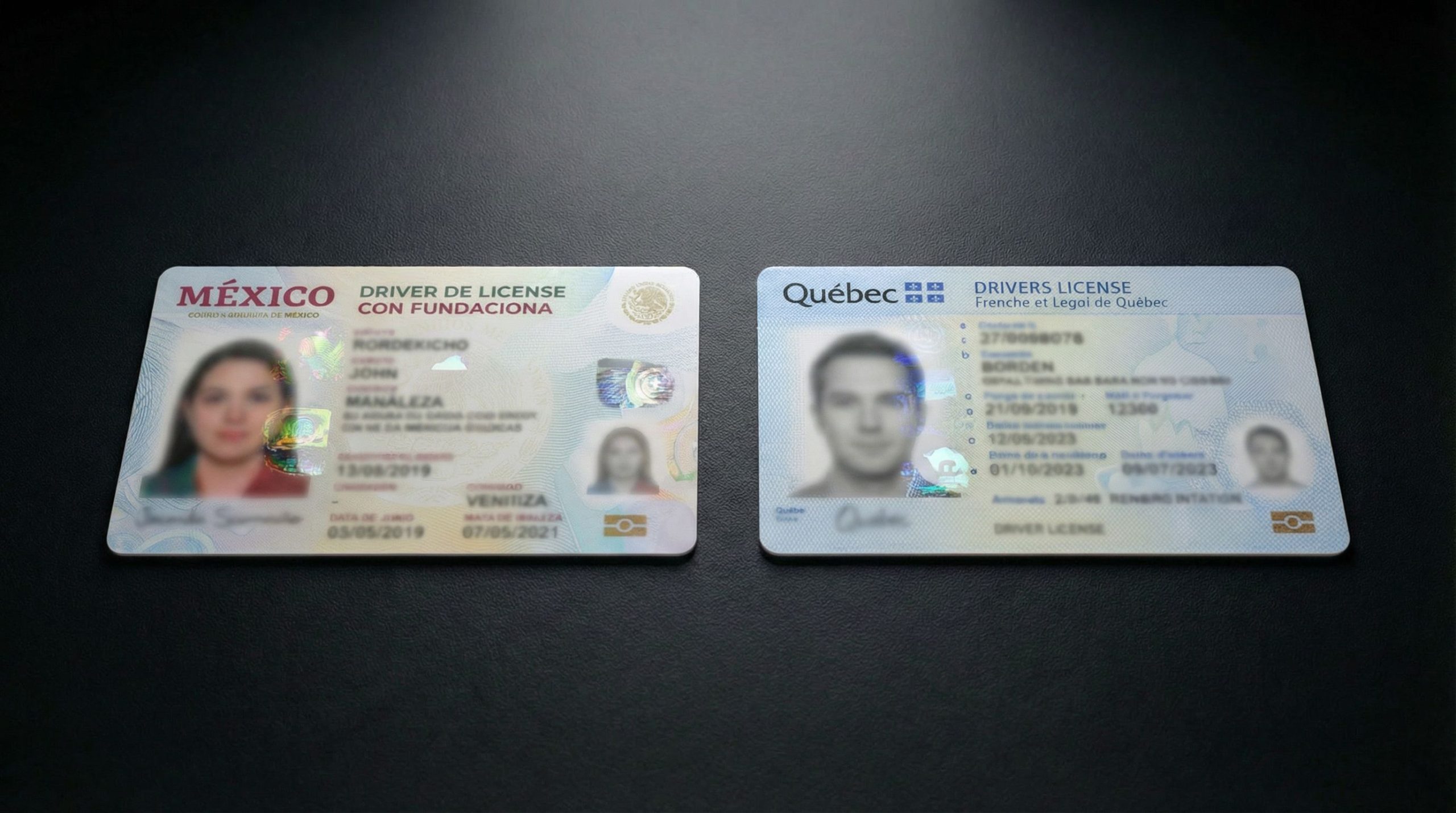
So, here is the situation this young man found himself in. Like many immigrants, he was granted a six-month grace period after his arrival to drive with his foreign license. He held a valid driver’s license issued in Mexico and was therefore authorized to use it in Quebec until May 2024. He had even taken the initiative by passing his Quebec written exam. However—and this is where the problem lies—he had not yet taken the practical exam to have his foreign driving experience recognized and validated.
It’s a bit of a paradox, you see? The law grants you a right, but it doesn’t immediately require you to prove that you’re ready for our roads—especially our roads in winter. Coroner Bouchard put it in black and white: “The accident occurred when he should have had his driving experience acquired outside Quebec recognized in order to bring his skills up to standard, which was not the case.” She finds this situation downright concerning. And we can understand her. She believes that this could have not only prevented this death but also averted other tragedies in the future.
She acknowledges that the SAAQ is already making efforts. The organization offers online resources on its website and conducts awareness campaigns through employers, French-language immersion groups, and community organizations. But clearly, this isn’t enough. “The SAAQ should review its guidelines to ensure that people who are issued driver’s licenses are capable of driving in winter conditions,” she insists. Basically, it’s not just about providing information, but about ensuring that it is understood and applied before giving the green light.
Reactions and Changes Already Underway
In response to these recommendations, how did the SAAQ react? Cautiously, as one might expect. Simon-Pierre Poulin, the organization’s spokesperson, indicated that they were reviewing the coroner’s report before commenting further. But he did add one telling remark: “Every traffic fatality is one too many for the organization.” This acknowledges the gravity of the situation, even if concrete solutions have yet to be specified.
Interestingly, it appears that administrative processes had already begun even before the report was published. Since June 2025—that is, after the accident but before the coroner’s findings—new rules have gone into effect. They represent a game-changer for foreign drivers. From now on, if someone from abroad fails their road test, they are no longer allowed to drive alone with their foreign license. Period.
Instead, they must drive with a learner’s permit. This means they must be accompanied at all times by someone with a valid driver’s license. And that’s not all: this learner status comes with other conditions, and they must wait a minimum of four weeks before retaking the test. The idea is to ensure a period of adjustment and supervised learning, especially to get accustomed to conditions not found elsewhere, such as our winter.
Would these new rules, had they been in place earlier, have changed the course of events for the young man from Princeville? It’s a painful question, and we’ll never know the answer. But perhaps this is the kind of measure the coroner had in mind.
Conclusion: Increased Vigilance for Greater Safety
So, where does all this lead us? Coroner Nancy Bouchard’s report highlights something important. Welcoming people from all over the world is a source of richness for Quebec. But it comes with a responsibility: to help them adapt to our reality, which can be harsh. Winter driving isn’t a minor detail. It’s a specific skill that must be learned—often through experience, but sometimes, unfortunately, at the cost of serious mistakes.
The coroner’s recommendations aren’t an accusation, but a call to action: reviewing guidelines, ensuring drivers’ actual ability to drive in winter, and raising awareness… These are concrete steps. And we can see that the SAAQ has already begun to tighten the rules with the mandatory learner’s permit for those who fail the exam.
Ultimately, this is a story that reminds us all that safety on our roads is everyone’s responsibility. Public agencies must provide better guidance, of course. But it’s also up to drivers—newcomers or not—to fully grasp the challenges posed by our climate. Let’s hope this tragic event helps prevent other families from experiencing such a tragedy. Because, as the SAAQ spokesperson said, one death on the road is always one too many.
The SAAQ Is Urged to Better Prepare Newcomers for Quebec Winters
This content was created with the help of AI.


