

A Silent Thief of Vision

Glaucoma is one of the leading causes of irreversible blindness worldwide. And no, it’s not an inevitable part of aging—at least not entirely. What makes it so insidious is how stealthy it is. Glaucoma gradually damages the optic nerve, usually without causing pain and, in the early years, without causing any visual disturbances. Dr. N. Soumittra, head of ophthalmology at MedGenome, sounds the alarm: “By the time a patient seeks care because they’re having difficulty with daily activities, the damage is often already extensive and permanent.” That’s because the trick this disease plays is simple: it starts by eroding our peripheral vision—the part we aren’t always aware of. To give you an idea, it’s a bit like looking through a tube that’s slowly narrowing—except you don’t notice it until your central vision is affected.
Your DNA: A Genetic Trail
Not everyone is born with the same risk of developing glaucoma. Nearly half of all cases are believed to have a hereditary component, according to the Glaucoma Research Foundation. Having a first-degree relative (parent, brother, sister) with the condition significantly increases your risk. But be careful: heredity is not a death sentence. It’s a predisposition.
“Glaucoma is never caused by a single gene,” insists Dr. Soumittra. “The MYOC and OPTN genes, among others, can play a role. They influence the optic nerve’s ability to withstand pressure from the eye’s internal fluids.”
Some patients have “normal” intraocular pressure, but their genetically predisposed optic nerve is still sensitive to it. It’s as if their tolerance threshold were genetically lower.
Screening Before Vision Becomes Blurry: A Medical Imperative
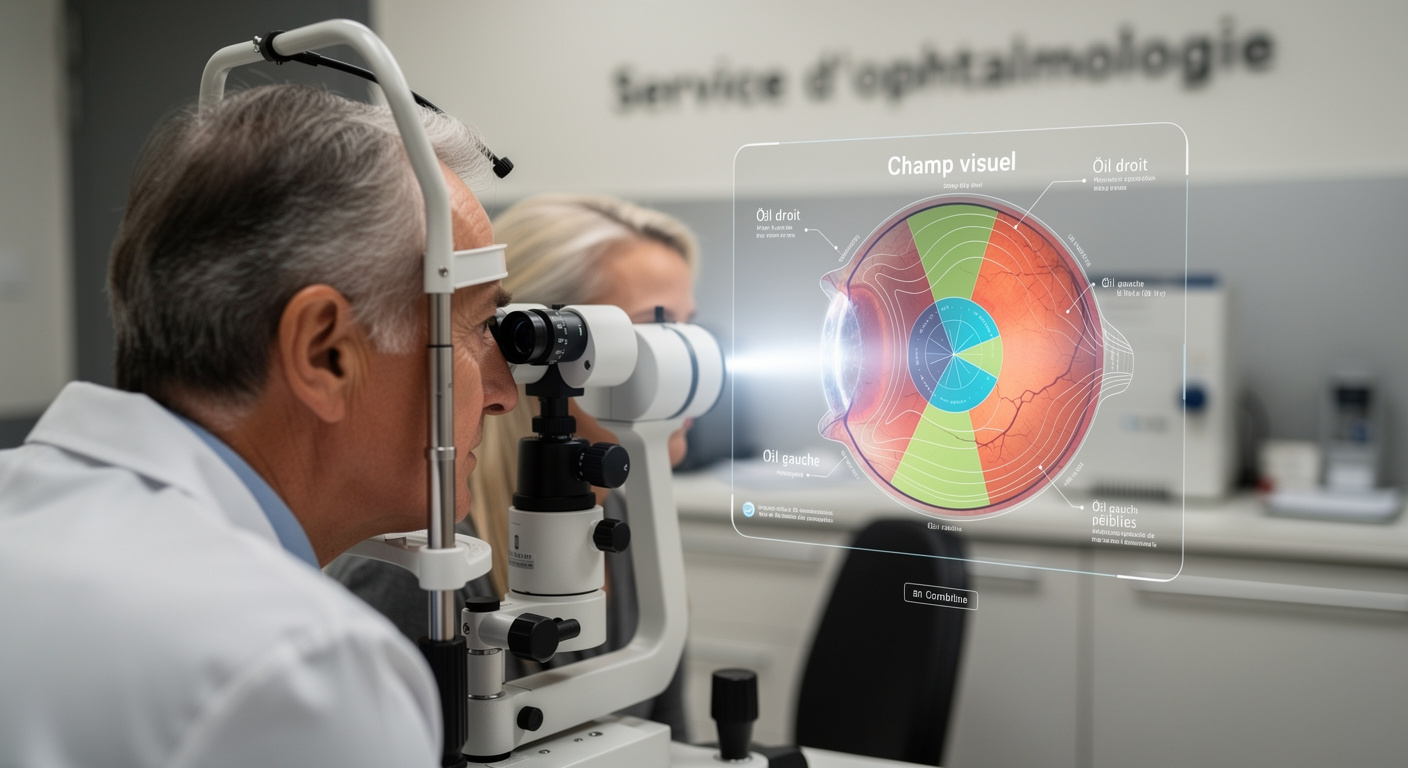
Glaucoma cannot be detected with the naked eye. The well-known “Puff test” is just the first step. In cases of genetic risk or warning signs, an ophthalmologist can perform a comprehensive examination that combines pressure measurement, high-definition imaging of the optic nerve, and visual field testing. Genetic testing is now beginning to play a role. It is not intended for mass screening, but in a genetically predisposed individual, it can identify a specific genetic risk, indicating the need for closer monitoring—much like monitoring for a risk of high blood pressure.
- Age (40 and older, especially after age 60)
- Family history
- Vision problems (severe nearsightedness) or health conditions (diabetes, high blood pressure)
- Long-term treatment with cortisone, either as eye drops or systemically
The idea, summarizes Dr. Soumittra, “is to shift from restorative medicine to predictive and preventive medicine. We identify high-risk individuals and prevent damage long before vision visibly declines.”
The big challenge: prevention, not repair

Glaucoma cannot be cured, but its progression can be halted. And that is a crucial distinction. Treatments—including medications, laser therapy, and surgery—aim to reduce intraocular pressure and slow the progression of the disease. But the damage is irreversible. Late diagnosis remains the leading cause of preventable vision loss related to glaucoma.
What should you actually do after age 40–50, especially if you have a family history of the disease? A fundus exam with an ophthalmologist isn’t a luxury—it’s an investment. Screening doesn’t hurt, it’s non-invasive, and it could preserve something priceless: your vision.
In the era of personalized medicine, the benefits are twofold. Genetic counseling combined with cutting-edge imaging techniques no longer merely states, “You have or will develop glaucoma,” but rather helps determine with whom and how the most appropriate monitoring plan should be implemented. The goal? To never reach the stage where, as Dr. Soumittra puts it, vision loss becomes noticeable. Take action early to keep the world as wide as our field of vision.
Source: timesnownews.com
Created by humans, powered by AI.
The Silent Vision Loss Caused by Glaucoma: How Genetics Is Transforming Early Detection.


