

A New Benchmark for Spatial Reasoning
The International Mathematical Olympiad (IMO) represents the pinnacle of competition for talented high school students from around the world. Competitors tackle highly complex mathematical problems. In this context, geometry problems—which require rigorous formal logic and advanced spatial reasoning—have long been considered a critical benchmark in artificial intelligence (AI) research.
The system’s achievements are detailed in a new study by the research team, published in the scientific journal Nature Machine Intelligence. This breakthrough marks a turning point, as it demonstrates that a machine can now rival the human mind in areas where intuition and visual construction are paramount.
The Delicate Art of Problem Formulation
The study’s authors highlight the subtlety of this exercise: “The most admired problems exhibit a deceptive simplicity: they are accessible through fundamental knowledge but require deep creativity for complete solutions. Mathematical elegance, particularly symmetry in various forms, serves as a critical quality criterion in prestigious competitions.”
The visual and constructive nature of geometry poses major challenges for AI. According to the researchers, fundamental limitations arise in computational approaches due to “the combinatorial explosion of reasoning paths and the scarcity of exemplary problems for heuristic development.”
An Innovative Neurosymbolic Architecture

Performance and Execution Speed
The researchers tested TongGeometry’s problem-solving capabilities using a dataset designed for AlphaGeometry (IMO-AG-30) as well as a new dataset (MO-TG-225). The IMO-AG-30 dataset comprised 30 problems drawn from 23 years of IMO competitions, while the MO-TG-225 dataset contained 225 well-known theorems, such as Euler’s line theorem. The results are indisputable: TongGeometry solved all 30 problems in the IMO-AG-30 test set.
These benchmarks confirm the system’s robustness when dealing with historical problems and classical theorems. The speed of solution—less than an hour for a corpus that would take a human days to solve—illustrates the optimization of the search algorithms employed by the Chinese team.
Technical Comparison with AlphaGeometry
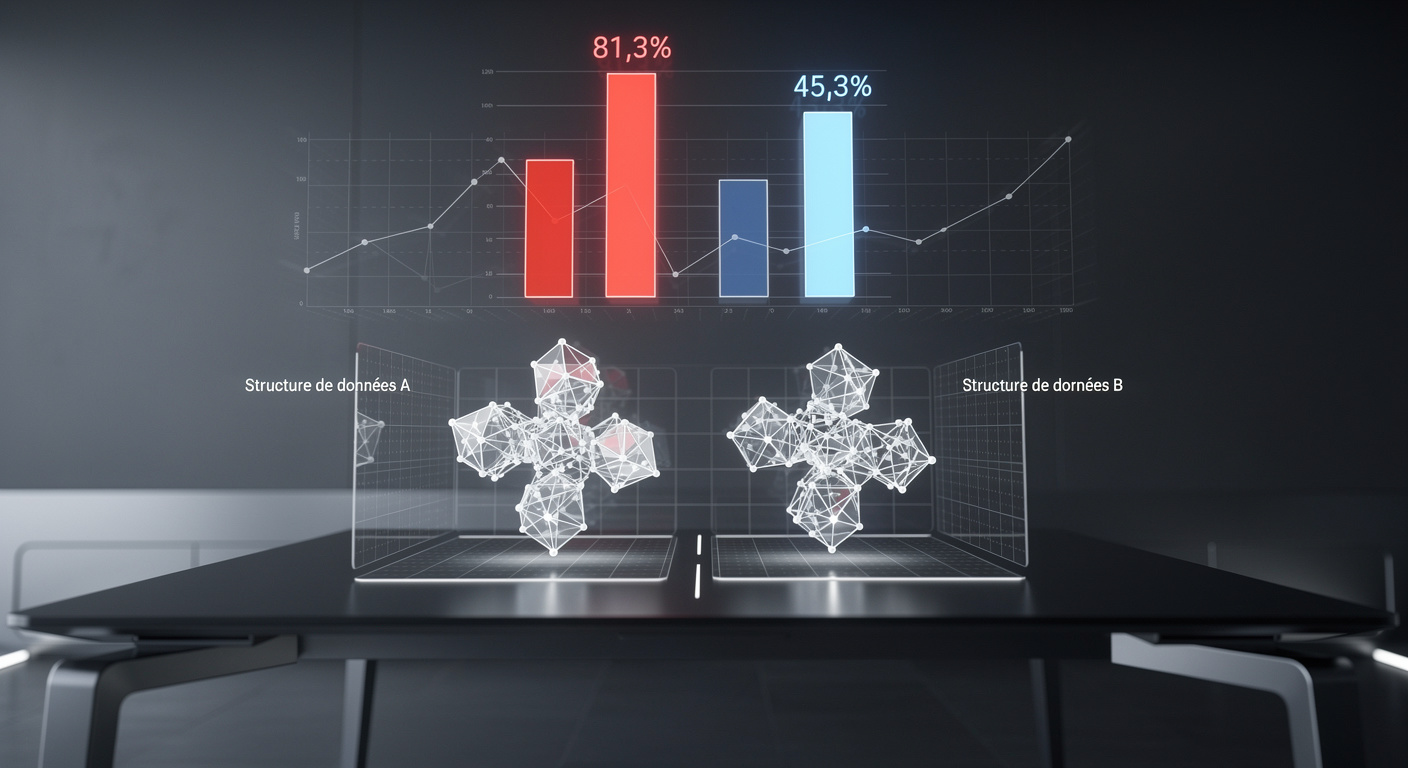
The study provides a detailed comparison with the previous system. The authors explain: “TongGeometry’s DD backend demonstrated improved problem-solving capabilities compared to AlphaGeometry’s DD+AR, achieving performance levels close to those of AlphaGeometry overall. We noted that AlphaGeometry’s success stemmed largely from its backend engine, with 72.5% of all solutions obtained by DD+AR.”
The difference lies in the use of neural networks. The researchers specify: “In contrast, TongGeometry not only solved a higher proportion of problems (81.3% versus 45.3%) but also leveraged its neural models more effectively to tackle auxiliary construction challenges, with only 55.2% of problems solved by DD alone.”
A Tool for Education and Research
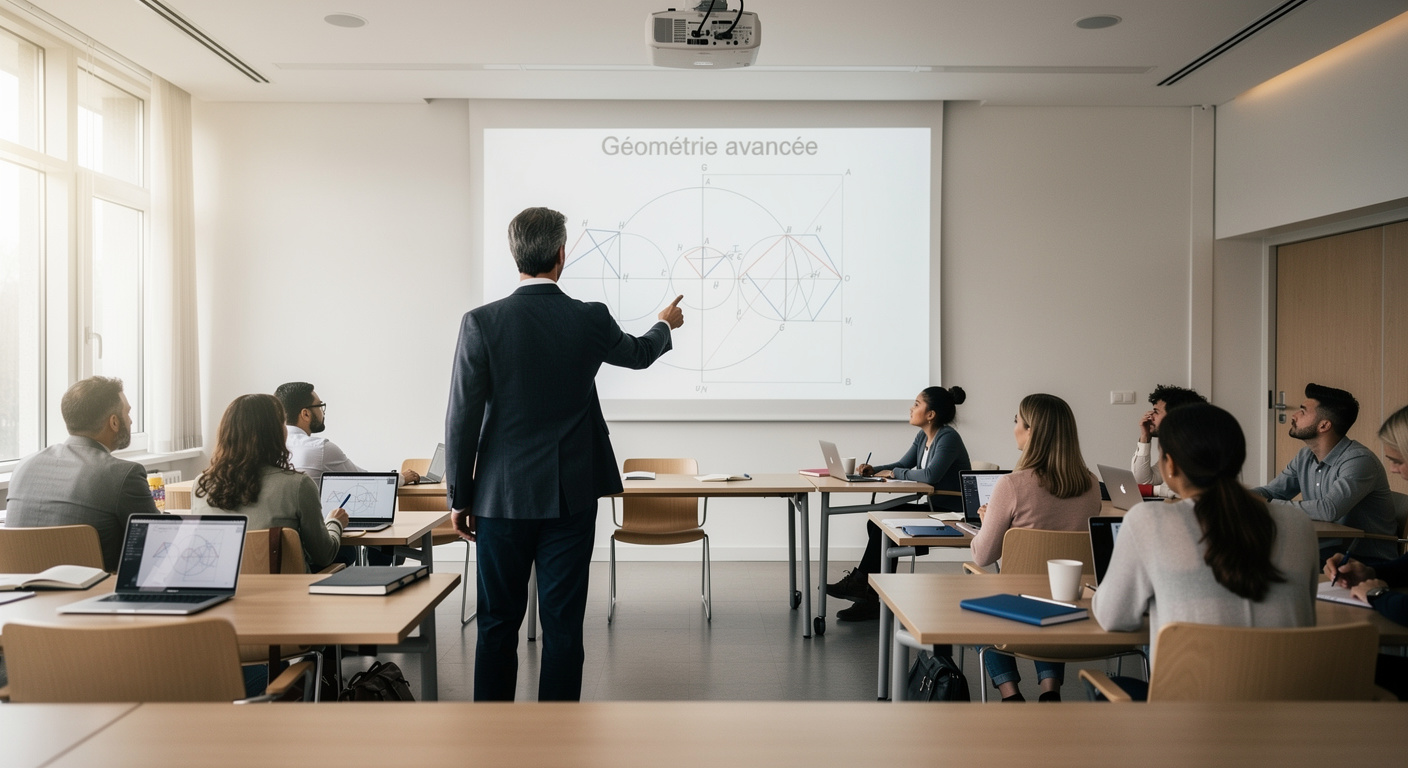
Although TongGeometry does not cover all possible geometry problems—such as those requiring algebraic or combinatorial reasoning—its architecture could be extended to other areas of mathematics. The system has already demonstrated its practical utility in educational settings, where experienced OIM coaches review and refine the problems before using them with their students.
The authors describe this process as follows: “This curated collection is then presented to students, serving a dual purpose: it provides a rich source of training material that helps students master complex topics and competition-specific techniques, while simultaneously acting as a powerful creative aid for coaches, helping them devise interesting and challenging problems for their teams.”
In conclusion, the researchers note TongGeometry’s potential to advance computational geometry and mathematics education, paving the way for increased collaboration between artificial intelligence and high-level pedagogy.
Source: phys.org
Created by humans, assisted by AI.
TongGeometry: The Artificial Intelligence That Challenges Gold Medalists in Geometry
This content was created with the help of AI.


