

Did he really bow down?
That’s the question on every political observer’s mind this morning. Last Monday, a phone call took place between U.S. President Donald Trump and Canadian Prime Minister Mark Carney. But what did they really say to each other? The accounts differ so widely that it feels like we’re hearing two different conversations.
On one hand, we have Scott Bessent’s full-frontal attack. The U.S. Treasury Secretary claims to have witnessed the scene firsthand from the Oval Office. His account, given to Fox News, is scathing toward the Canadian leader: according to him, Carney “backtracked very aggressively” on certain remarks made last week. Bessent even refers to “unfortunate remarks” that the prime minister reportedly retracted. Basically, from Washington’s perspective, Canada has done a complete about-face.
Clarification on China, No Apologies
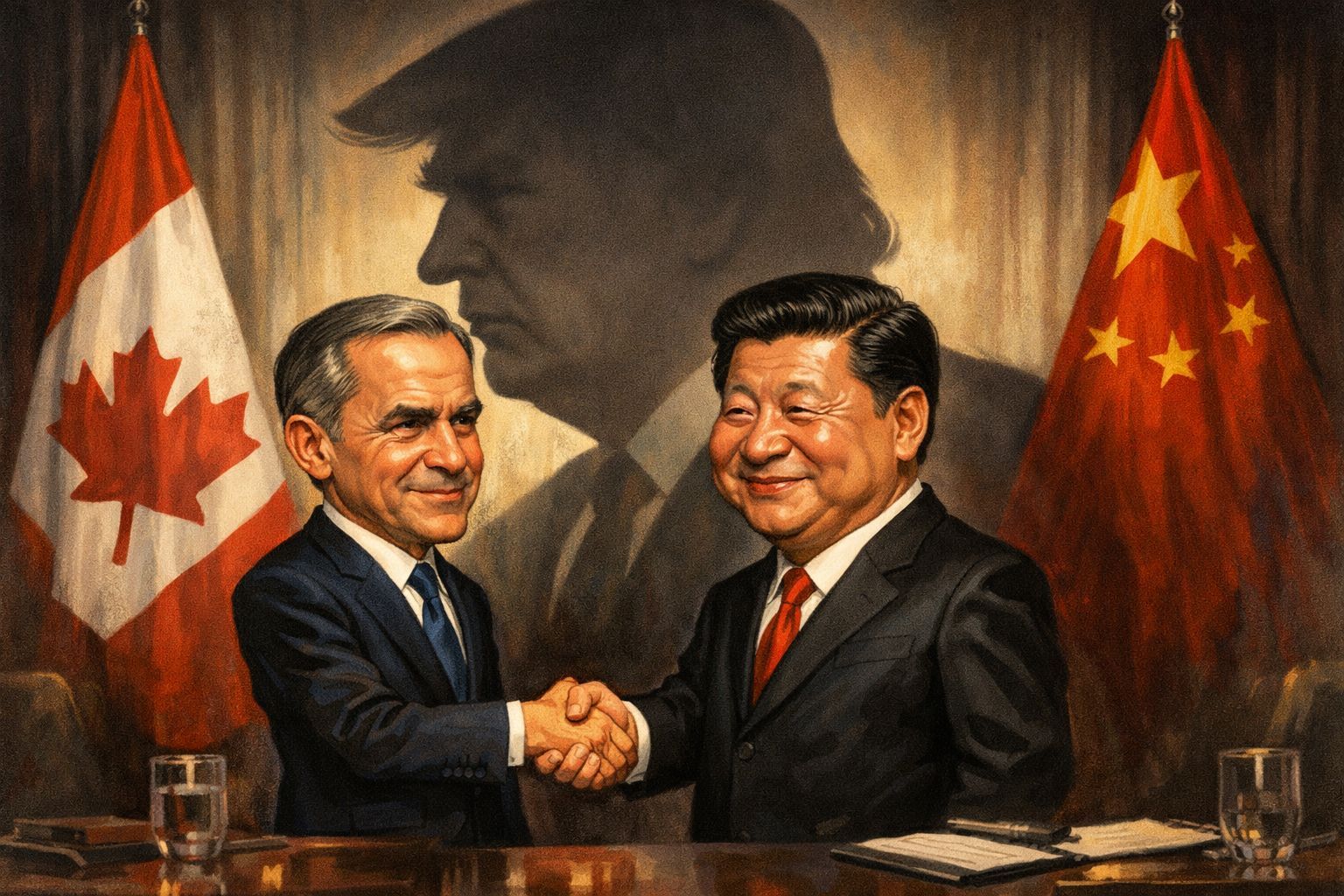
But wait—in Ottawa, the story is radically different. While the Prime Minister’s Office is playing it safe by refusing to officially confirm the call, a well-informed source let the cat out of the bag to Radio-Canada: yes, they spoke. But no, Mark Carney did not “backtrack.”
The purpose of the call? To clear up a major misunderstanding regarding China. The Americans had gotten it into their heads that Canada had just signed a free trade agreement with Beijing during the Prime Minister’s recent visit to China. However, according to this Canadian source, the call was simply to clarify the actual nature of the agreement, which is not a free trade treaty. This was all the more urgent given that Donald Trump doesn’t mess around with this kind of thing: he threatened to impose new 100% tariffs on Canadian products if this trade agreement were formalized. A potential economic disaster that absolutely had to be defused.
The bone of contention: the Davos speech
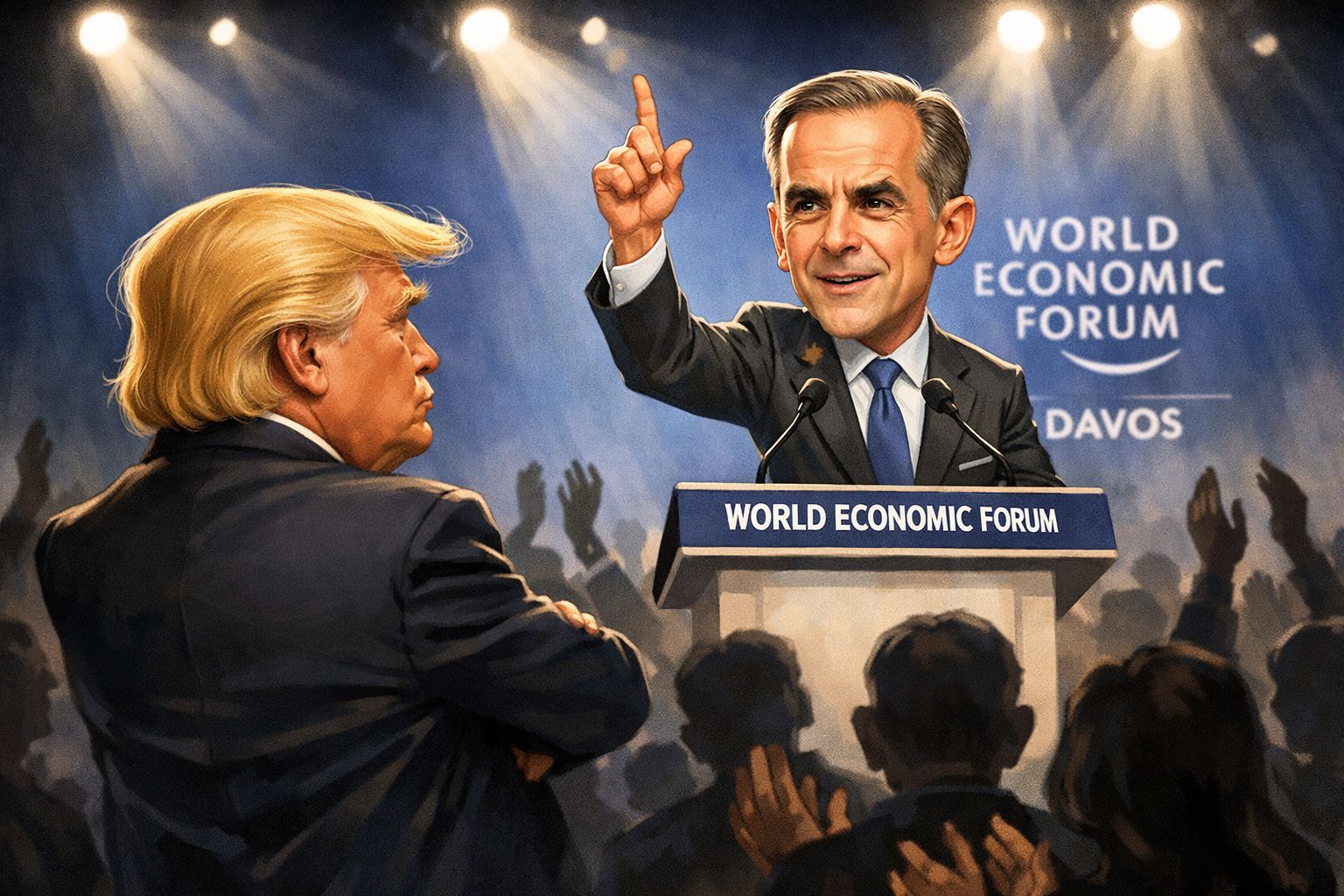
Why was the atmosphere so charged? It all goes back to January 20, 2025, during the World Economic Forum in Davos, Switzerland. On that day, Mark Carney delivered a speech that caused quite a stir—and not just a little. He called on “middle powers,” such as Canada, to unite against the “economic coercion” of the major powers, while highlighting the breakdown of the world order.
This statement, which received a standing ovation at the event, did not sit well with Donald Trump. The U.S. president took it personally, firing back with a scathing retort: “Canada lives off the United States. Remember that, Mark, the next time you make statements.” The diplomatic retaliation was swift: Trump withdrew the invitation he had sent to Mr. Carney to join his “Peace Council.” For Scott Bessent, the equation is simple: Canada depends on its neighbor, and if Trump follows through on his threat of tariffs, it would be, in his words, “a disaster for Canada.”
Trump vs. Carney: Behind the Scenes of a High-Tension Phone Call
This content was created with the help of AI.


