

A Night of Bombing in a Freezing Winter
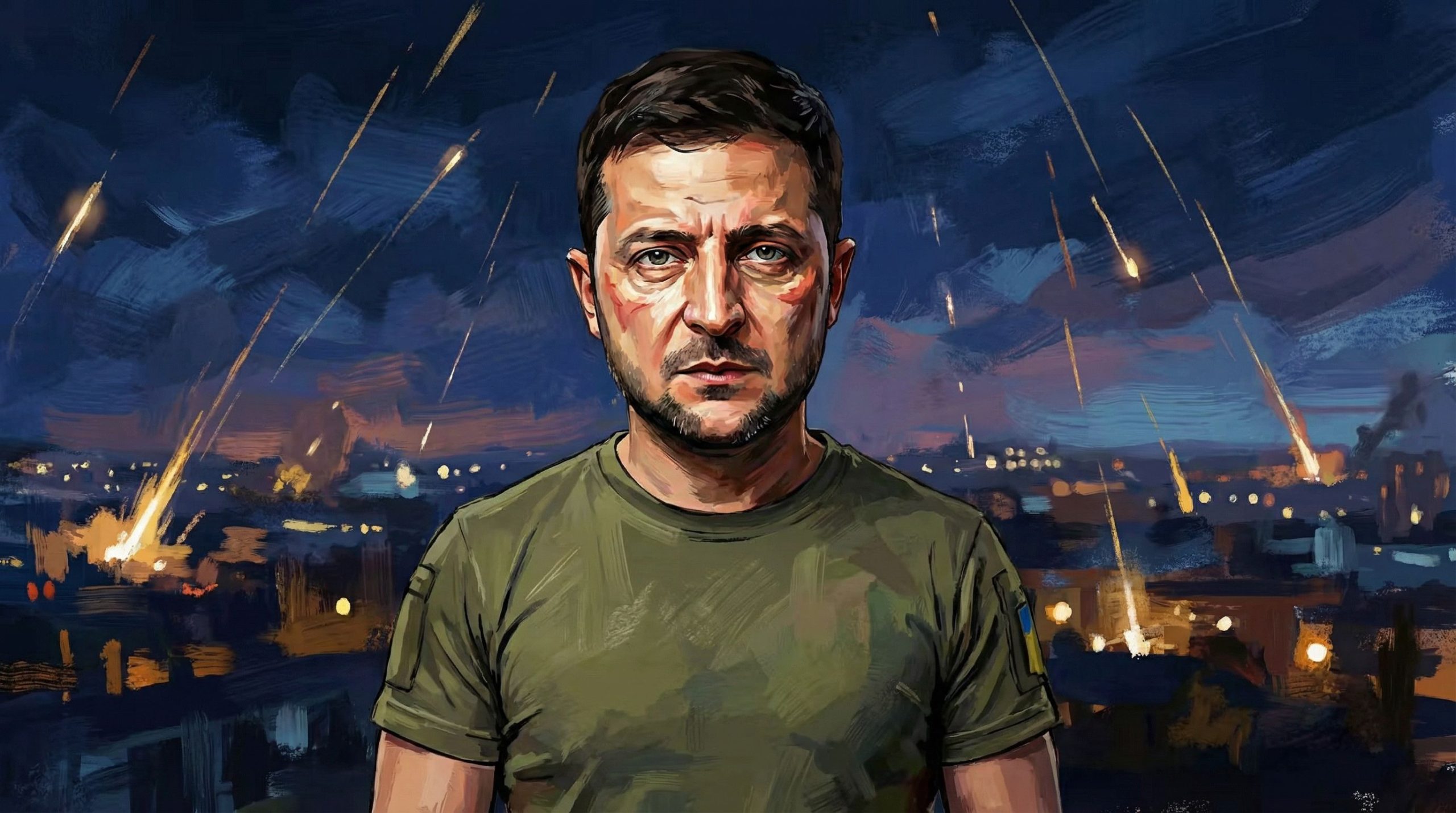
But what’s particularly concerning is the timing. As you know, it’s the middle of winter there—a bitterly cold winter. This morning, temperatures were below -15°C. And that’s precisely why, according to Ukrainian Foreign Minister Andriy Sybiga, Russia launched the attack. He posted this on X, the social media platform. The goal? To deprive people of electricity, water, and heat. A strategy of terror, in a way, that uses the cold as a weapon. Volodymyr Zelensky, the Ukrainian president, responded by saying that Russia must understand that the cold won’t help it win the war. He may say that, but the reality on the ground is bone-chilling.
The strikes and their immediate humanitarian consequences
Now, let’s delve a little deeper into the details of this attack. The Ukrainian Air Force has tallied the strikes: the Russians fired 25 missiles and launched 293 drones. Just imagine that number. They targeted several regions at the same time: the capital, Kyiv, of course, but also Kharkiv in the northeast, Zaporizhzhia in the south, and Dnipropetrovsk in the central-east. This came just four days after a similar barrage, and this systematic bombardment of cities and infrastructure has been going on for nearly four years.
In Kharkiv, one strike hit particularly hard. A postal warehouse was hit. An Agence France-Presse reporter on the scene described the scene: firefighters scrambling around the burning rubble. A warehouse manager, 31-year-old Andriy Pidnebesny, told AFP that he felt the blast. Several of his colleagues were trapped under the rubble. His account is heart-wrenching, you know. He said: “There’s danger everywhere. You never know what might happen. You go to a store and you could be killed. You go to work, you sleep at home—the same thing can happen.” That pretty much sums up the daily anxiety.
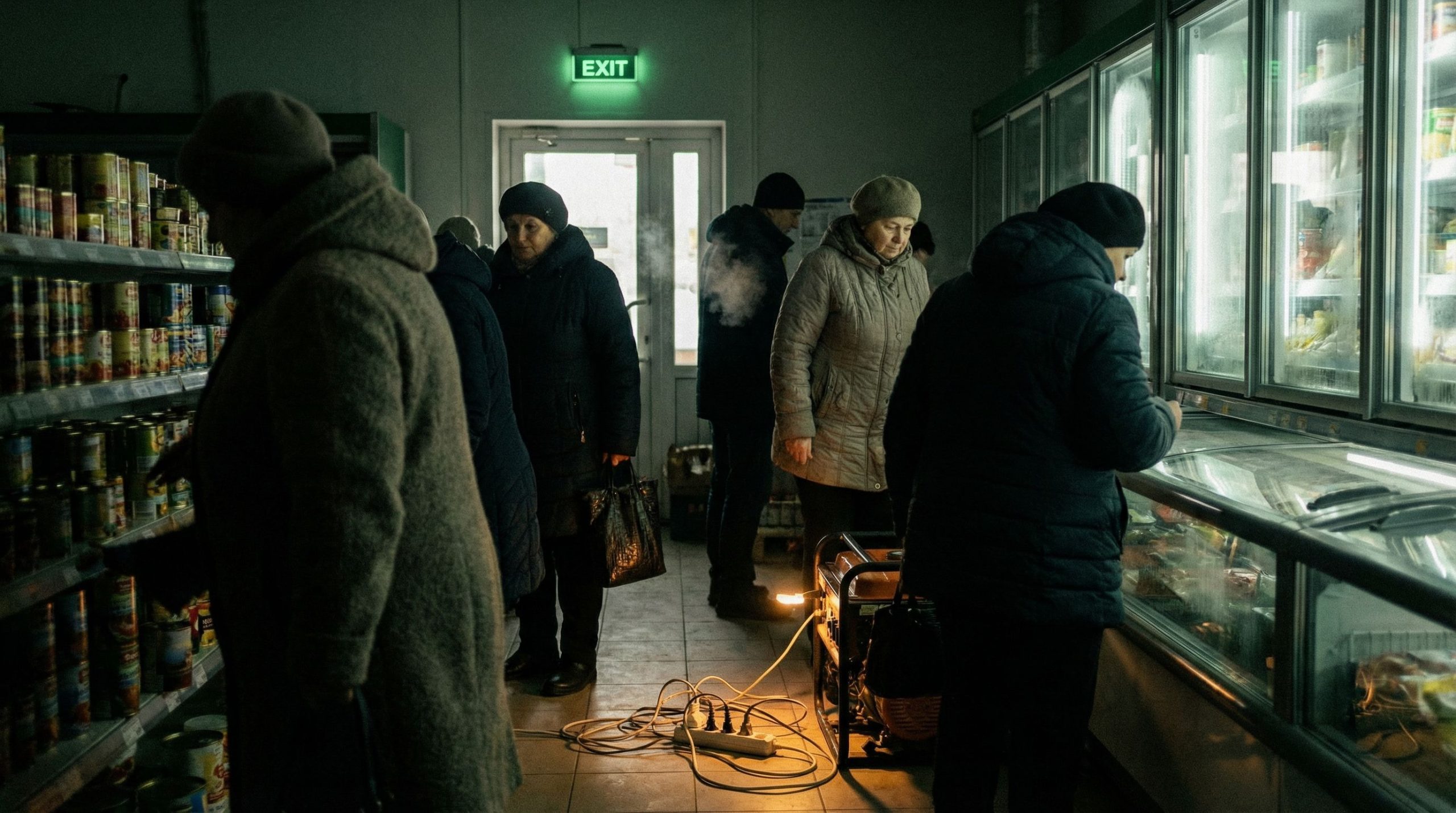
And then there are the immediate consequences on people’s lives. President Zelenskyy denounced a strike on this warehouse as having “no military purpose whatsoever.” These bombings left several hundred thousand households without electricity in the Kyiv region alone. The Ukrainian Ministry of Energy had to announce new power outages in and around the capital due to damage to infrastructure and the intense cold. In Kyiv itself, temperatures ranged from -7°C to -15°C. AFP journalists saw shoppers navigating the dark aisles of a store, where only a few cash registers were still working, powered by a generator. It’s like going back to a time we thought was long gone.
An entire country plunged into darkness and under threat
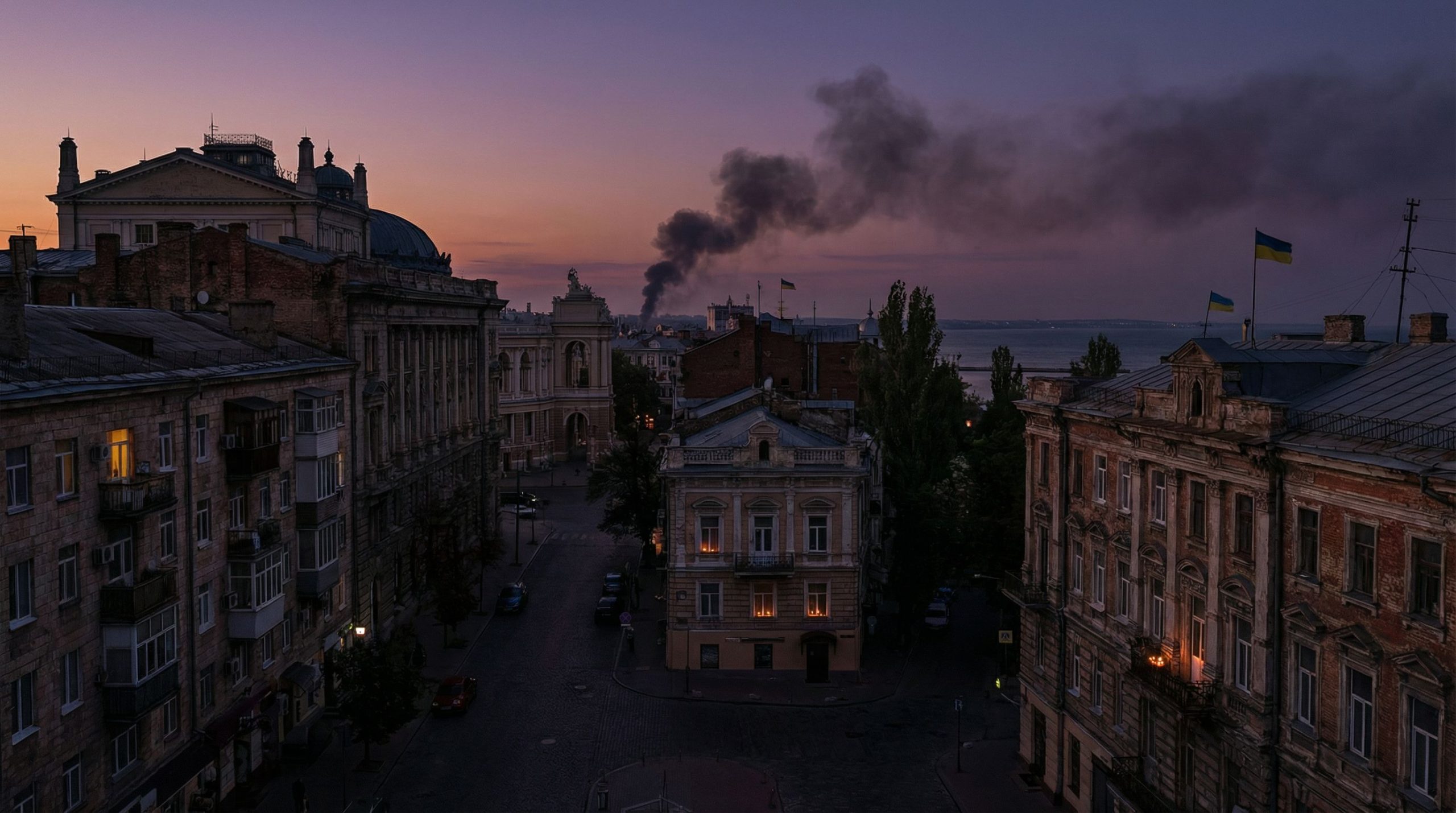
The damage is not limited to Kharkiv and Kyiv—far from it. Take the city of Odessa, on the Black Sea. There, the private electricity operator DTEK reported that 47,000 households were without power. Why? Because of attacks on two of its energy facilities. And this is not the first time—far from it. DTEK states that this is the eighth attack on its sites since October. Since the very beginning of the Russian invasion, their power plants have been targeted more than 220 times. The numbers speak for themselves: we are facing a deliberate campaign of destruction.
In Odessa itself, the city center was hit by two successive drone attacks. According to regional governor Oleg Kiper, six people were injured and civilian buildings were damaged. Elsewhere, in the Dnipropetrovsk region, Ukrainian emergency services reported two additional injuries: a woman and a man. For its part, as it does after every strike, the Russian Ministry of Defense stated on Tuesday that Moscow was targeting only sites linked to Ukrainian forces. This is a line we’ve heard from the start, but it stands in stark contrast to the images of civilian warehouses in flames and homes without power.
Conclusion: Diplomacy at a standstill and a war that is bogging down

Meanwhile, on the diplomatic front, it’s still business as usual—or nearly so. Efforts to find a resolution to the conflict may have intensified in recent months—there’s been much talk of the momentum provided by U.S. President Donald Trump—but in practical terms, they haven’t led to any progress. The talks are at an impasse.
And the verbal tensions, for their part, continue to escalate. On Monday, the United States outright denounced a “dangerous and inexplicable escalation” on Russia’s part. This took place before the UN Security Council. The reason? Moscow’s use last Friday of a latest-generation ballistic missile called the Orechnik. The Russians, for their part, claim to have targeted an aircraft factory near Lviv, in western Ukraine. Each side is digging in, accusing the other, and the war is bogged down in seemingly endless violence.
As I close the newspaper this morning, I can’t help but think of those Ukrainian families facing a harsh winter without heat or light, and of the constant fear described by that young man from Kharkiv. The conflict, now entering its fourth year, is no longer a “special operation.” It is a war of attrition, a war against civilians, a war in which the cold has become a weapon. And despite Kyiv’s repeated calls for more air defense systems, the international community often seems powerless—or at least divided—to put an end to this tragedy.
Ukraine: More Deadly Russian Strikes and Widespread Power Outages in the Middle of Winter
This content was created with the help of AI.


