Skip to content

A hallway secret that became historical fact

For decades, an urban legend had been circulating in the hallways of the Cavour Science High School in Rome. Students passed along mysterious tales from class to class, speaking of secret rooms, forgotten passageways, and ancient treasures hidden beneath the gym floor. As author Tim Newcomb reports, adults dismissed these rumors as mere fabrications by teenagers seeking adventure.

Claudia Marino, a history and Latin teacher at the school, said she first heard these stories many years ago but didn’t think much of them at the time. “Ten years ago, a student told me the story, but I didn’t pay much attention to it,” she said in an interview. It was only very recently that the myth gave way to a major archaeological discovery, confirming that the high school students’ hunches were correct.

The mystery was solved during a period of student protests that led to the occupation of the campus. Taking advantage of this unusual freedom, a group of young people explored every nook and cranny of the building. When they emerged, their accounts were unequivocal: something very real was indeed hidden deep within the school, beneath the gym’s disused boiler room.

Opening a Sealed Door to the Past
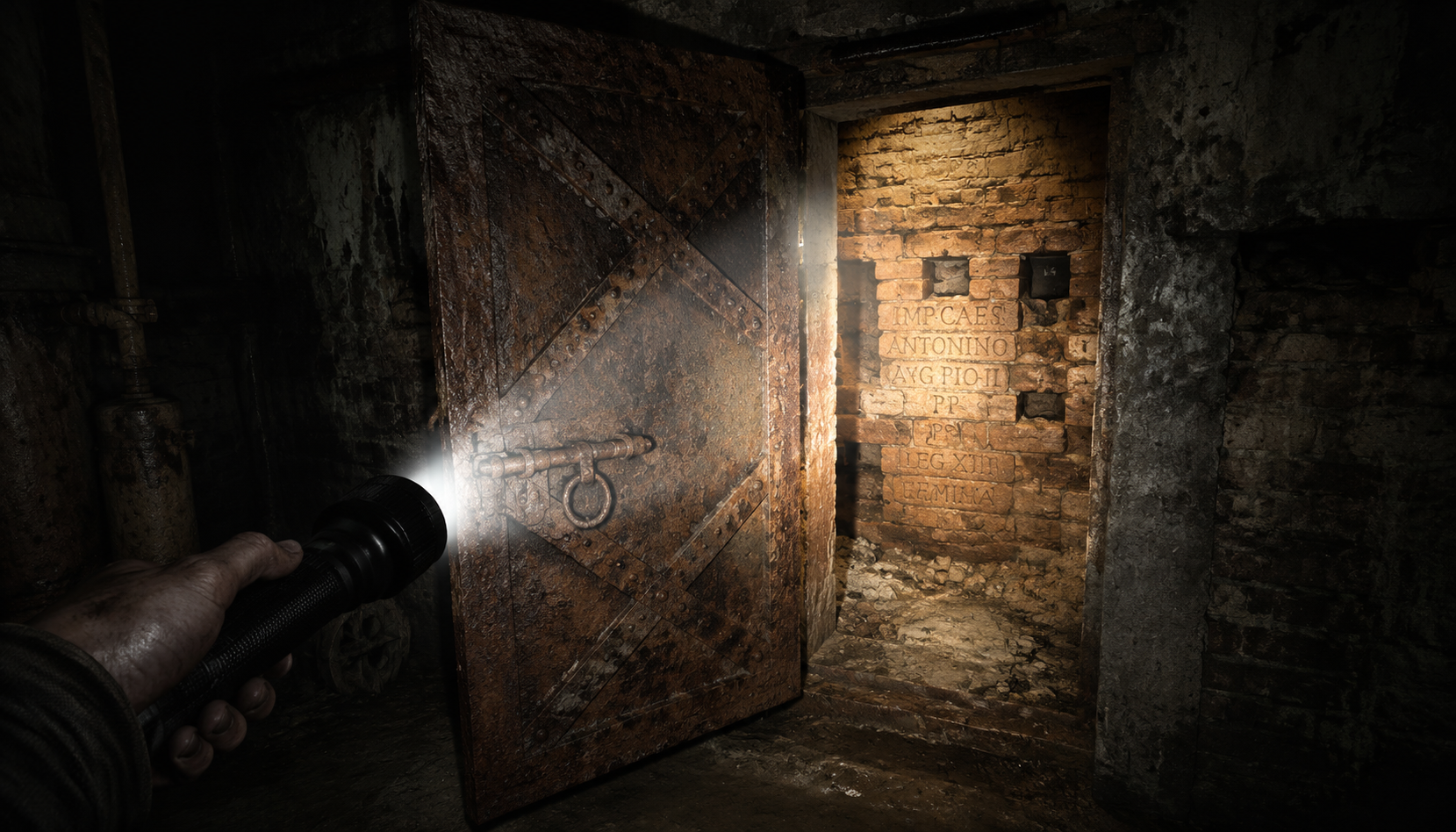
Intrigued by the persistence of these accounts, Claudia Marino decided to accompany a group of students to verify the facts. Armed with a key they found by chance, they managed to open a locked iron door leading to an old boiler room cluttered with outdated equipment. As they ventured further into the darkness, they suddenly saw ancient Roman walls emerge from the modern rubble.

Squeezing through a narrow opening, the teacher and her students entered what turned out to be a luxurious residence from the 2nd century CE. According to an official statement from the high school, the site was in an exceptional state of preservation. Vaulted ceilings still adorned with their original stucco work and walls decorated with floral and figurative frescoes welcomed the impromptu explorers.

This villa, which had remained hidden for generations, was virtually intact. The mosaics covering the floors bore witness to the site’s past wealth. The chance discovery immediately alerted the relevant authorities, transforming the school’s basement into an excavation site of international significance supervised by the Special Superintendency of Rome.

The Domus Liceo Cavour: A Marvel of the Imperial Era

The official excavations, which began in January 2026, confirmed the scale of the discovery. Unveiled to the public on May 28, the site is now officially named the Domus Liceo Cavour. It is believed to be a residence dating from the mid-Imperial period. Researchers believe it likely belonged to a member of the Umbrius family, possibly linked to the Samnium region in south-central Italy.

The excavation has already yielded 48 crates of valuable artifacts. Among the most remarkable finds is a mosaic composed of large, irregularly shaped tiles, a style that was particularly popular in the 2nd century CE. Inscriptions engraved on lead pipes mention the names of L. Fabius Gallus and Umbria Albina, although archaeologists have yet to confirm whether they were the owners or those responsible for maintaining the villa.

The Italian Ministry of Culture highlighted the importance of this site in a recent statement: “Given the spectacular state of preservation of all the paintings inside these rooms, it is essential that they be fully excavated to reveal the entire decorative scheme and allow for its detailed documentation.”

A historical trace lost and then rediscovered
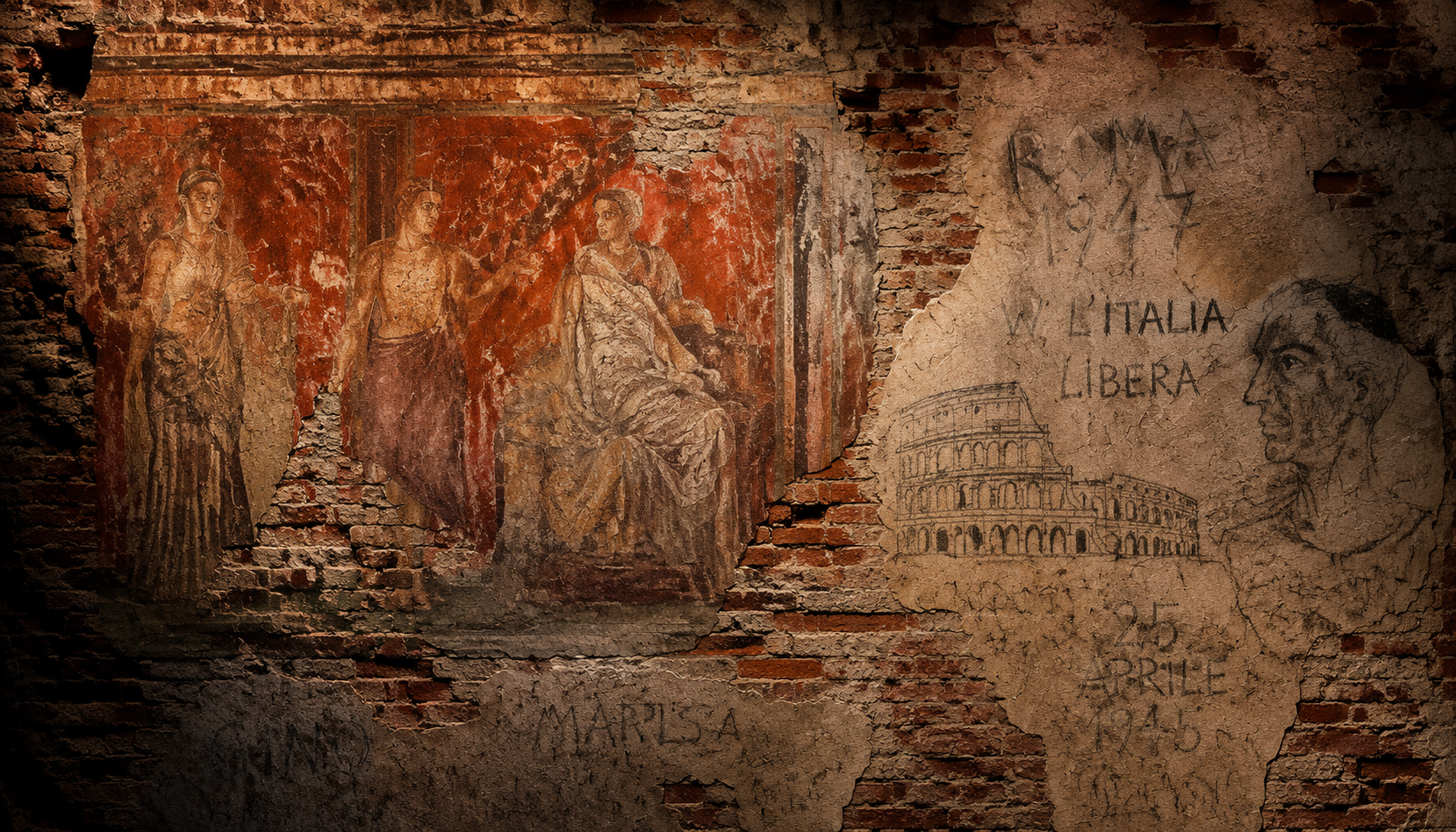
The story of this villa’s rediscovery is as fascinating as the site itself. The high school building was constructed between 1865 and 1885 to serve as the headquarters of a Catholic missionary congregation, less than 300 meters from the famous Colosseum. Historical documents indicate that while laying the foundations, workers reported the discovery of a corner of an ancient house to the local authorities of the time.

However, after this initial report, the trail went cold, and no further official mention was recorded for over a century. Yet the villa was never completely forgotten by those who frequented the area. Graffiti scrawled on the ancient walls bears dates ranging from the 1940s to the 1950s, proving that people were entering the site long before the building became a school in 1962.

More recent spray-painted inscriptions, likely left by students over the past few decades, confirm that the secret was known to a small group of daring teenagers. What was once merely a clandestine playground for a few high school students has now become a national treasure, revealing a surprising continuity between modern Roman youth and the ancient history nestled beneath their feet.

Toward Opening to the Public and a Role for High School Students
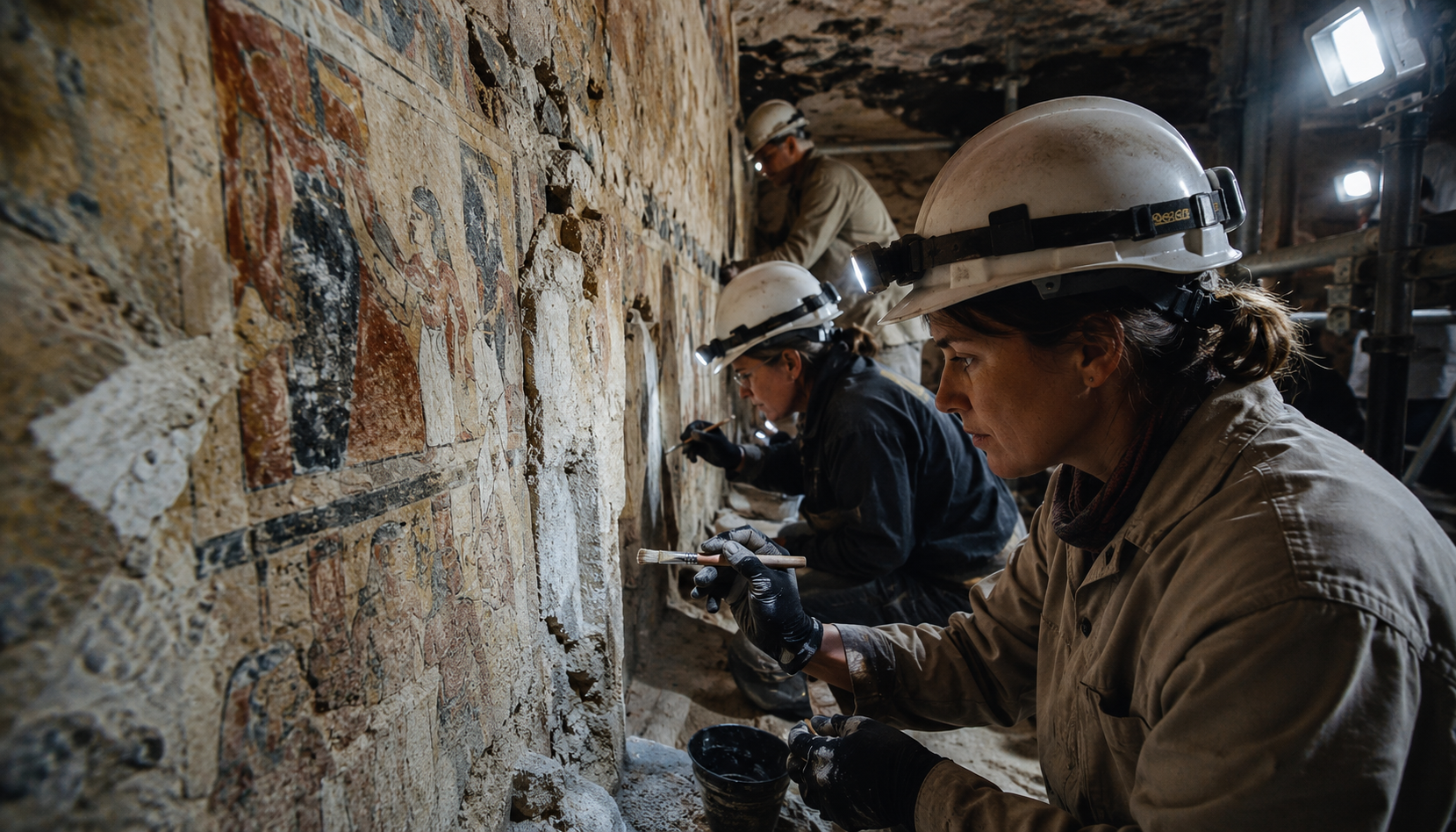
To date, only part of the Domus Liceo Cavour has been explored. Archaeologists believe the structure extends well beyond the discovered rooms, likely all the way under the high school’s playground. This large-scale project is funded as part of Italy’s National Recovery and Resilience Plan, ensuring the continuation of research and the restoration of the frescoes and mosaics.

The most unique aspect of this project is the future involvement of the students. Once the safety and restoration work is complete, the site will be open to visitors. The students of Cavour High School themselves will serve as tour guides, bringing to life the history of the villa they helped unearth. This initiative offers a unique educational opportunity, combining classical education with heritage preservation.

In conclusion, this discovery reminds us that history can sometimes lie hidden right beneath our feet, waiting for the right moment to be revealed by the curiosity of new generations. This domus, long a mere whisper in the hallways, is now poised to become a cornerstone of our understanding of daily life in Imperial Rome.

Source: popularmechanics.com

Students looked inside a sealed room and discovered an ancient Roman house

facebook icon twitter icon linkedin icon
Copied!

Commentaires

0 0 votes
Article Rating
Subscribe
Notify of
guest
0 Comments
Newest
Oldest Most Voted
Inline Feedbacks
View all comments
More Content