

A mysterious sound from the depths echoed across the Pacific. It took 8 years to find its source


The Unexpected Recording of the Summer of 1997
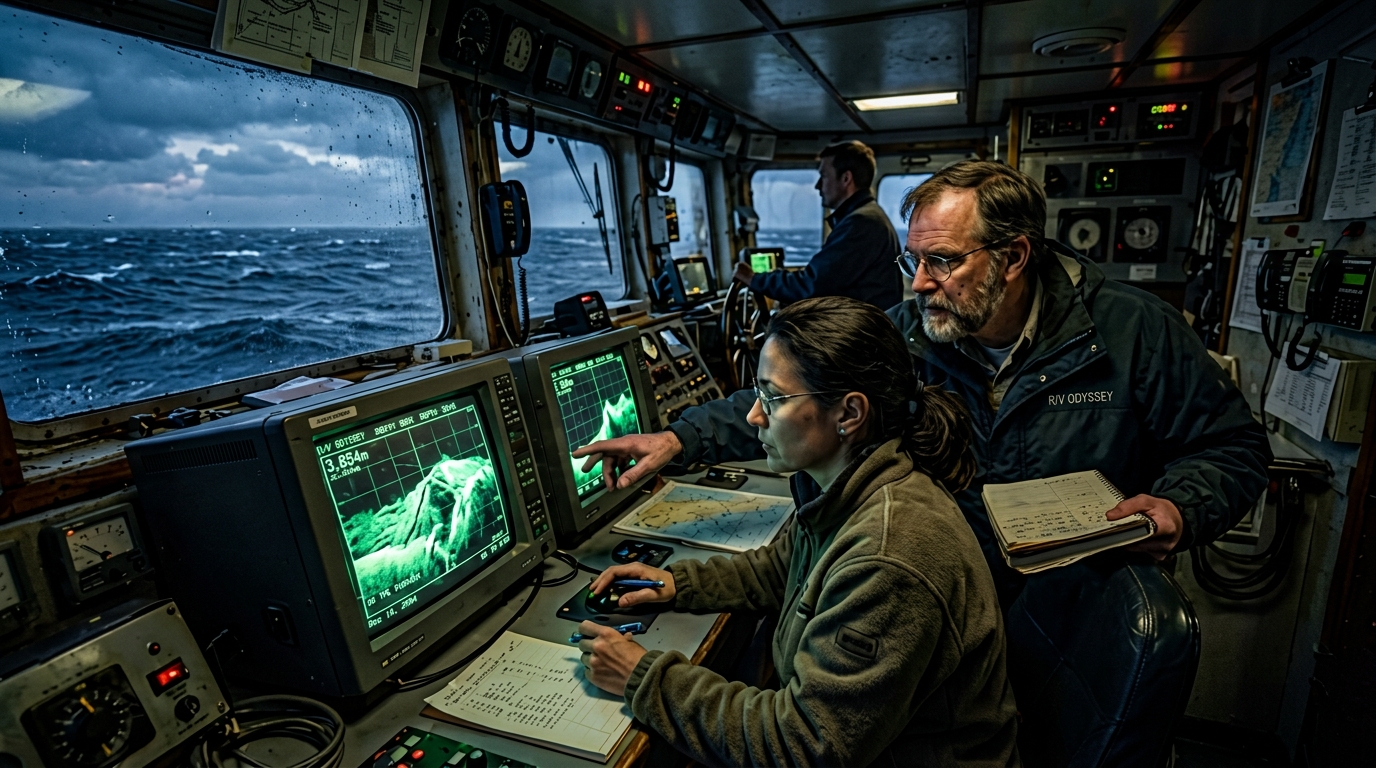
During the summer of 1997, while the global music scene was dominated by nonstop airplay of Hanson and the Spice Girls, teenagers were discovering the early days of dial-up internet, and millions of people were wiping away tears at Princess Diana’s funeral, science was turning its attention to the depths of the ocean. Far from this cultural buzz, researchers at the U.S. National Oceanic and Atmospheric Administration (NOAA) were focused on a very different mission, as detailed in the source article written by Elizabeth Rayne.
This scientific team had embarked on an extensive expedition to the South Pacific. Their initial goal was to document underwater volcanic activity. To do so, they listened intently to the ocean depths using their hydrophones—microphones specifically designed for prolonged submersion.
However, instead of the usual rumbling of magma, the sensors picked up something entirely different. This mysterious sound—similar to a massive bubble bursting under water pressure—was quickly dubbed “the Bloop.”
An unexplained resonance across the entire Pacific
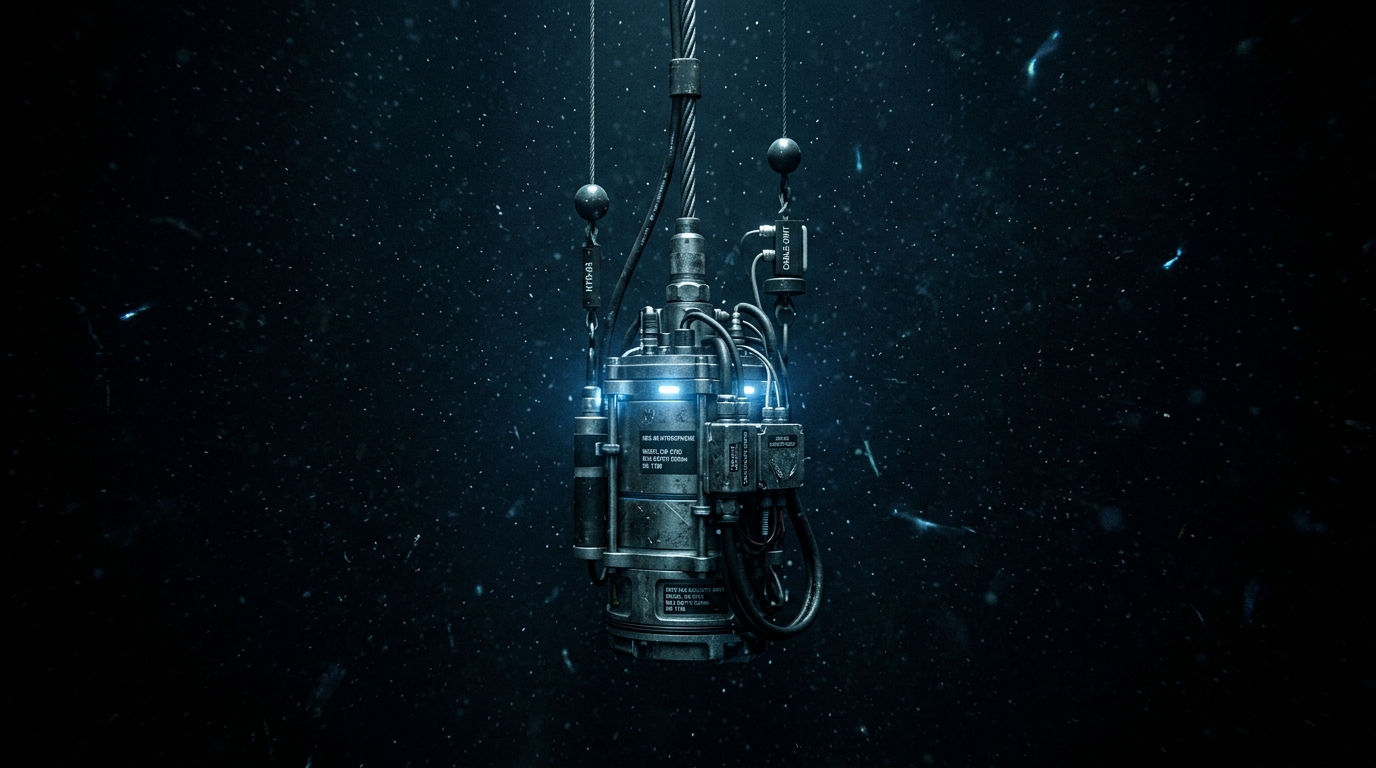
The research team in question was part of NOAA’s Pacific Marine Environmental Laboratory (PMEL). What they recorded that year defied all expectations: a sound from beyond the grave, with an ultra-low frequency but phenomenal power. It turned out to be powerful enough to trigger alerts on sensors scattered throughout the entire Pacific Ocean.
The scale of this detection left experts completely baffled as to the nature of the source. “It’s unusual for a sound to be recorded across all the sensors we’ve deployed,” said Robert Dziak, head of NOAA’s acoustics program. The scope of the phenomenon immediately raised many questions within the oceanographic community.
The researcher emphasized the exceptional nature of this event, adding: “Whether it’s a ship or a whale, when it emits a sound in the ocean, it isn’t powerful enough to be recorded across the entire Pacific. But this sound was recorded by so many hydrophones that it stood out in our minds as something unique.”
Sea Monsters, Myths, and Elusive Creatures
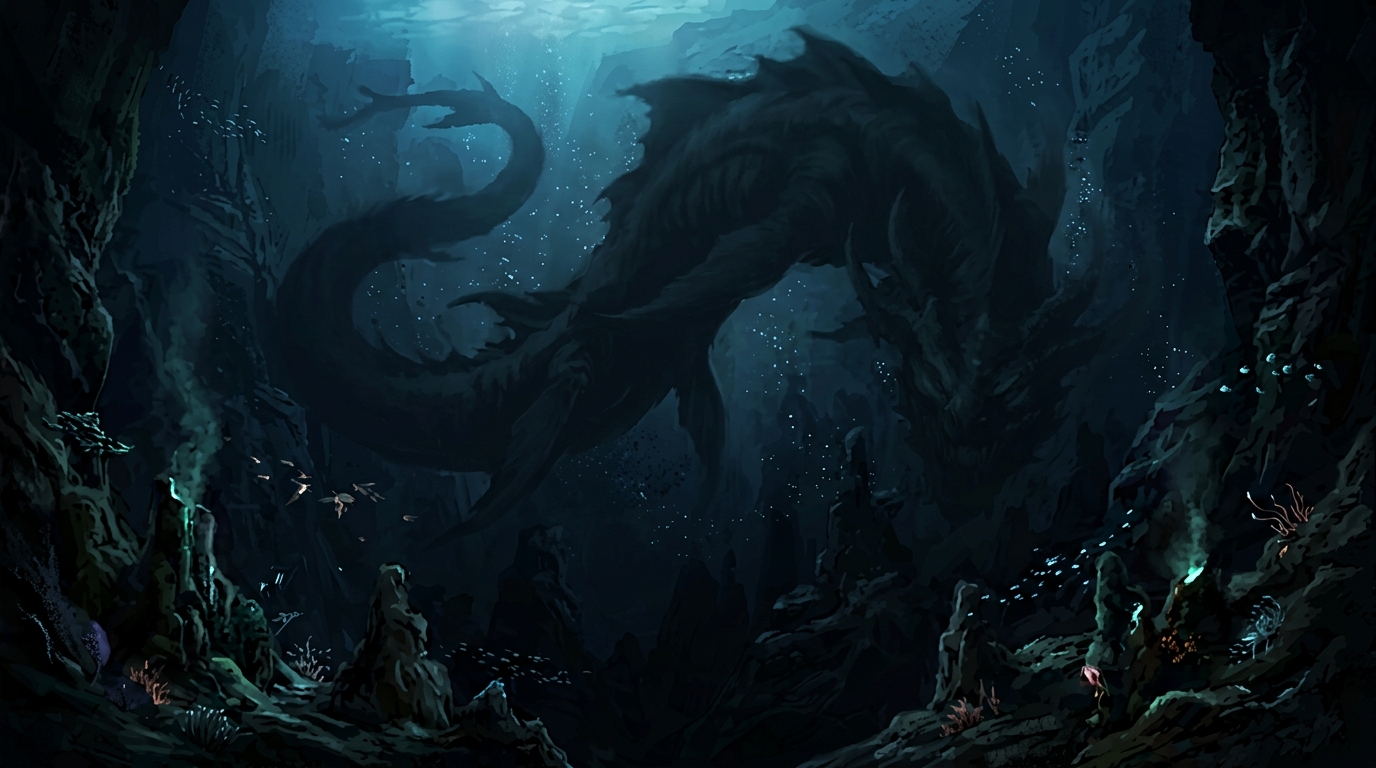
The frequency profile of this unusual sound roughly matched the call of a living creature, raising a mind-boggling question: what organism could produce a song detectable from more than 3,100 miles away? While the blue whale—the largest known animal on Earth—can be heard over vast distances, the amplitude of the “Bloop” suggested a creature twice as large. Given that the oceans remain largely unexplored, some have speculated about undiscovered species. The coelacanth—believed to have been extinct for 66 million years and known only from fossils before a live specimen was caught in a fisherman’s net in 1938—is striking proof of this. The idea of a prehistoric sea monster like the Megalodon still roaming the depths has thus gained traction.
Other mystery enthusiasts have delved into far darker theories, evoking the terrifying call of Cthulhu waiting to emerge from the seas, its tentacles writhing. This cosmic entity imagined by Lovecraft seemed all the more plausible to some because the coordinates of the “Bloop” were located about 1,500 kilometers from the fictional location of R’lyeh, the monster’s sunken city.
The Geophysical Lead and the Polar Expedition
Solving the Mystery and the Agony of the Ice
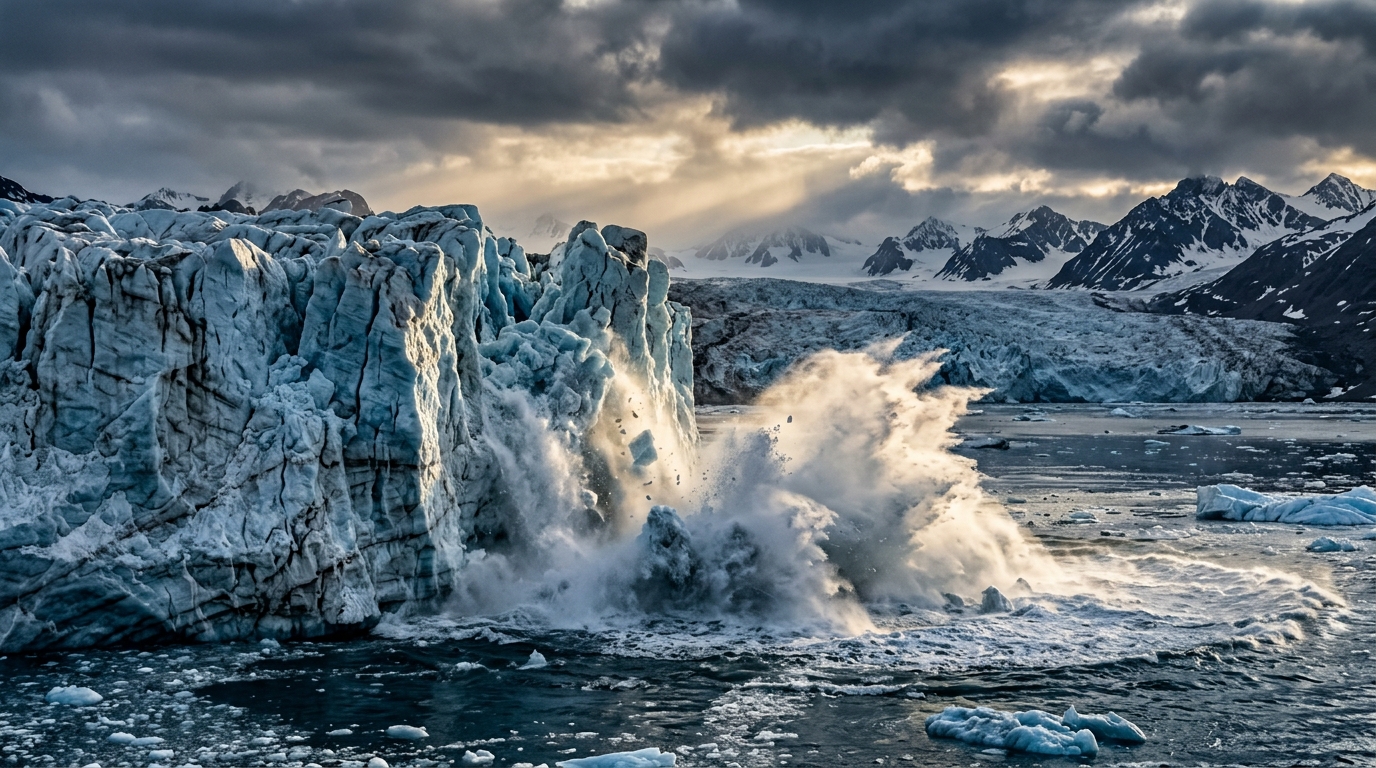
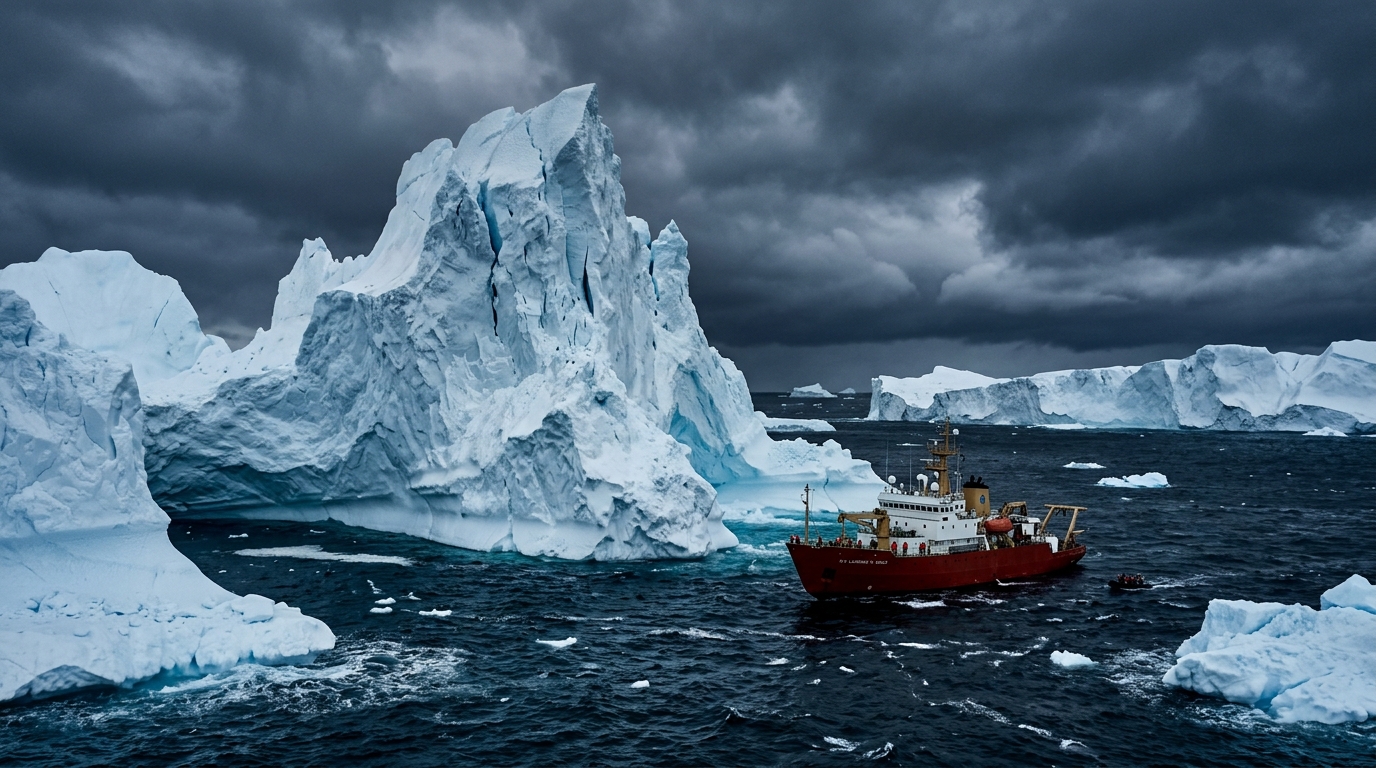
It wasn’t until 2005 that the source of the commotion was definitively confirmed as an icequake. As glaciers break apart and gigantic blocks break off—a process that is accelerating drastically due to global warming—the resulting booms can easily be mistaken for mythical sea monsters. Among the wide range of phenomena that bear a striking resemblance to the “Bloop” are calving—the cracking of ice—as well as harmonic tremors from icebergs, generated when they scrape the seafloor or collide with one another.
The specific iceberg responsible for the sound that shook the world—or at least the Pacific—has never been formally identified. The amplitude of the ice tremors allows them to be detected by multiple sensors, even at distances exceeding 3,100 miles. NOAA’s directional analysis revealed that the ice formation was likely located between the Bransfield Strait and the Ross Sea. The latter area is home to Cape Adare, a black basalt promontory east of the Antarctic continent, renowned for its strange cryogenic rumblings. Similar disturbances have also been detected by NOAA in the Scotia Sea.
So the mystery has an answer—and it’s not a monster. For Megalodon researchers, conspiracy theorists, Cthulhu devotees, or whoever invented the “Bloop” creature, the outcome is disappointing. However, the “Bloop” tells the story of a massive, ancient, and powerful force. The true entity behind it all is none other than a dying ice continent. Compared to an abomination with a gaping maw and writhing tentacles, this reality may well be far more terrifying.
Source: popularmechanics.com
A mysterious sound from the depths echoed across the Pacific. It took 8 years to find its source
