

The Secret Buried in the Sands of the Sahara
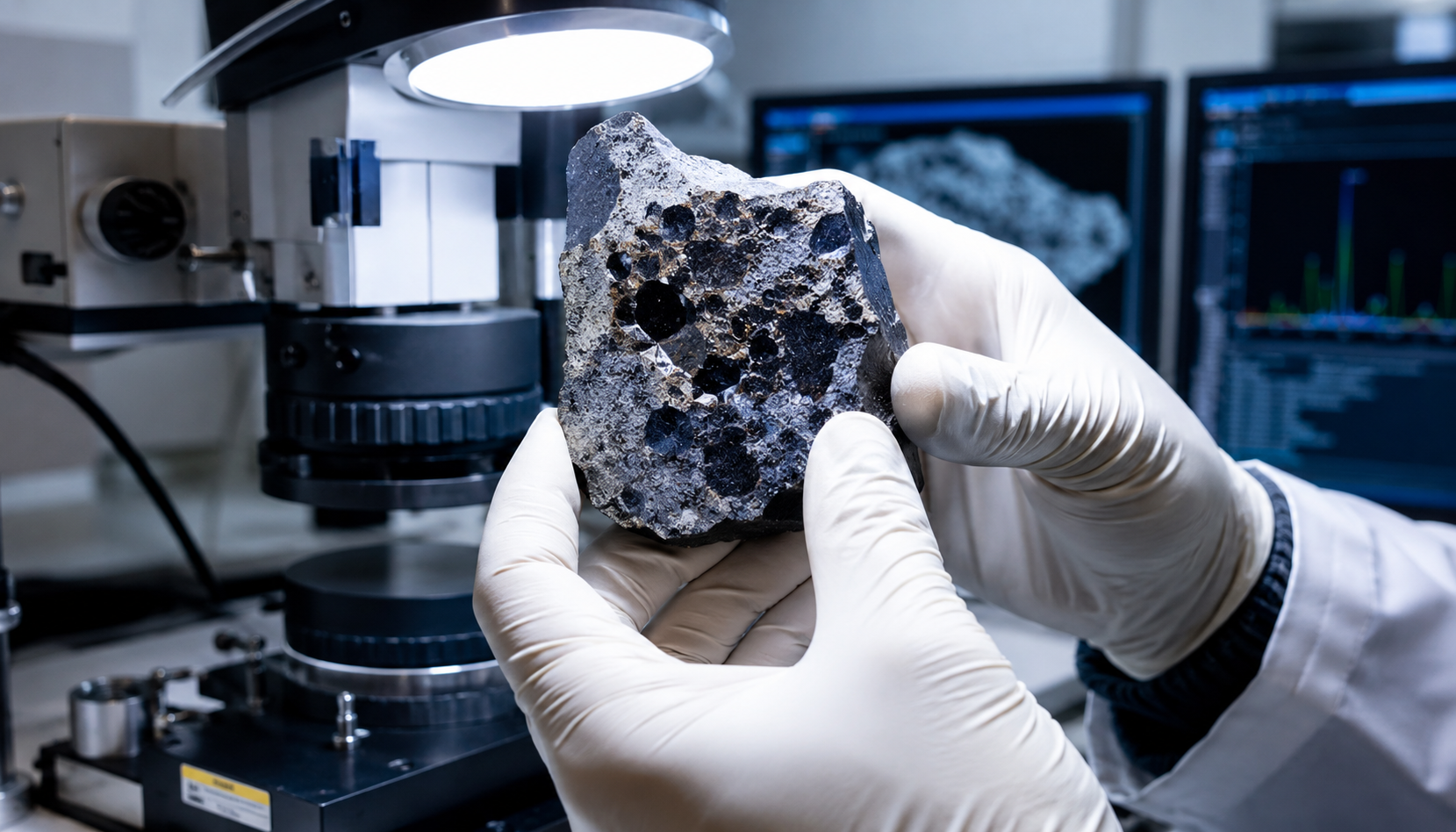
According to information published by Yvaine Ye on behalf of the University of Colorado at Boulder, this discovery challenges traditional hypotheses about planetary evolution. Aaron Bell, an assistant research professor in the university’s Department of Earth Sciences, highlights the significance of this finding. “It’s incredible to think that a world of such size ever existed,” says the researcher. “We know it existed only because a few fragments happened to land on Earth. These meteorites have preserved evidence of a completely different trajectory along which the early planets developed.”
Titanic Pressure Revealed by a Crystal
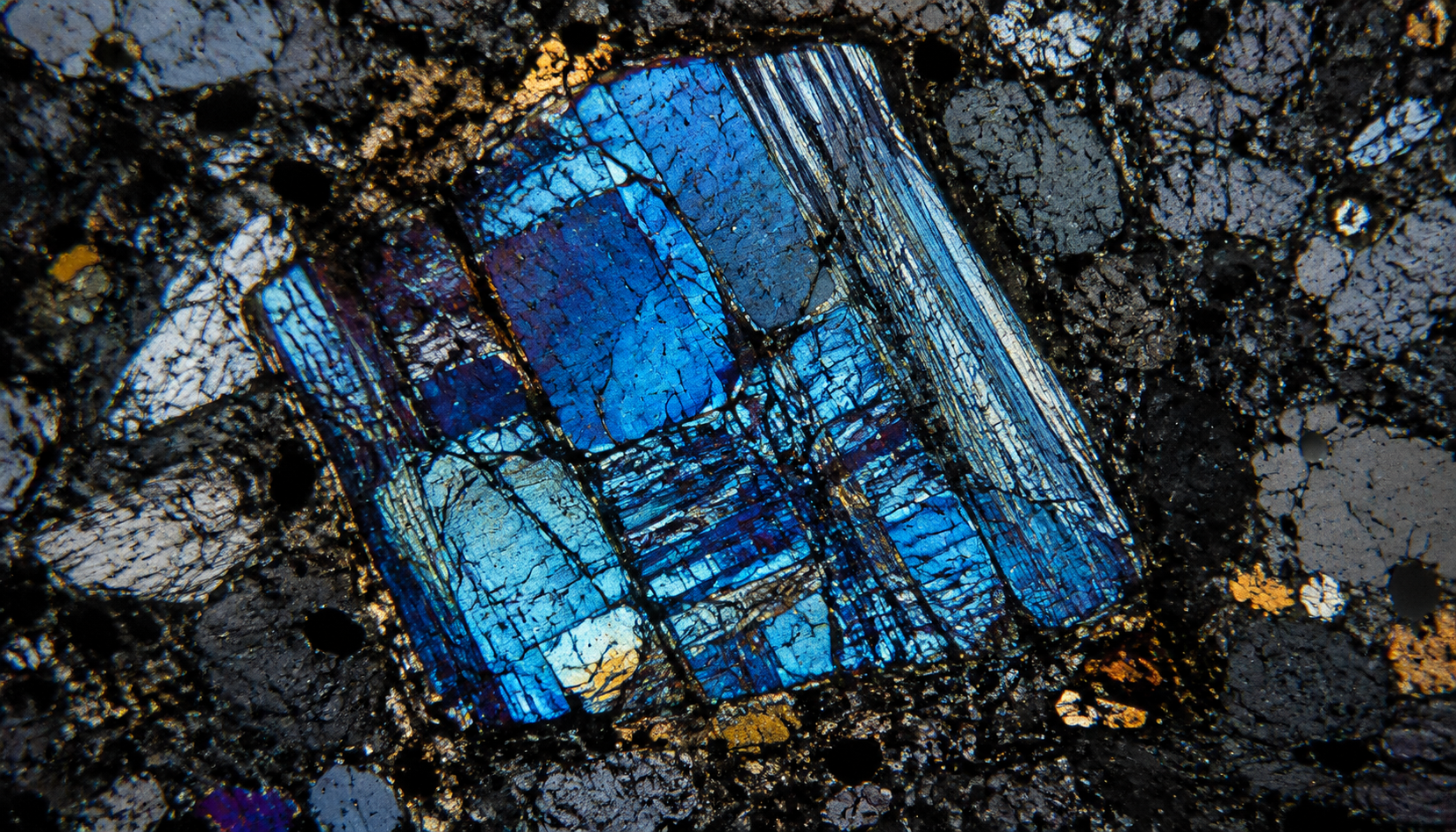
A detailed analysis of the NWA 12774 meteorite by Aaron Bell and his colleagues revealed the presence of a specific mineral crystal: clinopyroxene. While this element is commonly found in Earth’s crust and mantle, the variant identified in this extraterrestrial fragment stood out due to its exceptionally high aluminum content. This chemical characteristic is an indisputable indicator of subterranean formation under extreme conditions.
To understand the origin of this rock, the researchers modeled the conditions necessary for its formation. Their calculations showed that this aluminum-rich clinopyroxene required a minimum pressure of 17.5 kilobars to crystallize. To put this figure in perspective, the colossal pressure at the bottom of the Mariana Trench—the deepest point in Earth’s oceans—reaches only about 1 kilobar.
The Unexpected Dimensions of a Planetary Embryo
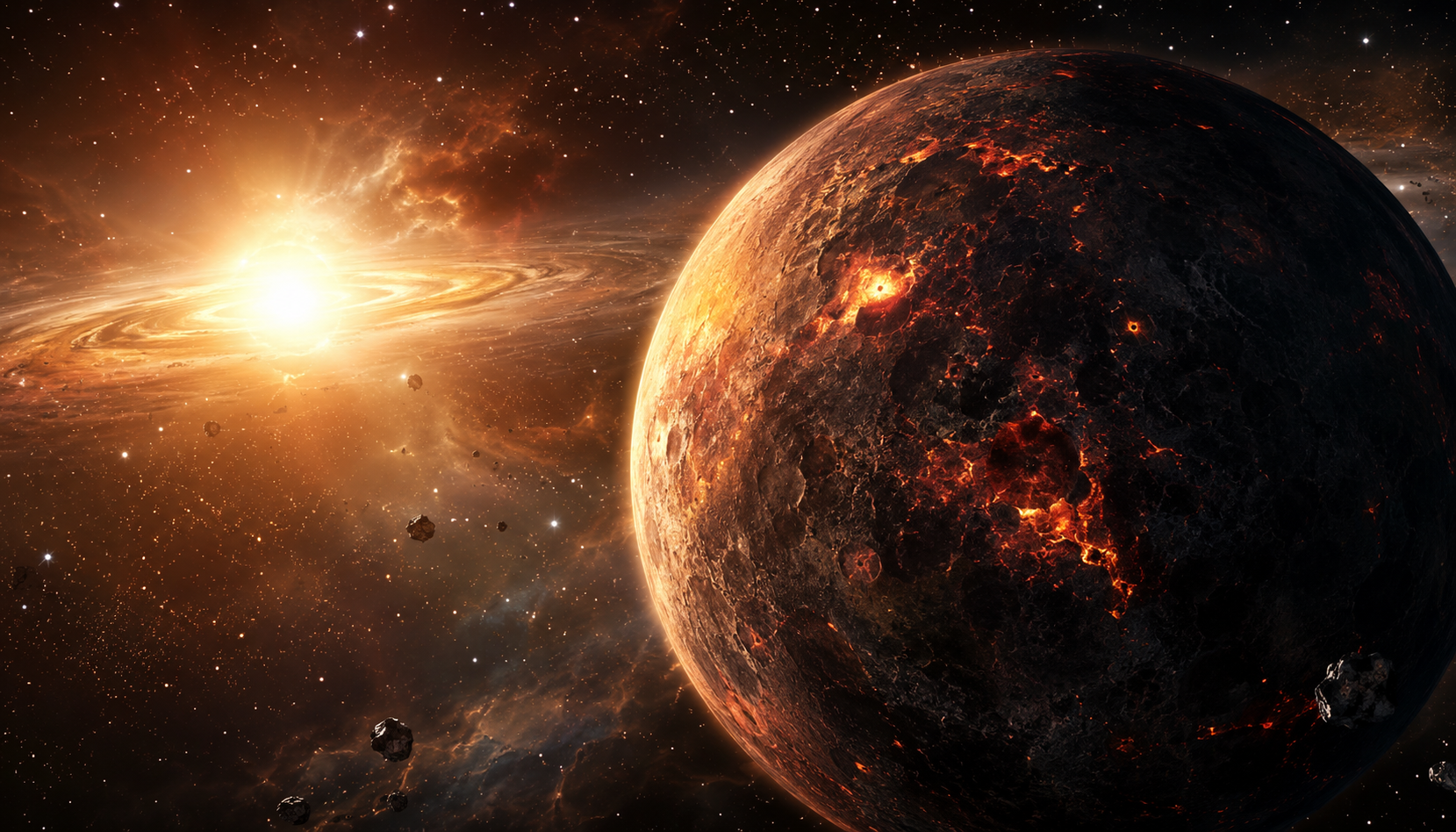
The meteorite contained other clues that led scientists to revise the size of this lost world upward. The crystals trapped inside NWA 12774 have retained sharp edges as well as particularly delicate chemical patterns. If these elements had formed in the planet’s abyssal depths, these characteristics would inevitably have been erased by heat and internal dynamics.
This preservation indicates that the crystals actually formed at relatively shallow depths within their parent body. For a pressure of 17.5 kilobars to be reached near the surface, the object’s total mass must have been enormous. Modeling thus suggests that this protoplanet could have had a radius exceeding 1,800 kilometers (1,118 miles), which is roughly the size of our Moon.
The Chemical Enigma of the Angrites
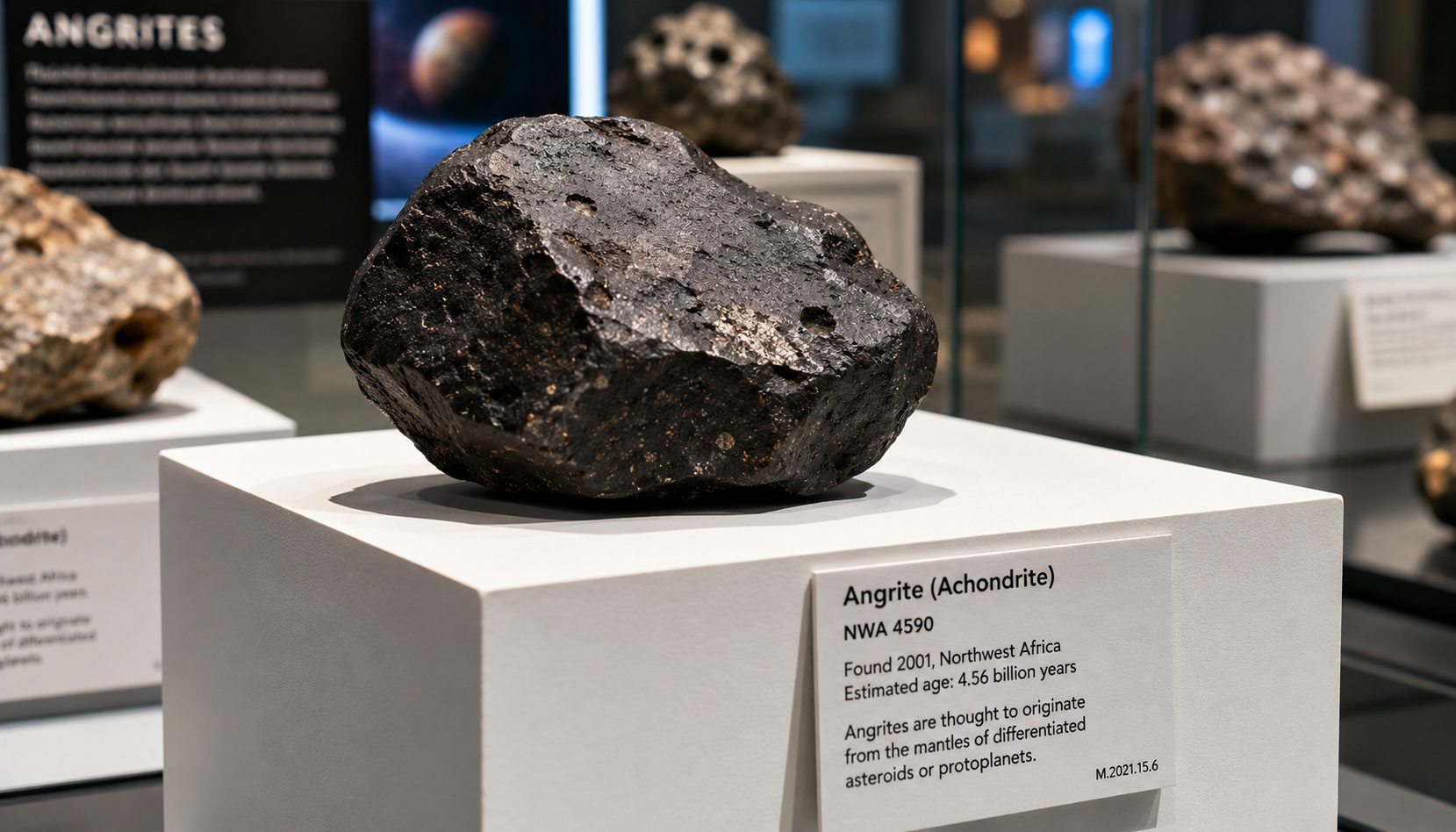
The NWA 12774 meteorite belongs to an extremely rare family of space rocks called angrites. These fragments are considered the oldest known volcanic rocks in our solar system. They formed within just a few million years after the solar system’s birth, approximately 4.56 billion years ago. Their rarity is striking: out of more than 80,000 meteorites recorded on Earth’s surface, there are only 68 angrites.
A Cosmic Family Tree in Need of Rewriting
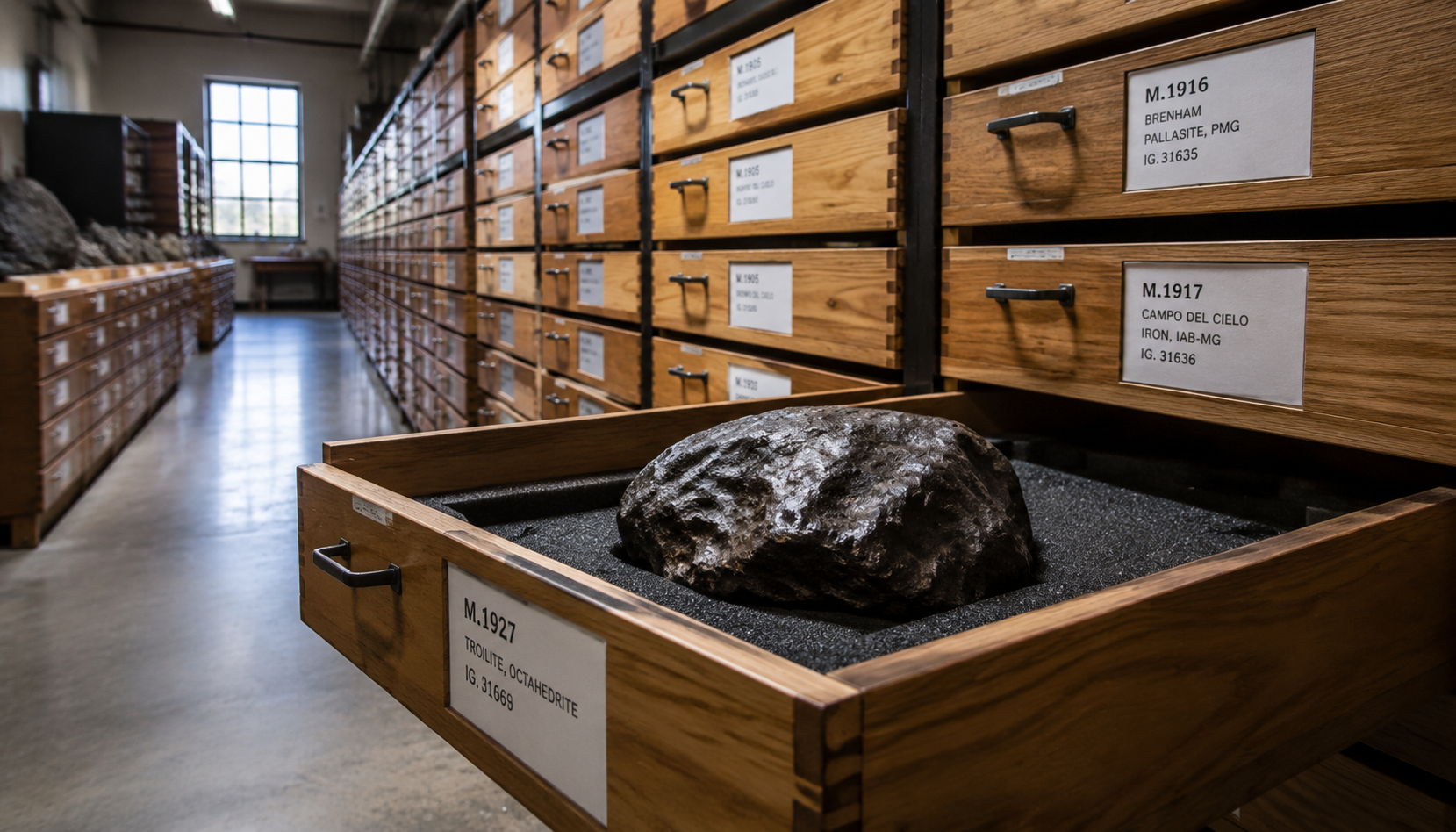
This discovery opens up new avenues for space research. “There are many meteorites sitting in drawers that haven’t been studied in depth, so there have probably been other protoplanets of this type that we don’t know about,” explains Aaron Bell. The scientist emphasizes the uniqueness of this object: “The materials that formed the parent body of the angrites are fundamentally different from the ingredients of Earth and Mars. This points to a distinct and separate evolutionary path in planetary formation early in the history of our solar system.”
The detailed results of this research have been documented in a paper co-authored by Aaron S. Bell and his team, titled “High-Pressure Clinopyroxene in Northwest Africa 12774 and New Geobarometric Evidence for a Planetary-Embryo-Sized Parent Body of the Angrites.” The study is published in the 2026 issue of the journal Earth and Planetary Science Letters and is accessible via its digital object identifier (DOI: 10.1016/j.epsl.2026.120029).
According to the source: phys.org
A meteorite fragment reveals the existence of a giant planet that disappeared at the dawn of our solar system


