

An Unexpected Discovery on the Way to College
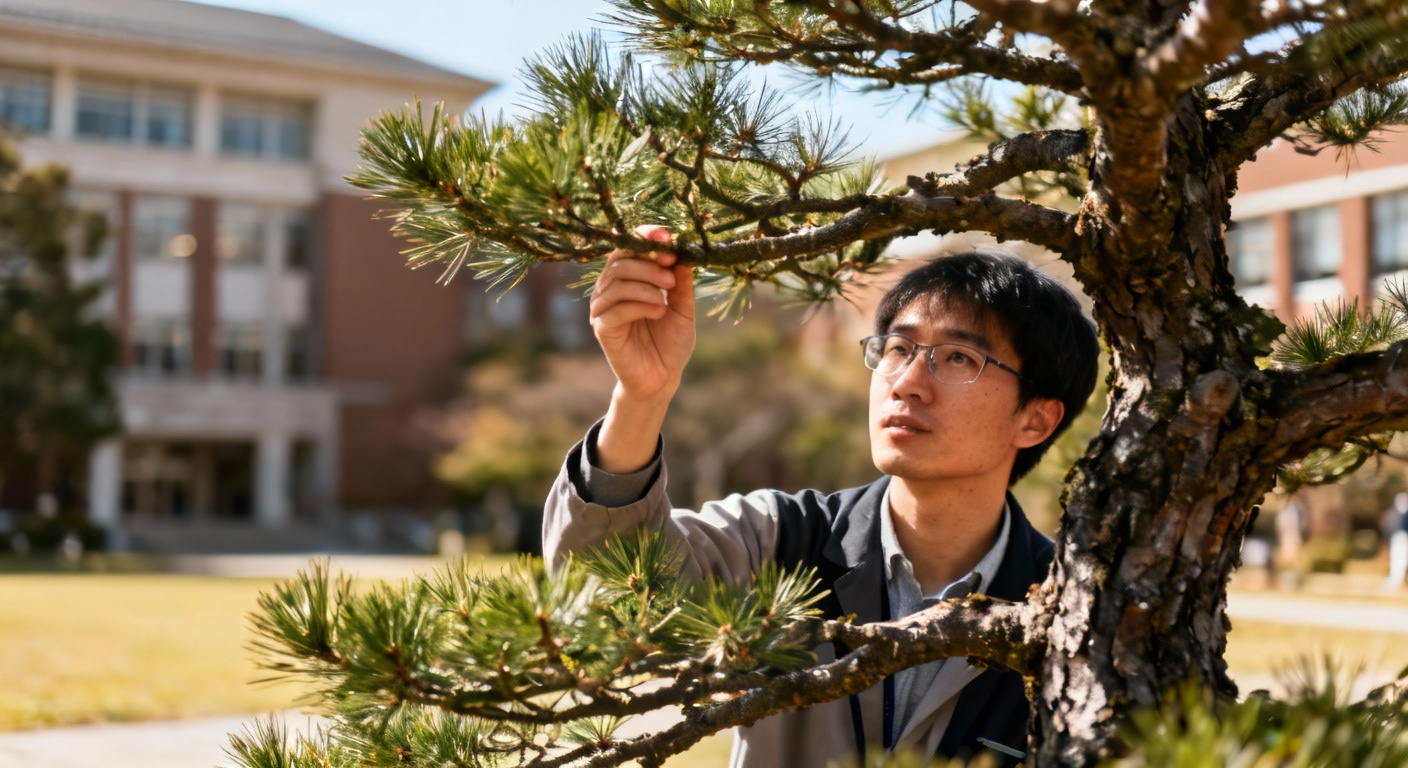
We often imagine that new animal species are hiding deep in impenetrable jungles or in the ocean depths. Yet sometimes, science finds what it’s looking for right on our doorstep. That’s exactly what happened at Kyushu University in Japan. A team of researchers there discovered a brand-new species of ladybug, named Parastethorus pinicola, living peacefully on a pine tree at the Hakozaki satellite site.
This discovery, published in the journal Acta Entomologica Musei Nationalis Pragae, was no accident. Ryōta Seki, a doctoral student at the Entomology Laboratory of the Graduate School of Bioresource and Environmental Sciences, had a hunch. “I knew that this group of ladybugs often inhabits pine trees,” he explains. Since Japanese black pines grow on campus, he simply decided to take a look. Bingo! That’s where he found the new species. According to him, the reason it remained undiscovered for so long is that insect collectors generally don’t pay much attention to these trees.
A painstaking effort to identify a speck of sand
Don’t expect the famous red ladybug with black spots. Parastethorus pinicola—whose name literally means “pine dweller”—is a tiny black beetle. It measures barely more than a millimeter in length. “These tiny black beetles have been little studied because they’re incredibly difficult to identify,” says Ryōta Seki.
The challenge is daunting: they’re barely larger than a grain of sand, and they all look alike. It’s impossible to distinguish between species with the naked eye; their reproductive organs must be dissected and examined under a microscope. This complexity has, in fact, led to numerous misidentifications in the past. This discovery is part of a three-year study aimed at revising, for the first time in over 50 years, the classification of the Stethorini tribe in Japan—a group known for preying on tetranychids (mites).
To set the record straight, the team sifted through approximately 1,700 specimens. This monumental effort corrected a long-held belief: the common ladybug known in Japan as Stethorus japonicus is in fact the same species as Stethorus siphonulus, which is already widespread from China to Southeast Asia. “Standardizing these names is important because it allows us to share data and research with other Asian countries,” notes Seki, adding that the species ranges from the tropics to temperate Japan.
A Family Tribute and a Lesson in Humility

The study didn’t stop at the campus pine trees. It also led to the discovery of a second new species from Hokkaido, named Stethorus takakoae. It’s a name steeped in emotion, as Ryōta Seki chose it in honor of his grandmother, Takako Ōtsuki. It’s a beautiful way to thank the woman who supported his passion for insects from his earliest childhood.
For Associate Professor Munetoshi Maruyama of the Kyushu University Museum, who supervised this research, this scientific adventure reminds us of the importance of observing the world more closely. “People rarely notice insects this small. But as our study has shown, even in a city or on a university campus, there are unknown species living right next to us,” he points out.
These insects, though seemingly “minor,” support our ecosystems. The professor concludes with a note of hope: that this discovery will spark interest in this diverse and fascinating world that exists, unnoticed, right at our feet.
Source: phys.org
Created by humans, assisted by AI.
An unknown species discovered by chance right on the university campus


