

A Groundbreaking Breakthrough in Our Understanding of Matter

For the very first time, physicists have succeeded in developing a model capable of explaining the origins of magic nuclei—these unusually stable atomic structures. This breakthrough is based directly on the analysis of the interactions between their protons and neutrons. The results of this landmark study were published in the prestigious scientific journal Physical Review Letters.
The Quest for Equilibrium: Isotopes and Instability
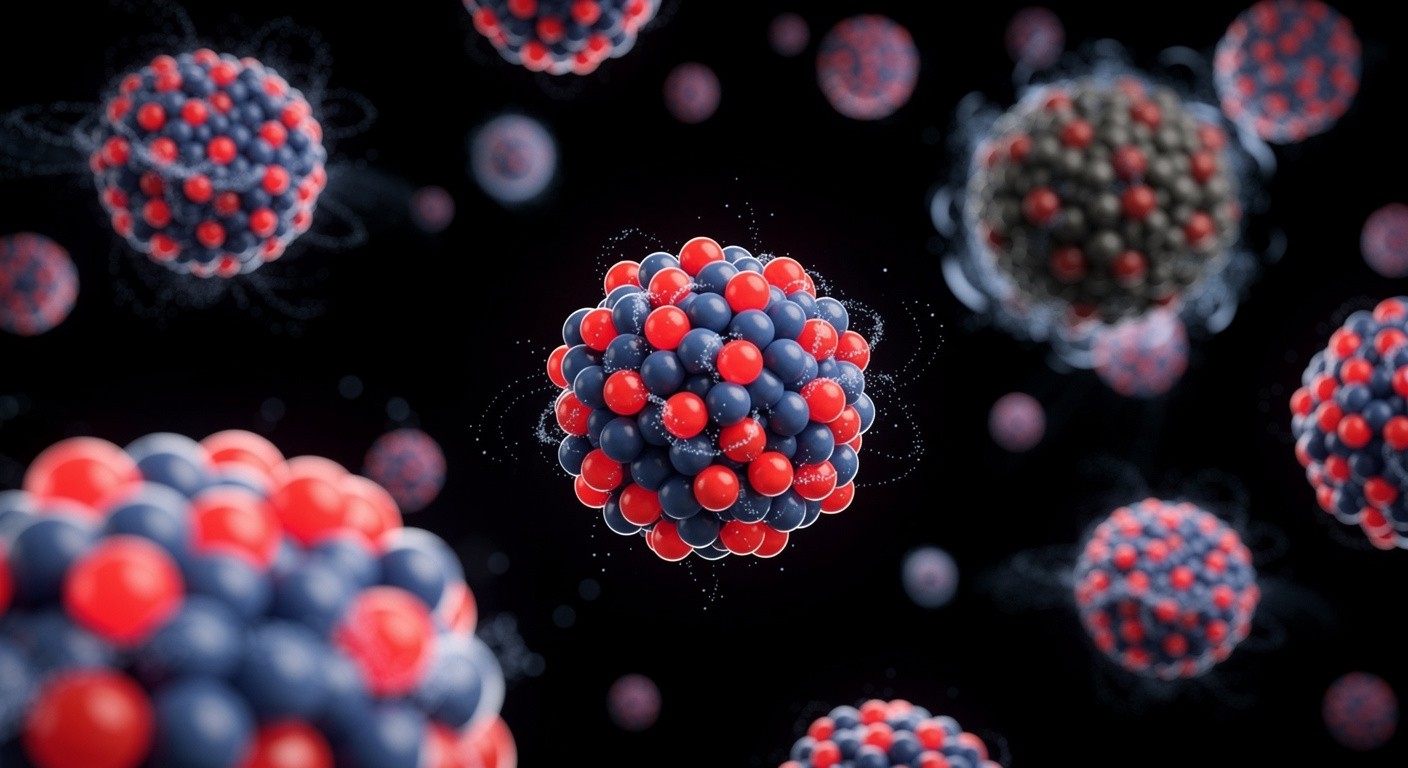
It is essential to remember that each chemical element is defined by a fixed number of protons in its atomic nucleus. In contrast, the number of neutrons in the nucleus is much less constrained. For nearly all known elements, there are at least two different nuclear configurations—called isotopes—that differ only in their number of neutrons.
However, this arrangement is not without limits. If the number of protons and neutrons becomes too unbalanced—in either direction—the nucleus becomes unstable. Since heavier elements tend to have fewer stable isotopes, these radioactive nuclei become increasingly rare as this imbalance grows.
Despite this general rule, there are notable exceptions. For certain specific numbers of protons and neutrons—collectively referred to as “nucleons”—exceptionally stable isotopes are observed. These particular configurations, the underlying reasons for which long eluded physicists, are what define the famous magic nuclei.
The Limitations of the Shell Model in the Face of the Nuclear Force
These particularly robust isotopes, known as “magic nuclei,” are traditionally described by the nuclear shell model. This theoretical framework works similarly to the electron shell model used in atomic physics. It posits that nucleons occupy discrete energy levels, where transitions between levels are accompanied by the absorption or emission of energy.
A quantum approach reimagined by Chenrong Ding’s team

The team therefore used a wave function describing the nucleus in its entirety. This holistic approach allows for the inclusion of strong interactions between pairs—and even trios—of nucleons, thereby providing a more accurate picture of the nucleus’s internal physical reality.
The Decisive Test on the Tin-132 Isotope
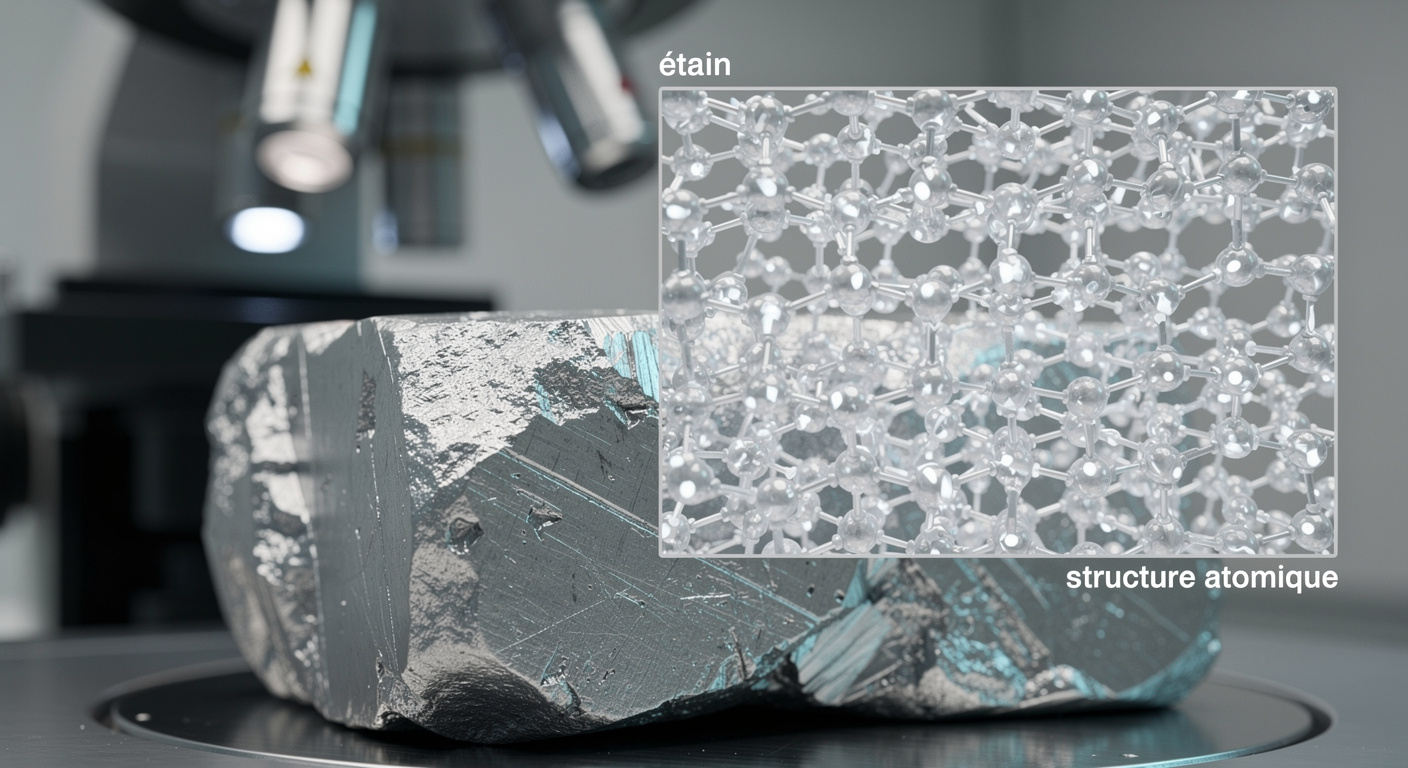
To test the validity of their approach, Chenrong Ding and his colleagues focused on a specific case: tin-132. This is a particularly stable isotope containing exactly 50 protons and 82 neutrons. This choice is significant, as it represents a perfect example of the “magic numbers” that science is trying to unravel.
Toward a Reconciliation of Theoretical Models
The team’s results bridge, for the first time, a long-standing gap between two major approaches in nuclear theory. On one hand, there are phenomenological models that successfully describe nuclear behavior; on the other, there are so-called “ab initio” (or first-principles) methods that aim to derive this behavior from fundamental forces.
Source: phys.org
Created by humans, assisted by AI.
A Mystery in Nuclear Physics Finally Solved: The Origin of Magic Numbers
This content was created with the help of AI.


