

A Controversial Theory
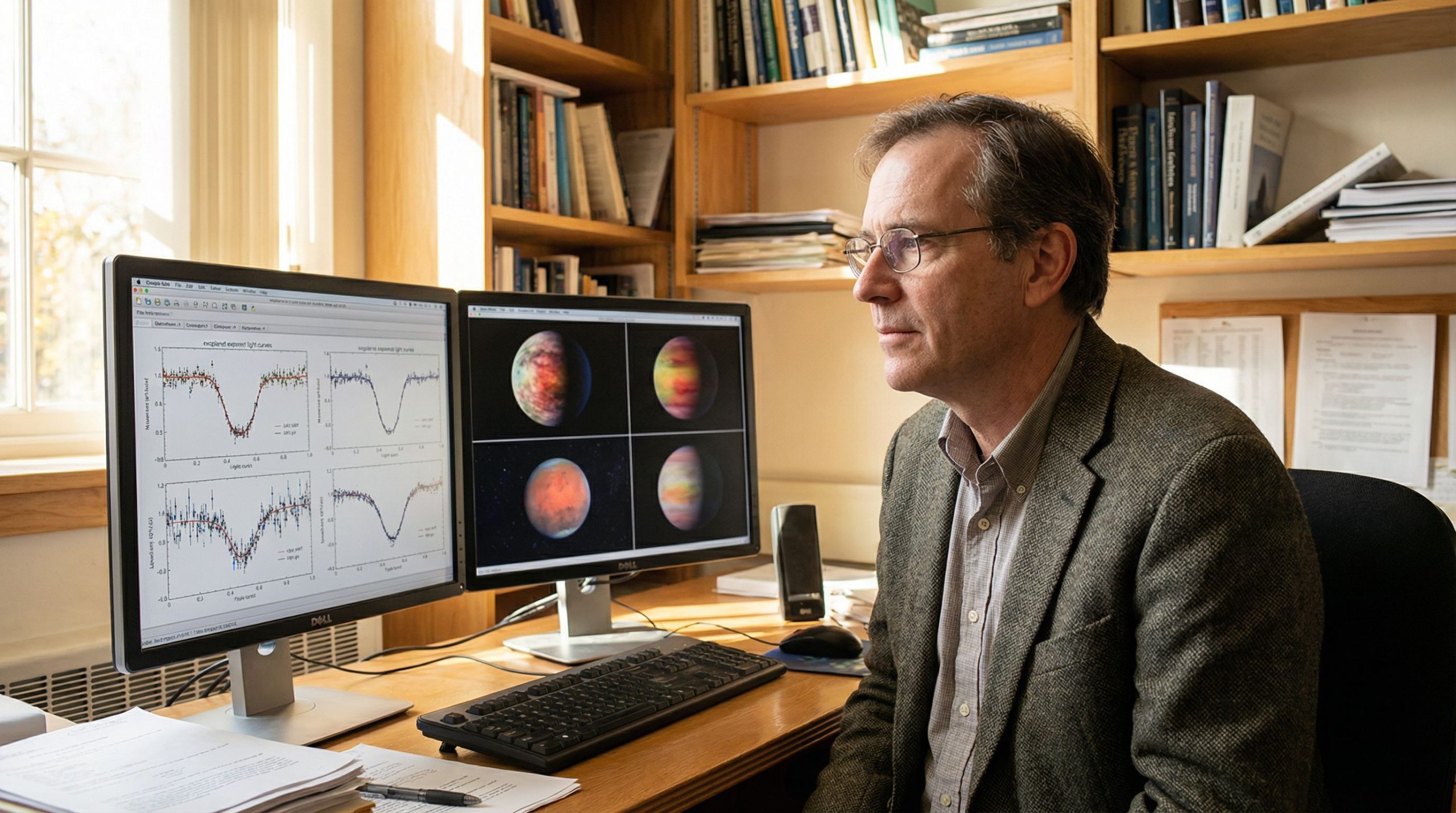
You know, sometimes we need to question what we’ve always believed to be true. That’s what’s happening today with Uranus and Neptune, those two distant and mysterious planets. For decades, they’ve been described in books as the “ice giants” of the solar system. But now, researchers at the University of Zurich are challenging this long-held belief. In a study published in the journal Astronomy & Astrophysics, they argue that these planets could be much rockier—and much less icy—than previously thought. Just imagine!
To give you an idea of how significant this reevaluation is, I spoke with an expert, Professor Nicolas Cowan of McGill University. He wasn’t involved in the study, but he finds it truly interesting. “This hypothesis will certainly spark debate within the astronomical community, since it runs counter to what has been widely accepted for decades,” he told me. That’s how much of a stir it’s causing in the small world of astronomy.
The Ice Line Theory Challenged and a Recipe for Cosmic Vinaigrette

Professor Cowan reminded me of how planets are usually classified. It’s very textbook, actually: Mercury, Venus, Earth, and Mars are rocky planets. Jupiter and Saturn are the big gas giants. And then, way out there, were Uranus and Neptune, the ice giants. This classification was based mainly on their distance from the Sun. Since they’re very, very far away, beyond what’s called the “ice line” (the point where water and other compounds freeze), it was long assumed that they must be full of ice.
But is that really the case? Swiss researchers, led by astrophysicist Luca Morf, do not claim to have definitive proof of a rocky core. Rather, they say that the idea of an ice-rich interior is not the only possibility. Their hypothesis is also consistent with something else: data from the New Horizons probe in 2015. That probe suggested that even the dwarf planet Pluto, which is even farther away, has a massive rocky core about 1,700 kilometers in diameter—which accounts for about 70% of its total diameter. That gives you pause, doesn’t it?
Professor Cowan raises another crucial point, and I find it very telling. Understanding a planet’s interior is a huge challenge. We often picture it like an onion, with distinct layers. But for Uranus and Neptune, it’s probably much more… mixed up. “The interiors of Uranus and Neptune are more like a well-mixed salad dressing,” he explained to me. In other words, because of the extreme pressures and temperatures at the cores of these giants, hydrogen, rock, and ice are all mixed together. The boundaries are blurred. It’s a cosmic soup, not a layered cake.
Hundreds of simulations and new mysteries solved
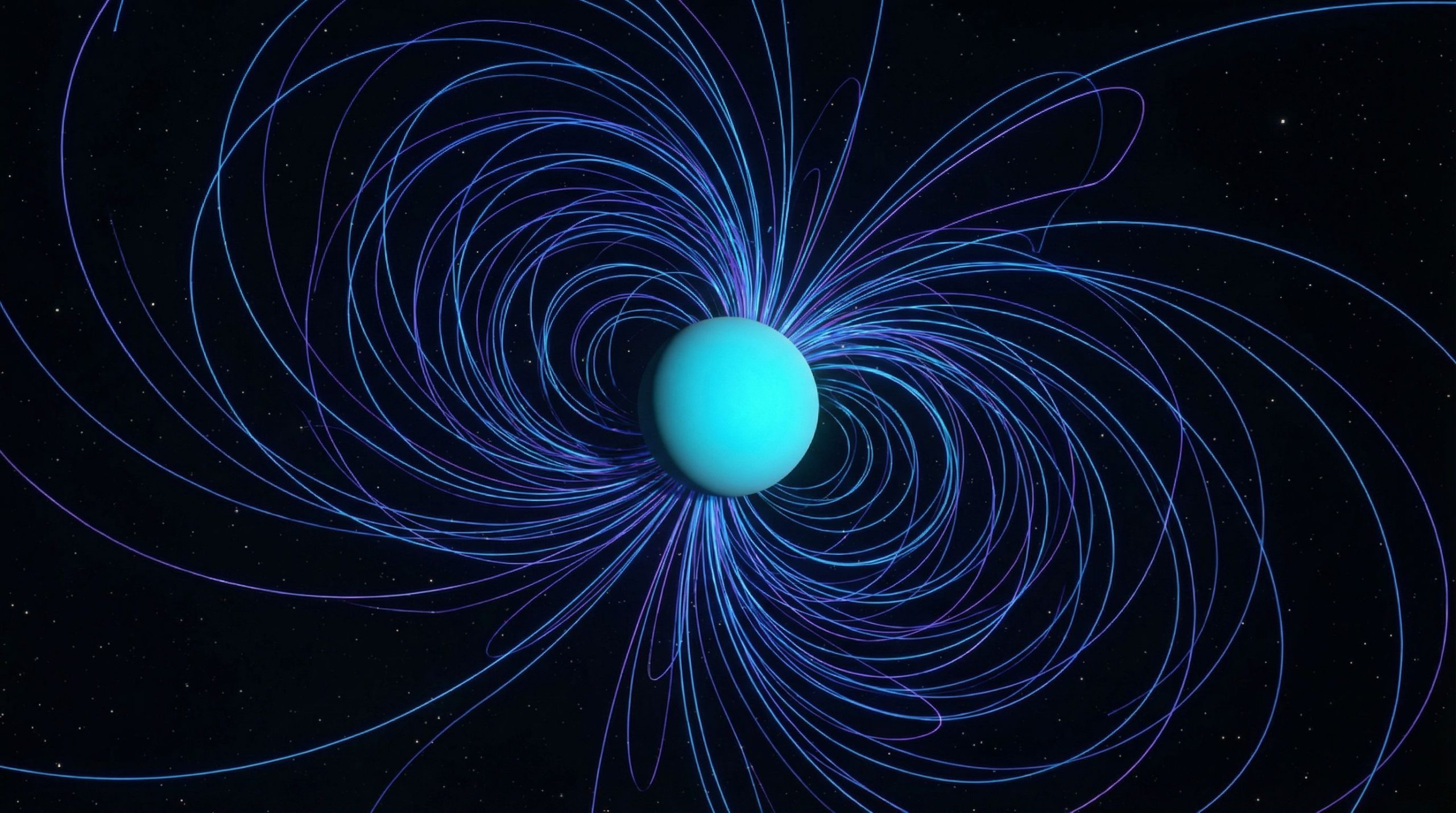
So, how did the Swiss scientists arrive at their conclusion? They used a rather clever approach, inspired by the study of planets outside our solar system—exoplanets. Instead of starting with a complicated model that assumes a specific composition, they proceeded by trial and error—but in a very scientific way. They created hundreds of random profiles for the interiors of Uranus and Neptune, testing different combinations of rock, gas, and ice.
Next, they calculated the gravitational field each model would produce and compared these results with actual observational data for the two planets. By repeating this process hundreds of times, they searched for the combinations that “fit” best. This simplified method showed that ice-free, and potentially rocky, cores could very well explain what we observe. It’s a promising approach, even if, as Nicolas Cowan cautiously points out, all of this remains hypothetical.
“We honestly have no idea what’s inside Uranus and Neptune. We don’t have a magic telescope that can see inside a planet,” he admits frankly. They could be rocky or icy giants, and it remains impossible to determine this beyond a shadow of a doubt with the current data. Luca Morf, the lead author, also acknowledges that there are still many uncertainties, especially regarding how materials behave under such extreme conditions.
But their model does more than just call the composition into question. It could also help solve an old mystery: why are the magnetic fields of Uranus and Neptune so bizarre and chaotic compared to those of other planets? The researchers’ simulations show that layers of water, positioned in specific locations, could act as enormous generators (“dynamos”) and create these highly irregular magnetic fields. They even discovered that Uranus’s magnetic field appears to originate deeper than Neptune’s. Science is often one question leading to another!
The Future: Spacecraft on Their Way and a Technique for Distant Worlds
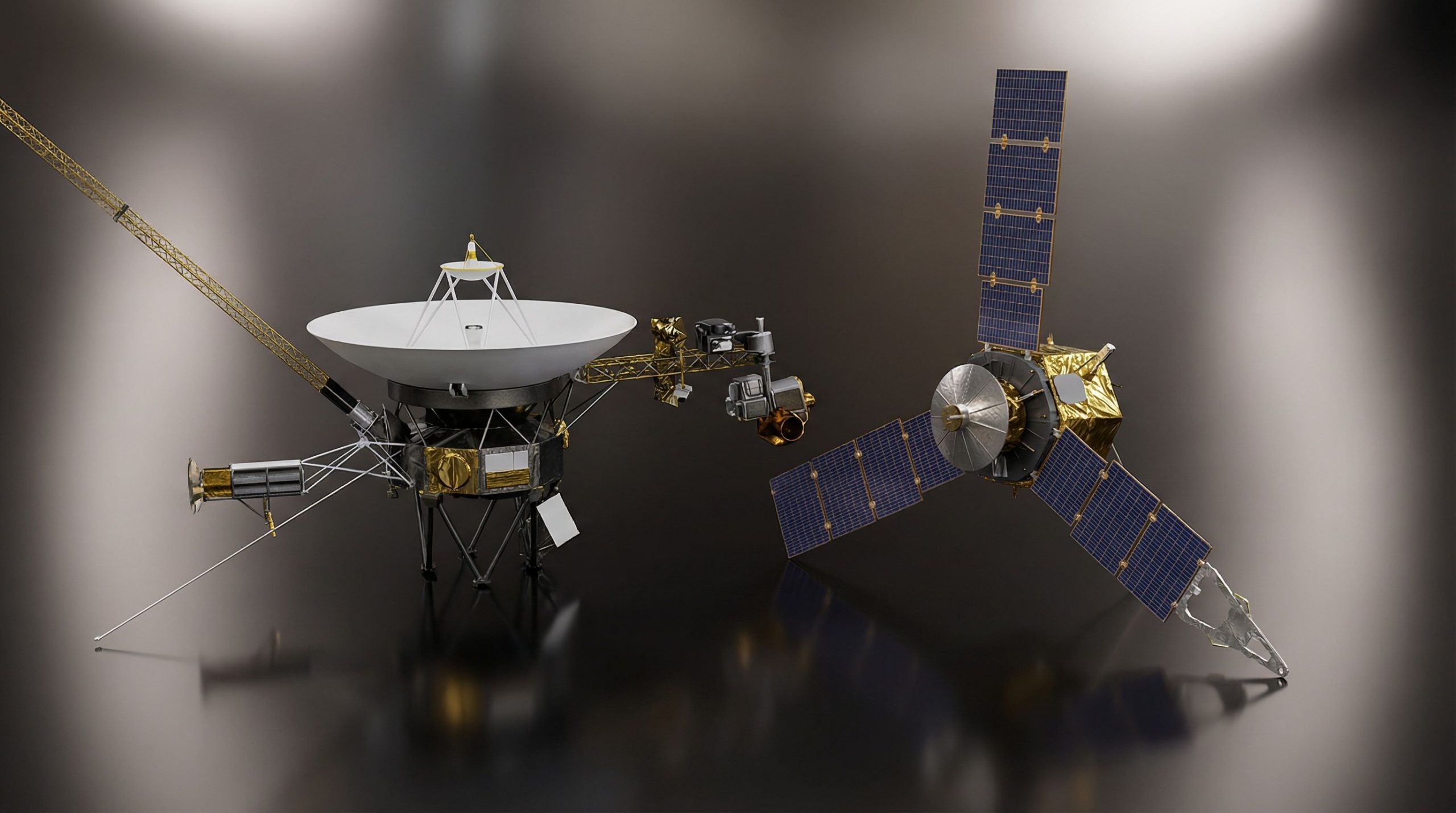
So, how can we get to the bottom of this? Everyone agrees: we have to go see for ourselves. We need to send a probe into orbit around Uranus or Neptune, just as NASA did with Juno around Jupiter. Launched in 2011 and arriving in 2016, Juno revolutionized our understanding of Jupiter, revealing in particular that it didn’t have a true solid core, but was instead… a “well-mixed salad dressing,” to use the famous analogy.
Plans are on the table. NASA hopes to launch an orbiter to Uranus in the 2030s, which would arrive at its destination around the mid-2040s. For its part, China, with its Tianwen-4 mission—also scheduled for launch around 2030—could include a flyby or an orbital mission around Uranus around 2045. That’s a long time from our perspective, but in astronomical terms, it’s just around the corner.
In the meantime, it’s worth remembering that the only close-up visit we’ve ever had took place a long time ago. It was NASA’s Voyager 2 probe, launched in 1977. It flew by Uranus on January 24, 1986, and Neptune on August 25, 1989. Since then, nothing.
Finally, the simulation technique used by the Swiss researchers may have a much broader future. Nicolas Cowan is enthusiastic about this. Usually, to study each planet in our solar system, we use highly complex and specific models. He finds that “a little disappointing.” “I like the idea of a simpler model that can be adapted to several different planets. In the study of exoplanets, that’s very interesting,” he says. This method could be invaluable for characterizing the thousands of mini-Neptunes and super-Earths that have been discovered, about which we have very little information. In fact, the Swiss authors plan to present their work at exoplanet conferences in the coming months.
Conclusion: Knowledge is a never-ending journey
Ultimately, this story reminds us of one essential thing: in science, we must always keep an open mind. What we took for granted yesterday may be called into question tomorrow by a new analysis or a new technique. Uranus and Neptune, those distant and elusive neighbors, still hold much of their mystery. Are they ice giants or rocky giants? We don’t know for sure yet.
But this very uncertainty is good news. It drives us to explore, to develop new methods, and to dream of space missions that, in twenty years, will finally teach us more. In the meantime, the next time you look up at the sky and think of these distant worlds, remember that they might well be made of a completely different mix than what’s written in your old books. The universe is full of surprises.
Are Uranus and Neptune less icy than previously thought? A surprise from Switzerland
This content was created with the help of AI.


