

The Birth of a Party That Promises to Shake Things Up
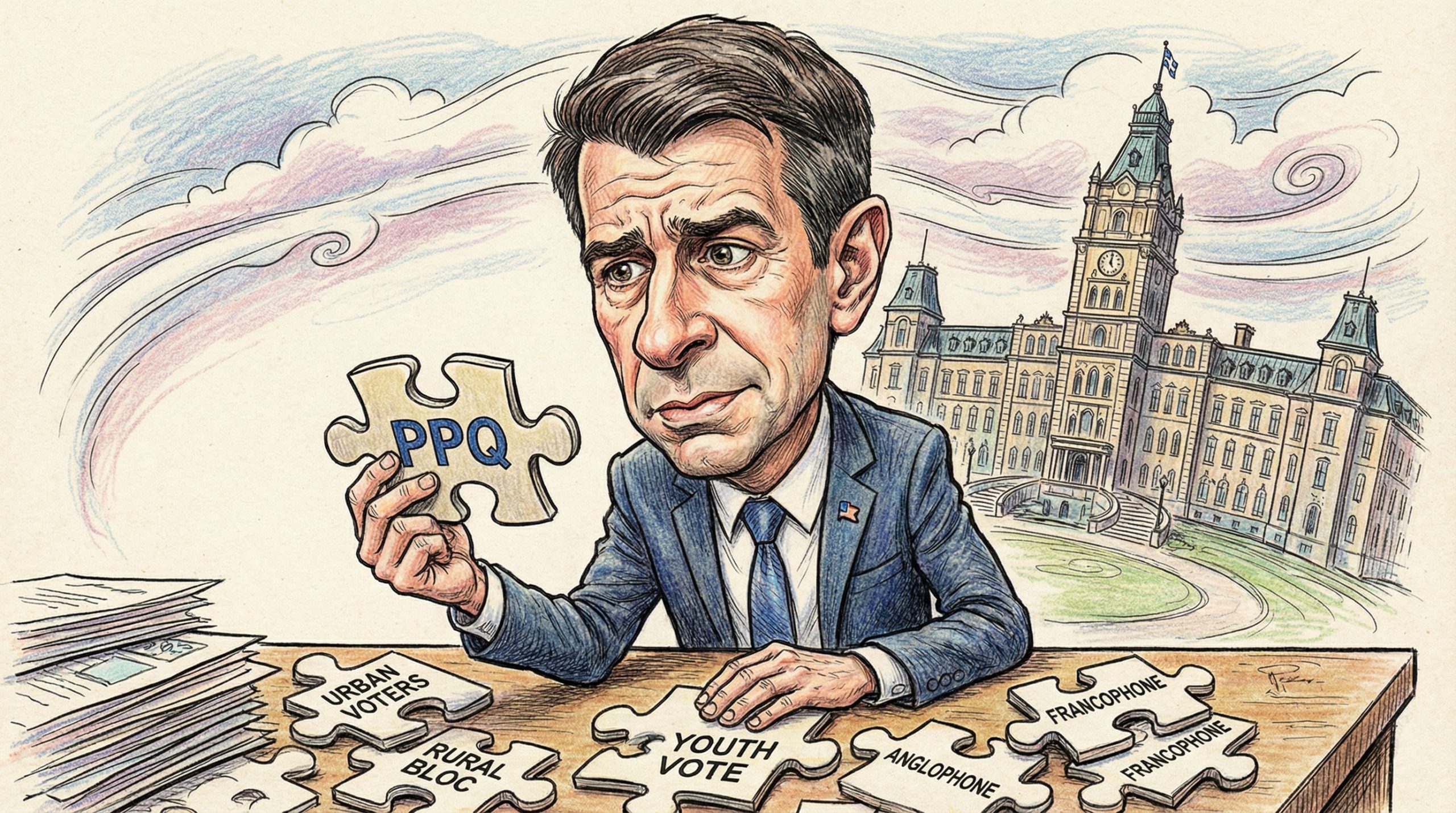
Well, a new political party is entering the Quebec political arena. That’s always a big deal, don’t you think? It seems like the political landscape is never really quiet. This time, it’s the Parti populaire du Québec (PPQ) that has just received official authorization to operate. The news broke last Friday, straight from the office of the Chief Electoral Officer of Quebec (DGEQ, as it’s known to insiders).
What immediately stands out is the party’s stance. Its founders, as you know, describe themselves as nationalists, pro-freedom, anti-woke, anti-vaccine, and opposed to mass immigration. It’s a mix that’s sure to get people talking—to say the least. And one name keeps coming up: that of former federal MP Maxime Bernier. The PPQ’s founders say they have his “blessing.”
The leader of this new venture is Sylvain Pariseau. He’s described as a former candidate for Mr. Bernier’s People’s Party of Canada (PPC), as is his executive director, Daniel Brisson. The latter is even described as Maxime Bernier’s “Quebec lieutenant.” That speaks volumes about their ties, though we’ll come back to that. The idea, according to Mr. Pariseau, is to challenge a political class he considers too homogeneous. He wants to bring “uncomfortable” issues back to the forefront. Can you sense the tone?
The Ties to Bernier and a “Conviction-Based” Party
So, let’s talk about these ties to the federal party. The PPC was indeed informed of the PPQ’s creation, but its spokesperson, Martin Masse, is keen to set the record straight. “This is not a PPC initiative, and we have not devoted any resources to it,” he stated. There is therefore no formal link between the two. Bernier’s party sees itself as purely federal, explains its spokesperson, adding that it has “always maintained the official position of focusing on federal politics and not getting directly involved in provincial politics.”
But here’s the thing: it still encourages its supporters to get involved at all levels. This isn’t the first time a provincial version of the PPC has emerged, mind you. In Ontario, the Populist Party of Ontario was founded in 2022 by former Bernier candidates. Its election results, however, were… let’s just say negligible. A precedent worth pondering.
Sylvain Pariseau, for his part, insists that this new party shouldn’t be seen as a criticism of Maxime Bernier. “It’s just that we’re facing a culture war with two fronts: the federal and the provincial,” he explains. He describes himself as a classical liberal with libertarian leanings and very conservative family values. His enemy? The activism of the “woke” movement, especially in schools, and a “globalist” political class that, in his view, always says the same thing.
One of his key issues is the question of vaccines. He laments that no party is addressing the “harm caused by vaccines,” a highly polarized topic, even though science has largely settled the matter. “As for me, I bring up all these uncomfortable issues,” he says.
The party does not yet have an official platform, but its executive director, Daniel Brisson, assures us that one is in the works. “The Parti populaire du Québec will be a party of convictions,” he promises. Nationalist but not separatist, it will defend “freedom on all fronts.” His catchphrase: “We won’t be afraid to tell the truth, without censorship.”
Immigration is another pillar. Sylvain Pariseau speaks bluntly: “Quebecers are being overrun. Far too many people are arriving. Demand is skyrocketing, especially for housing.” He does, however, express compassion for immigrants, whom he sees “as victims.” “I don’t want to deport anyone… But this has to stop.” Despite these positions, both men reject the label of “right-wing.” They aim for the “center,” speaking of “balance” and “common sense.” A rather… peculiar stance, one might agree.
The founders’ backgrounds: a headache for the right
Who are these men launching this party? Let’s take a look at their backgrounds—they’re often revealing. Sylvain Pariseau ran twice under the PPC banner. In 2021, in Saint-Hyacinthe–Bagot, he received 2.7% of the vote. In 2025, in the same riding—renamed Saint-Hyacinthe–Bagot–Acton—his share of the vote dropped to 0.7%, and he admits he “didn’t really campaign.”
Daniel Brisson, on the other hand, has a more extensive track record… in terms of attempts. He has run for seven elected offices since 2005—at the federal, provincial, and even municipal levels—without ever succeeding. In 2017, he tried to become mayor of Québec City, receiving 0.67% of the vote. And in 2021, he ran against Éric Duhaime for the leadership of the Conservative Party of Québec… unsuccessfully, of course. He also notes that he is no longer a member of that party, having not “renewed his membership card.”
Speaking of Éric Duhaime, the founding of the PPQ may actually be a poisoned gift for him. That, at least, is the analysis of Éric Montigny, a professor of political science at Laval University and author of a recent book on populism. He is not surprised that the PPQ’s founders reject the “right-wing” label. “There is still a traditional left and right when it comes to government intervention, but when we talk about populism, there are commonalities,” he explains.
According to him, these movements like to portray “the elites as responsible for the economic conditions of the working class,” an idea that has historically been more associated with the left. But on immigration, the dividing line is clear: “On the right, people are more likely to blame immigration.” He notes that the federal PPC has “radicalized” in recent years, adopting a very hardline “nativist” rhetoric.
And that’s where the problem lies for Duhaime. The PPQ and the Conservative Party of Quebec will likely court the same electorate and the same activists, the professor believes. Worse still, the emergence of the PPQ could be a “sign of a schism,” just as Éric Duhaime is trying to “broaden his base toward the center.” Given that Daniel Brisson is a former Conservative activist, this hypothesis isn’t far-fetched.
The Road to the 2026 Elections and Practical Details

Now, in practical terms, where does this new party stand? With the DGEQ’s approval, the PPQ becomes the 23rd authorized political party in the province. This gives it the right to participate in the next general election—scheduled to take place no later than October 5, 2026—and to field candidates.
The name “Parti populaire du Québec” had actually been reserved by Sylvain Pariseau back in June. At the time, they had even considered speeding up the process to run in the Arthabaska by-election. But Premier Legault called the election early at the end of the summer, and they were caught off guard. In the end, PQ candidate Alex Boissonneault won that by-election.
So, what will become of this new venture? Will the PPQ manage to exist beyond the page? Will it attract votes or simply further fragment an already divided electorate? The 2026 elections will tell. In the meantime, Quebec’s political landscape has just gained a new color—and it’s certainly not going unnoticed.
A new party is formed in Quebec: the PPQ
This content was created with the help of AI.


