

An Unexpected Response to the Trade War
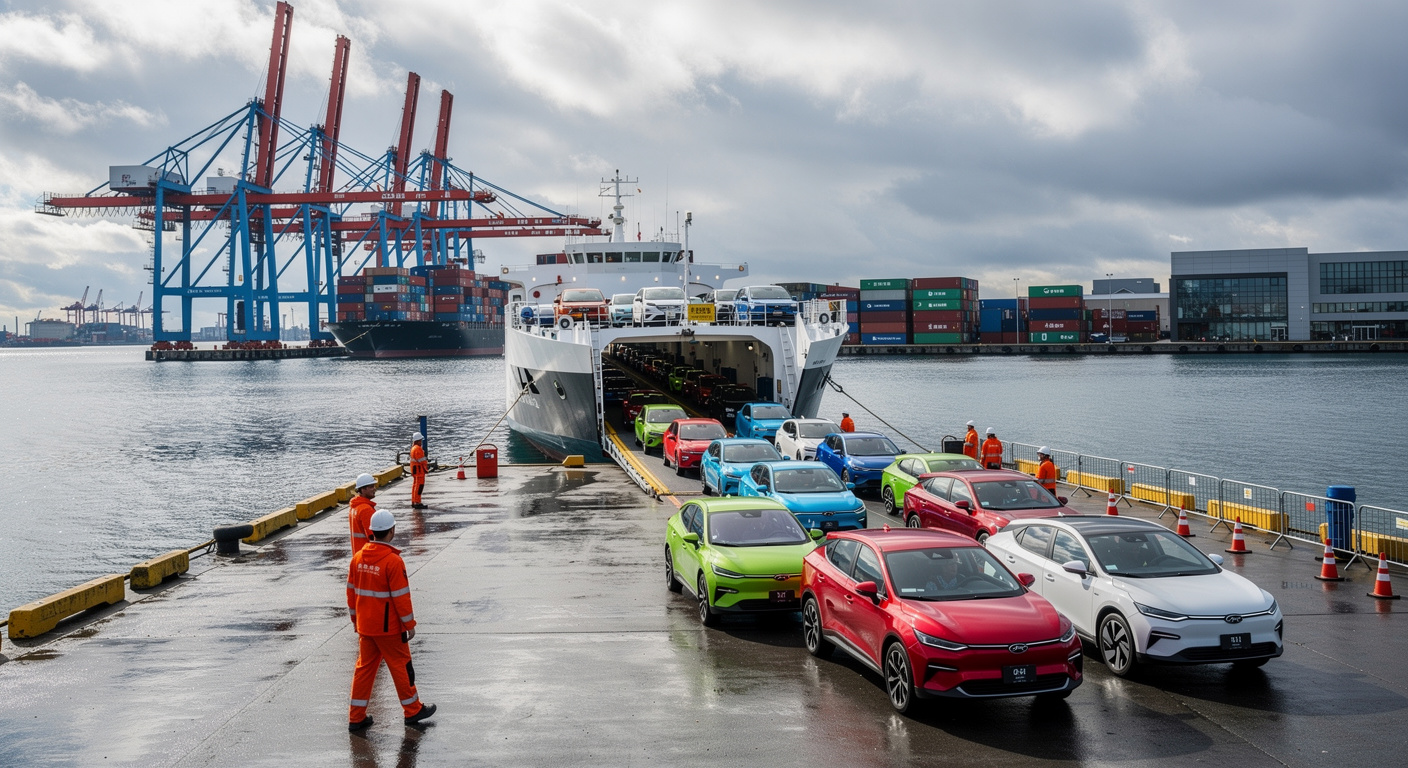
It’s what you might call tit for tat. Canada has found a radical way to give President Donald Trump and his tariffs a taste of their own medicine: rolling out the red carpet for Chinese automakers. Ottawa is now throwing open its market to these low-cost electric vehicles—the very ones that remain effectively banned from U.S. soil.
How does it work? It’s fairly technical but incredibly effective. Under a new trade agreement, Canada has eliminated its 100% punitive tax on cars manufactured in China. Instead? An import cap set at 49,000 vehicles and, most importantly, a modest 6.1% tariff. A drastic change of course.
Previously, with the 100% tax in place, it was unthinkable for brands like Chery, Great Wall, or BYD—which recently surpassed Tesla to become the world’s leading electric vehicle manufacturer—to sell in Canada. Under this new system, Chinese vehicles could account for about 3% of annual car sales in Canada.
Panic Among the Detroit Giants
This decision isolates the United States. It is now the only major automotive market that still prevents the easy sale of Chinese cars. But the problem is that these inexpensive electric vehicles are now just across the border. Ford CEO Jim Farley didn’t mince words: for him, this could pose an “existential threat.”
Mary Barra, GM’s CEO, made no secret of her concern last Tuesday. In her view, allowing tens of thousands of cheap Chinese electric vehicles into the market poses a direct threat to the North American manufacturing industry. “I can’t explain why this decision was made in Canada,” she said, adding that it was a “very slippery slope.”
A Geopolitical Chess Game
Canadian Prime Minister Mark Carney presents this agreement with China as a way to counter U.S. influence. At the World Economic Forum in Davos, he made strong remarks: “U.S. hegemony, in particular, has helped provide public goods, open sea lanes, a stable financial system… That system no longer works.”
However, Mr. Carney was quick to clarify afterward that Canada had “no plans” to sign a comprehensive free-trade agreement with China. This clarification was necessary, as Donald Trump had threatened to impose a 100% tariff on Canadian exports if Ottawa were to conclude a broader pact with Beijing.
Why the border is such a concern

It’s important to understand that the United States and Canada share an extremely interconnected automotive industry. Parts and cars typically cross the border without a hitch thanks to long-standing trade agreements. Canada remains a huge market for Detroit automakers: in 2025, Ford, GM, and Stellantis sold more than 700,000 vehicles there.
However, this well-oiled system was put to the test last year. U.S. tariffs on vehicles and parts manufactured in Canada forced automakers to scale back operations. GM stopped producing its electric vans at a plant in Ontario and reduced staffing at a pickup truck plant. Meanwhile, Chinese automakers, despite gaining ground worldwide, have been blocked from entering the U.S. market by very high federal tariffs—until now.
Source: dailymail.co.uk
Created by humans, assisted by AI.
Canada Hits Back at Trump Over Tariffs with a Controversial Decision on Cars


