

A more transparent bill—or just a way to pass the bill on?
Have you noticed that your grocery bill is getting more and more expensive? Of course. But do you know exactly why? That’s the crux of the debate launched by Quebec businesses. Faced with skyrocketing costs to fund recycling programs, they no longer want to foot the bill alone. Their proposal: adding “eco-fees” that appear directly on your receipts.
For the Quebec Food Processing Council (CTAQ), the current situation lacks clarity. Annick Van Campenhout, vice president of the organization, is adamant: it’s not right for consumers to be unaware of why prices are rising. According to her, people complain about inflation without realizing that part of this increase goes toward covering the growing costs of selective collection, managed by Éco Entreprises Québec. “Apart from bottle deposits, citizens aren’t involved in the civic act of recycling,” she laments.
The idea is simple: instead of quietly factoring these costs into the price of your cereal box or jar of jam, the industry would like them to be explicitly stated. As is already the case with tires and electronic devices. For the CTAQ, there’s a limit to how much companies can absorb. Annick Van Campenhout even refers to a “missed opportunity” and believes that recycling is a societal issue that concerns everyone, not just manufacturers.
Blue bins, deposit systems, or eco-fees: how do you make sense of it all?
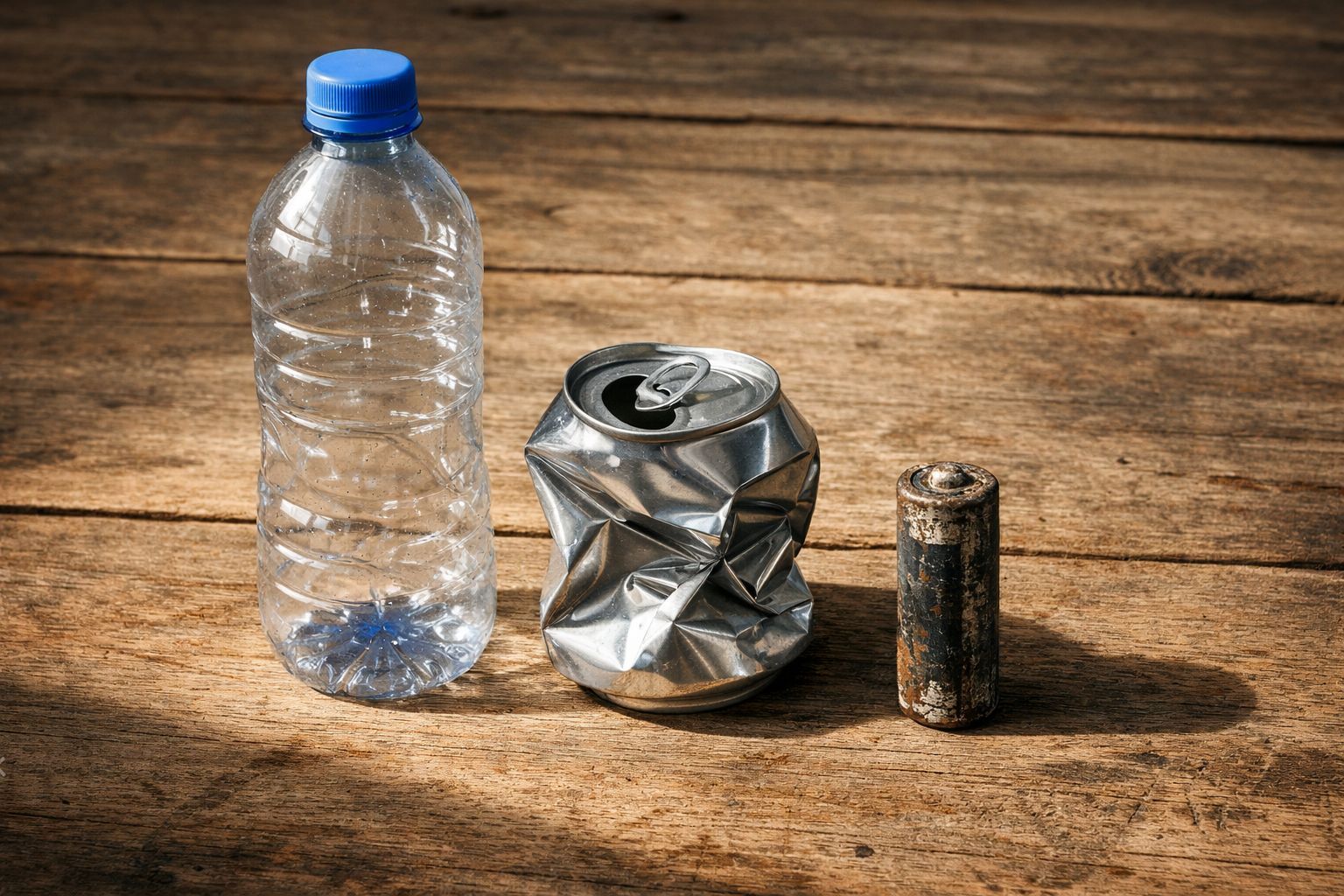
Before making a decision, it’s important to understand how the current system works. Today, your waste follows three distinct paths to avoid the landfill. First, there’s the well-known selective collection (the blue bin). Since January 2025, it has accepted all containers, packaging, and printed materials. This is funded by producers through Éco Entreprises Québec, but the cost is hidden in the price of the products. The system will also be expanded to include polystyrene and hangers in 2027, straws and utensils in 2029, and compostable plastics in 2031.
Then there’s the deposit system. You pay 10 or 25 cents at the time of purchase, and you get that amount back when you return the empty container. This system has been updated to include all aluminum and plastic beverage containers (100 ml to 2 L). Glass and multilayer cardboard will follow in 2027. Here, sorting is excellent, approaching 100% recycling according to Francis Vermette of Recyc-Québec, because the materials are separated at the source.
Finally, there are the famous eco-fees. This is the model used for batteries, paint, and refrigerators. You pay a visible, non-refundable fee to fund recycling. It’s this model that the food industry is eyeing for its packaging.
A logistical and ethical nightmare?
The idea of extending eco-fees to your yogurt or granola bar has experts up in arms. “How do you determine that a particular piece of packaging will cost a certain amount in eco-fees?” asks Karel Ménard, executive director of the Quebec Common Front for Ecological Waste Management. With the multitude of products on store shelves, managing this would become a real headache. Francis Vermette, of Recyc-Québec, agrees: currently, these fees are internalized. Consumers pay, of course, but without the administrative complexity.
But beyond the logistics, it’s the philosophy that’s troubling. For Julie-Christine Denoncourt of Équiterre, transparency is desirable, but not if it serves to shift responsibility away from manufacturers. This is the principle of “Extended Producer Responsibility” (EPR): those who bring a product to market must manage its end-of-life. If the customer is billed directly, the pressure on manufacturers is reduced. “They aren’t the ones who design the packaging in which products are sold to them,” she points out, emphasizing that companies should instead use available subsidies for eco-design.
Karel Ménard goes further: in his view, the eco-fee is often perceived by the public as nothing more than a tax. Worse still, it guarantees nothing. “You can collect a product and then send it to the landfill,” he says, criticizing the often-low recovery rates for products subject to eco-fees, unlike the deposit-return system, which is self-financing and encourages return.
So, which system is better?

While the industry advocates for transparency in eco-fees to show consumers the true cost—and perhaps encourage them to make better choices or buy in bulk, according to Équiterre—experts remain skeptical. Karel Ménard believes that the financial burden already falls too heavily on consumers. For him, the real solution lies in durable, repairable products and an end to planned obsolescence.
Ultimately, these three systems (recycling bins, deposit-return, and eco-fees) have recently begun coexisting in their modernized forms. As Francis Vermette points out, “This is all very new, and it’s still hard to figure out which system might be the best.”
Source: ici.radio-canada.ca
Recycling: Why the Industry Wants to Add New Charges to Your Bill
This content was created with the help of AI.


