Skip to content

An Investigation into the Heart of the Jurassic

How did gigantic carnivorous dinosaurs, such as Tyrannosaurus rex, manage to consume enough calories to reach their colossal size? Scientists believe they have part of the answer, and it lies millions of years before the reign of T. rex. Fossils indicate that long-necked baby dinosaurs were a vital food source for several large predators during the Late Jurassic period.

This abundance of young, common, and easy-to-catch herbivores likely provided the hunters of that era with a much more accessible food supply than that available to the giants that evolved millions of years later. It was at the Dry Mesa Dinosaur Quarry site in western Colorado that the pieces of the puzzle began to fall into place. This site is renowned for its rich bone beds, where a dense layer of remains has preserved predators and prey in the same location.

By analyzing these remains to reconstruct food webs, a team from University College London (UCL) highlighted the indispensable role of young long-necked dinosaurs. Cassius Morrison, a postdoctoral researcher in Earth Sciences at UCL, was thus able to link several large predators to these same small prey animals. This discovery suggests that the most dangerous period in the life of a long-necked dinosaur was not the end, but rather the very beginning.

The Perfect Prey: Small, Slow, and Defenseless

Sauropods—those giant herbivores with long necks and massive tails—began their lives in a state of great vulnerability. They hatched from surprisingly small eggs, leaving the newborns highly exposed. A study has shown how this combination of small eggs and slow growth left the young animals defenseless for years after hatching.

“When these animals walked, the ground shook beneath their feet, but despite this, they laid relatively small eggs, no more than a foot in diameter [about 30 centimeters],” explains Cassius Morrison. With no way to grow quickly enough to protect themselves, these juveniles provided a constant and reliable source of food for the large predators in their ecosystem.

For a hunter like Allosaurus, attacking an adult sauropod was too risky a venture for a single individual. A juvenile was a much safer target. For their part, armored dinosaurs like Stegosaurus, with their spiked tails and bony plates, were prey that required significant energy to hunt and carried a high risk of injury. Predators therefore had every reason to target unprotected juveniles. Fossils of carnivores bearing signs of severe injuries confirm that hunting was never without danger, and regular access to smaller prey ensured their survival.

Reconstructing the Diet of the Time

To move from a simple pile of bones to a true food web, the UCL team used a wide range of clues. Tooth wear, fossilized stomach contents, bone isotopes—chemical signatures that vary depending on diet—and, of course, the size of the animals made it possible to link each bone to a potential meal. This meticulous work resulted in the creation of more than 12,000 unique food webs.

In this analysis, long-necked dinosaurs had far more connections than armored herbivores. Such figures transform fossil accumulations into a testable ecological tool, far more reliable than mere speculation about who ate whom. The setting is the Morrison Formation, a sequence of rocks deposited about 150 million years ago, where these immense herbivores constituted the largest bodies in the ecosystem.

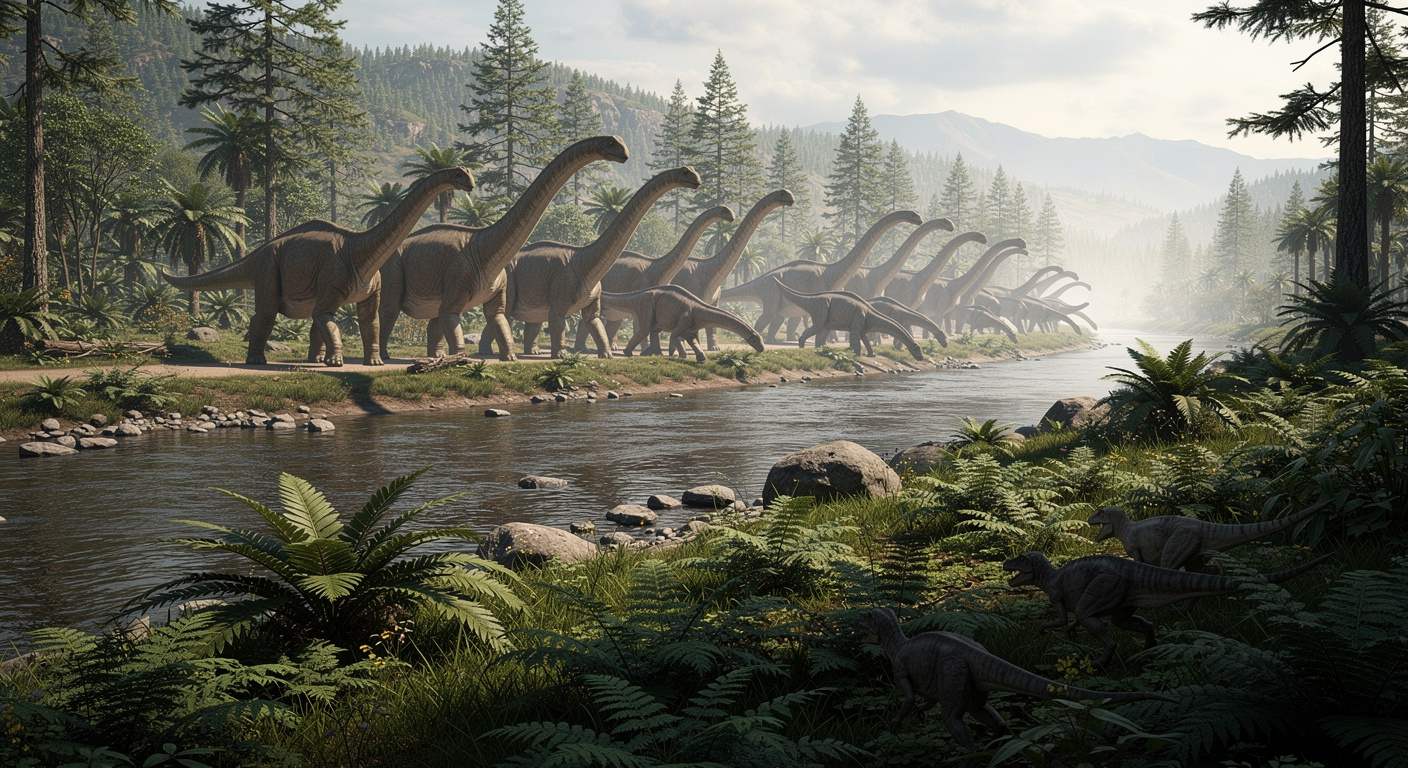
Different species of sauropods, such as Diplodocus and Brachiosaurus, fed at different heights, allowing them to coexist without competing for the same plants. By trampling the ground, grazing, and snapping off branches, these giants acted as “ecosystem engineers”—animals that physically reshape their habitat. Such a concentrated weight on a single group meant that the survival of the entire system depended not only on the plants but also on the number of young that reached adulthood.

A world very different from that of the T. rex
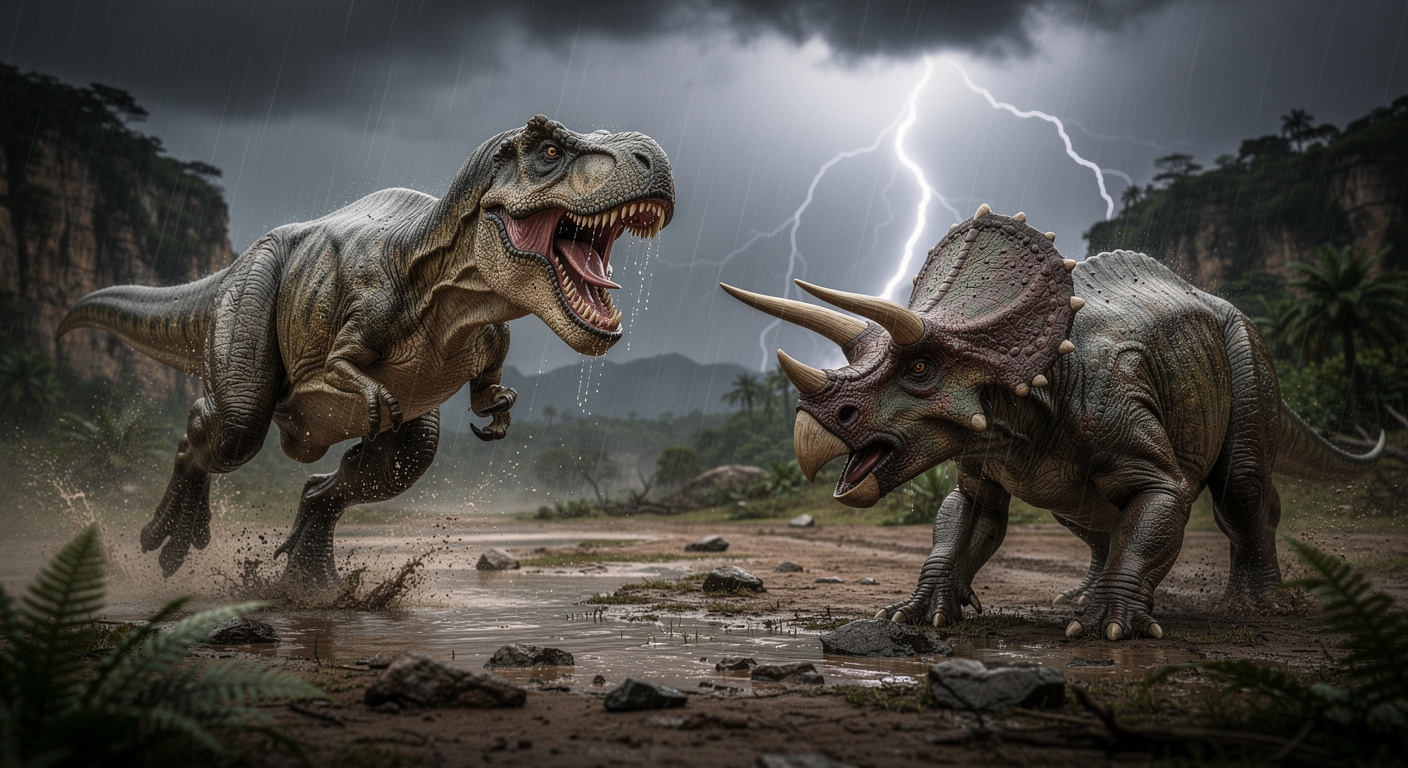
The picture changes radically if we fast-forward 70 million years to the time of Tyrannosaurus rex. Predators from this later period faced a very different environment. Easy prey such as young sauropods were less numerous, and the large herbivores had far more formidable defenses.

This new reality fostered the evolution of different adaptations among carnivores. More powerful jaws and keener senses helped hunters like T. rex take on opponents closer to their own size. In comparison, the abundance of easy prey during the Jurassic placed less pressure on predators to regularly attack dangerous adults.

This striking contrast establishes a direct link between a predator’s anatomy and the opportunities offered by its environment. The available prey options can thus favor power in one era and speed in another.

What the Fossils Don’t Tell Us Yet
Even a site as rich as Dry Mesa captures only a snapshot in time. The bones found there accumulated over a period of less than 10,000 years. Furthermore, the fossil record is incomplete: scavengers and floods may have washed away the remains of the smallest victims, meaning that the number of newborns actually devoured by predators is likely underestimated.

A single excavation site also blends seasons and periods of drought into a single geological stratum, potentially masking brief episodes of chaos. This new food web therefore functions better as a snapshot than as a comprehensive census of the entire Western Jurassic. Nevertheless, the approach is promising. It gives paleontologists a way to test ideas about ecosystem balance, based on quantifiable data rather than just spectacular skeletons.

New discoveries could reveal whether young sauropods were always this abundant, or whether Dry Mesa was a special case. Finds of eggshells, bite marks, or stomach contents would help strengthen connections that currently rely on indirect evidence. Every additional detail would bring ancient ecology closer to understanding behavior, transforming bones into evidence of daily survival. Viewed through the lens of feeding habits, the end of the Jurassic period appears as a system sustained by its youngest giants. The study is published in the New Mexico Museum of Natural History and Science Bulletin.

Source: earth.com

Scientists believe they have figured out how the T. rex consumed enough calories to reach its enormous size

facebook icon twitter icon linkedin icon
Copied!

Commentaires

0 0 votes
Article Rating
Subscribe
Notify of
guest
0 Comments
Newest
Oldest Most Voted
Inline Feedbacks
View all comments
More Content