

Why You Go Along With the Crowd Without Even Realizing It: The Secrets of Collective Intelligence


The Mystery of Invisible Contagion
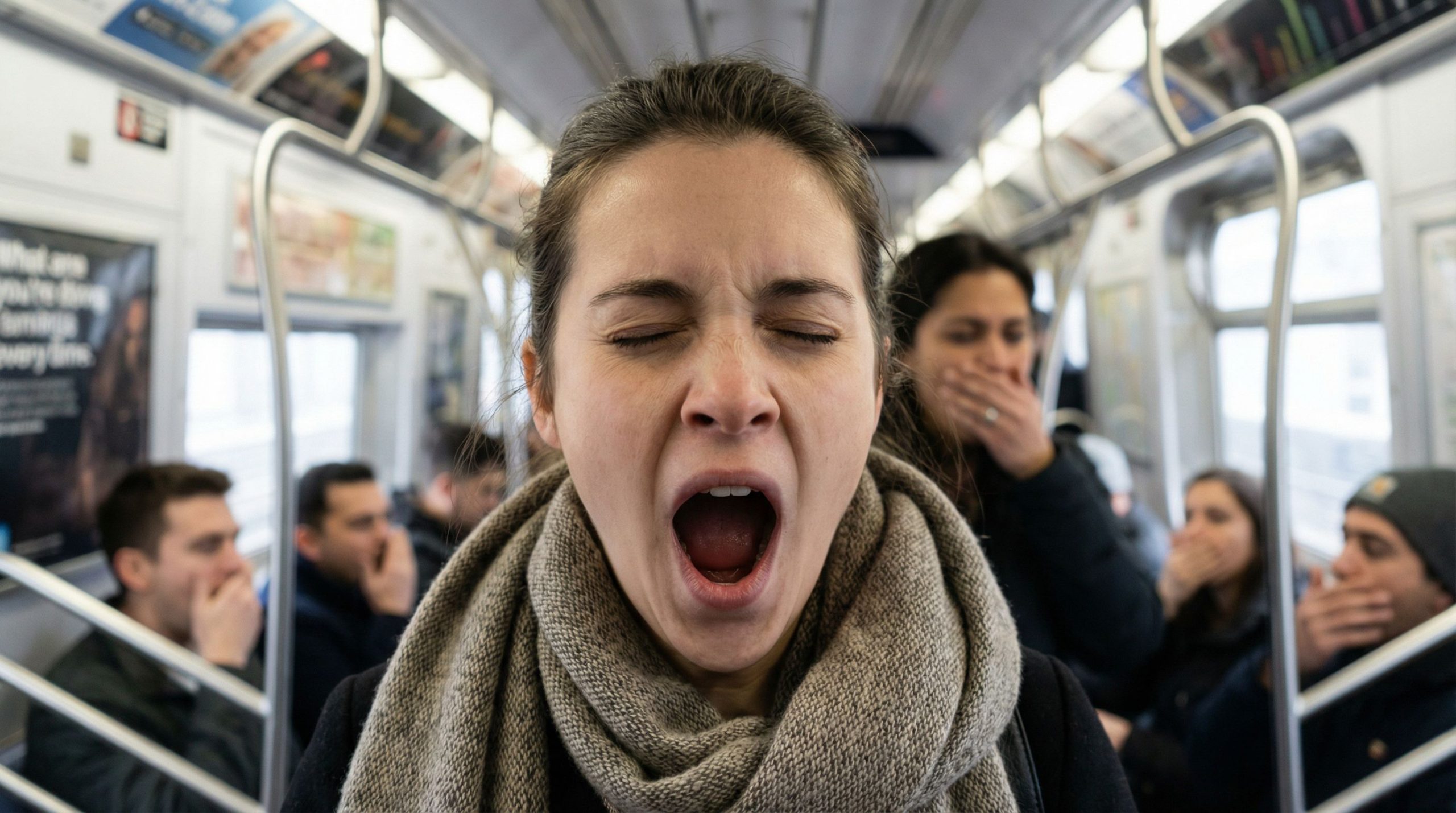
Have you ever yawned simply because the colleague across from you did? Or stood up in a stadium, almost automatically, to join a wave? It’s strange, isn’t it? We think we’re in control of our movements, and yet… These small, everyday gestures—which we often dismiss as trivial—actually hide a fascinating mechanism. This is what scientists call the spread of social information.
In a captivating article for The Conversation, Guy Théraulaz, a researcher at the CNRS and a specialist in animal cognition at the University of Toulouse, opens the door to this invisible world. Spoiler alert: whether we’re humans, fish, or insects, we often operate in the same way. No need for a leader, no orders shouted through a megaphone. It all hinges on our ability to copy, interpret, and react to what our neighbors are doing. It’s a kind of chain reaction—sometimes subtle, sometimes spectacular—that allows entire groups to make decisions with remarkable efficiency.
From the democracy of wild dogs to the wave at the stadium
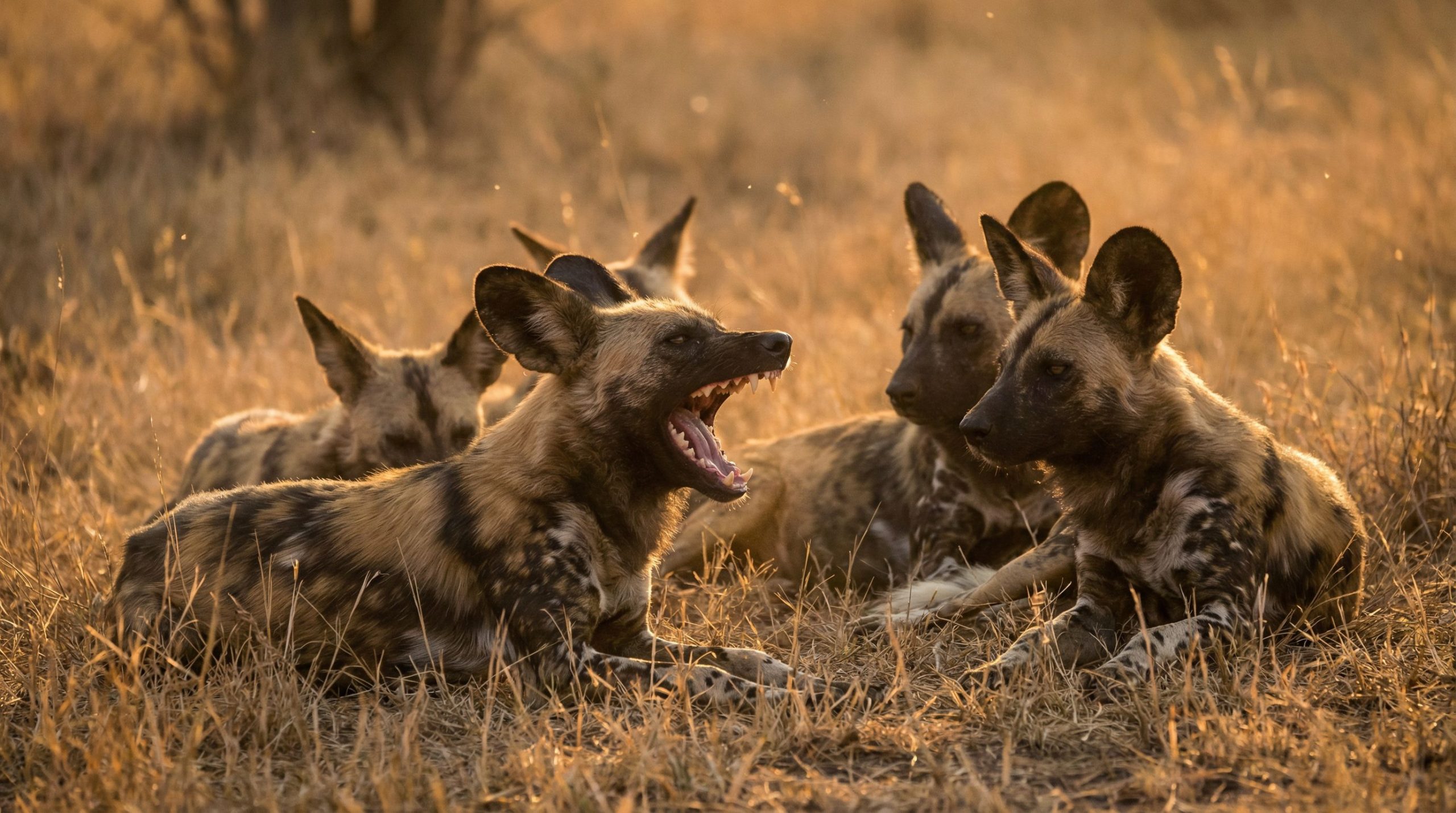
Let’s take simple contagion. This is level one, so to speak. Yawning is a perfect example. We see it in humans, of course, but also in chimpanzees and, more surprisingly, in African wild dogs (Lycaon pictus). These African wild dogs have an incredible social structure. Before setting out to hunt, they organize a sort of vote… through yawning! Guy Théraulaz explains that the more yawns there are, the more likely the group is to spring into action. Each animal becomes a small link in a collective decision. There’s no charismatic leader here, just mutual imitation that sets the action in motion.
Nature is full of examples like this. Have you ever heard of the giant Asian honeybees, Apis dorsata? When faced with an attack by hornets, they don’t panic. They trigger a visual wave by raising their abdomens in unison. This is called “flickering.” It’s a collective alarm that drives off predators. It’s astonishingly effective.
And what about us? Well, we do the same thing in the stands at soccer games. The famous “ola.” A small group stands up, arms in the air, and just like that, the momentum spreads. For it to work, there needs to be a moderate level of excitement—neither too calm nor too hysterical. The spectator then acts exactly like a heart or nerve cell: they go from inactive to active, then enter a “refractory” phase (a forced rest) before they can start again. We are literally cells of a giant organism for the duration of a game.
The Mystery of Perfect Synchronization and the Follow-Me Fish
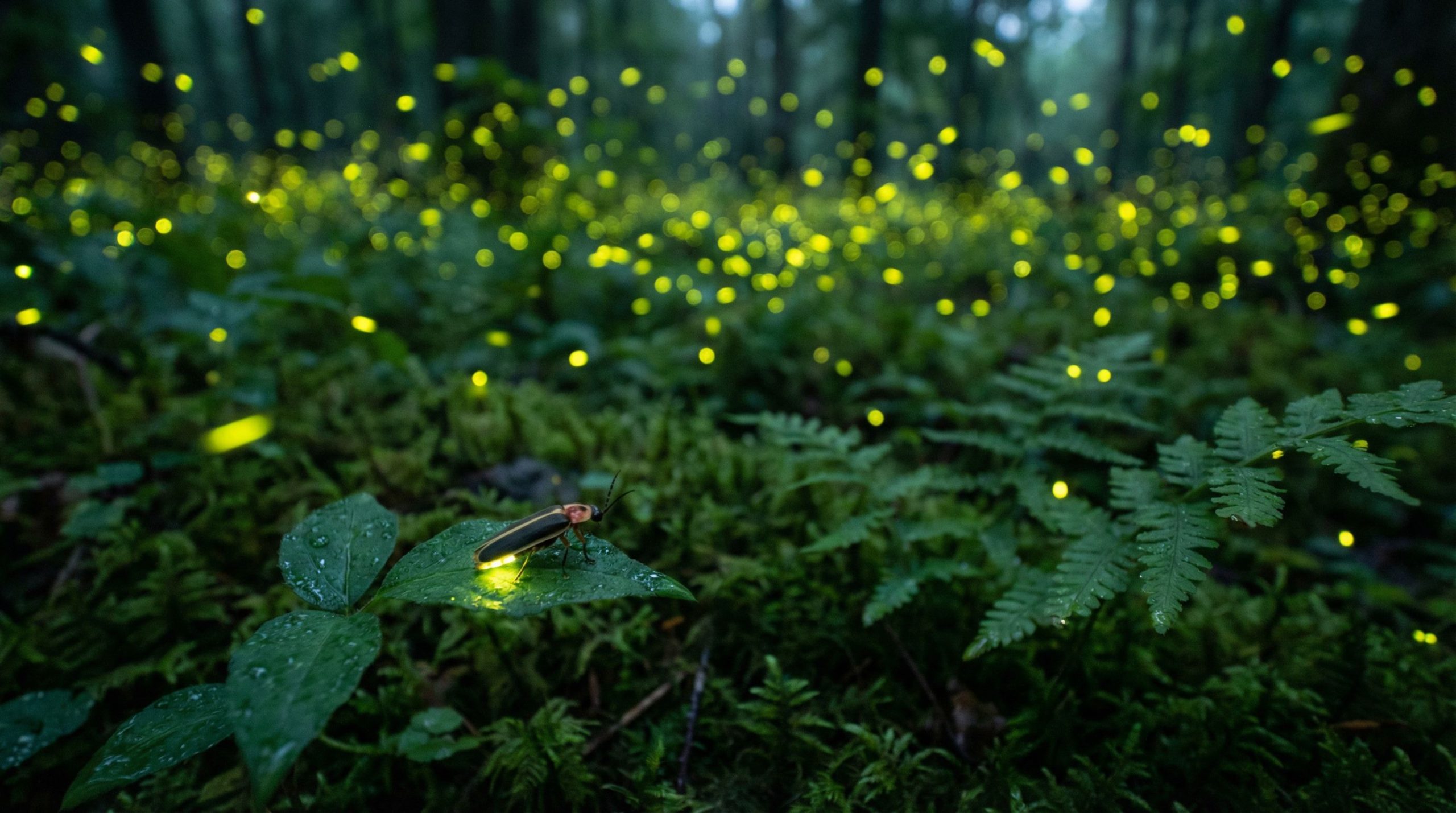
Sometimes, the group goes beyond simple imitation: it synchronizes. That’s when it becomes almost poetic. Imagine a summer night in the United States. Male fireflies of the species Photinus carolinus flash to attract mates. At first, it’s chaos. But as soon as there are enough of them, a miracle happens: they start flashing all together, in bursts, every 12 seconds. Each firefly acts like an oscillator that adjusts its rhythm to match that of the others. If it sees a flash a little too early, it delays its own, and vice versa.
That’s exactly what we do at the end of a concert. Have you noticed? At first, the applause is disorderly, but then—without any conductor involved—everyone claps at the same time. We become human metronomes. In fact, the slower we clap, the better we synchronize.
But when the group moves, it’s a whole different story. Among fish or birds, who decides the course? No one. And everyone. Take the yellow minnow (Notemigonus crysoleucas), a small North American fish. A single fish changes direction, and the entire school turns in a domino effect. No leader, just social physics. Studies conducted in Toulouse at the Center for Research on Animal Cognition have shown, through video analysis, that each fish monitors only a few neighbors. It aligns with those in front and to the sides, but ignores those behind. It’s a smart strategy: it reduces the cognitive load on the brain while ensuring a rapid response.
Depending on the intensity of these interactions, the group changes shape: a scattered cloud, a circular vortex, or a polarized school swimming in a straight line. They can even reach a state of “maximum alertness,” a critical point where the slightest stress (a predator, a shadow) causes the entire group to react instantly. A distributed intelligence, ready to flee even before the danger is seen.
Conclusion: Chemical Trails and the Trap of Habit
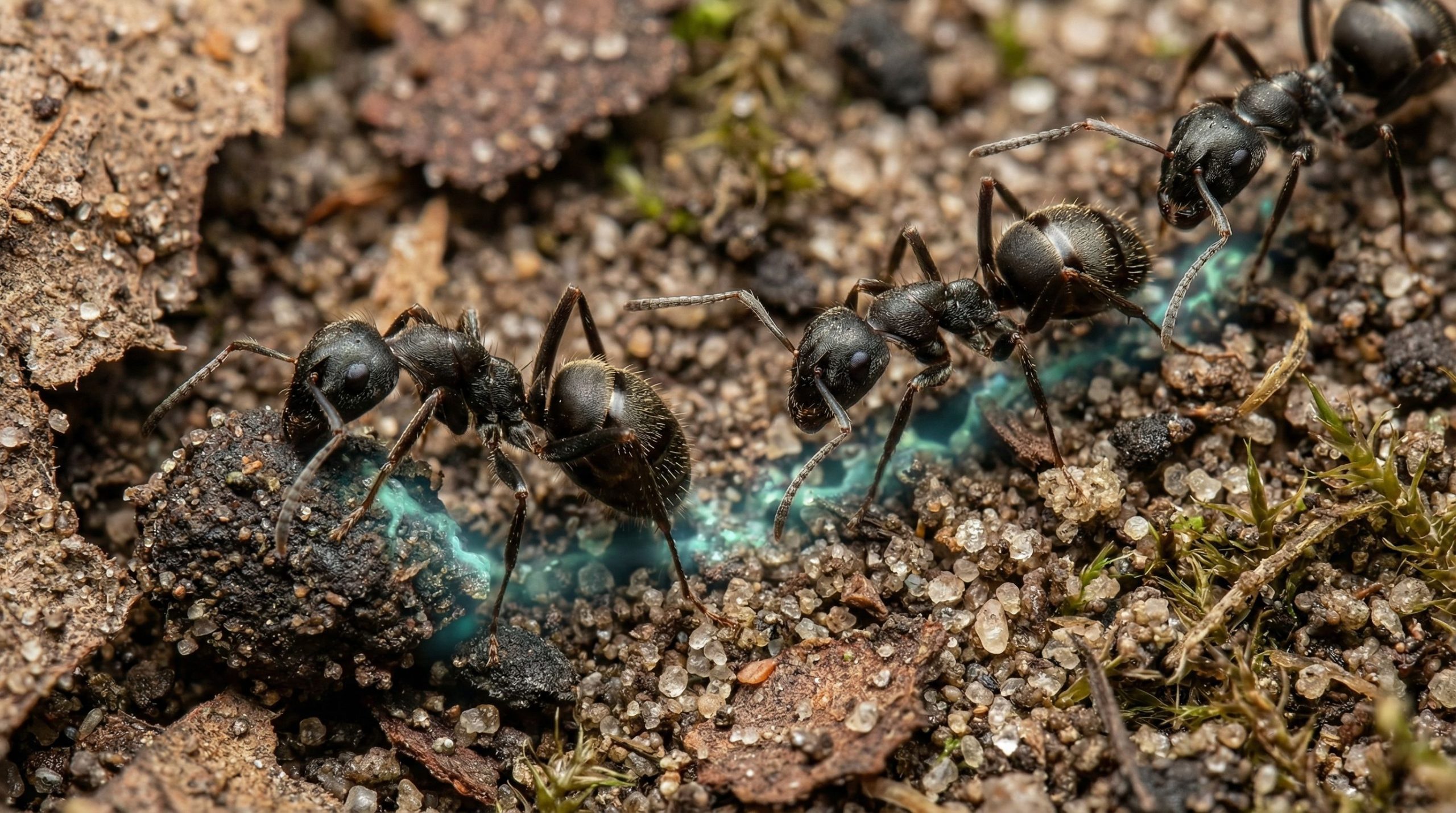
Finally, information doesn’t always travel through the eyes. Sometimes, it’s… chemical. This is the realm of ants and termites. Biologist Pierre-Paul Grassé called this stigmergy. The principle is brilliant: you leave a trail in the environment for others to follow. When a Lasius niger ant finds sugar, it returns to the nest, leaving a trail of pheromones behind. Its fellow ants follow the trail, reinforce it, and boom—a highway is created.
They’re even capable of choosing the best food source without consulting one another. If the sugar is plentiful, the trail is chemically more pronounced. But watch out—there’s a catch! This system can backfire. If a well-established trail leads to a mediocre food source, and a fantastic one appears later… it’s too late. The colony’s “chemical memory” is too strong; they remain stuck on the wrong option. Colonies can be a bit stubborn.
Ultimately, from fireflies to human traffic jams, everything hinges on these local adjustments. Understanding these mechanisms is useful not only for biologists but also for our urban planners and AI engineers. Because knowing how information circulates or fades away is the key to building smarter systems—and perhaps, a society that flows a little more smoothly.
Why You Go Along With the Crowd Without Even Realizing It: The Secrets of Collective Intelligence
This content was created with the help of AI.
