

The Flicker of a Primordial Cosmic Giant
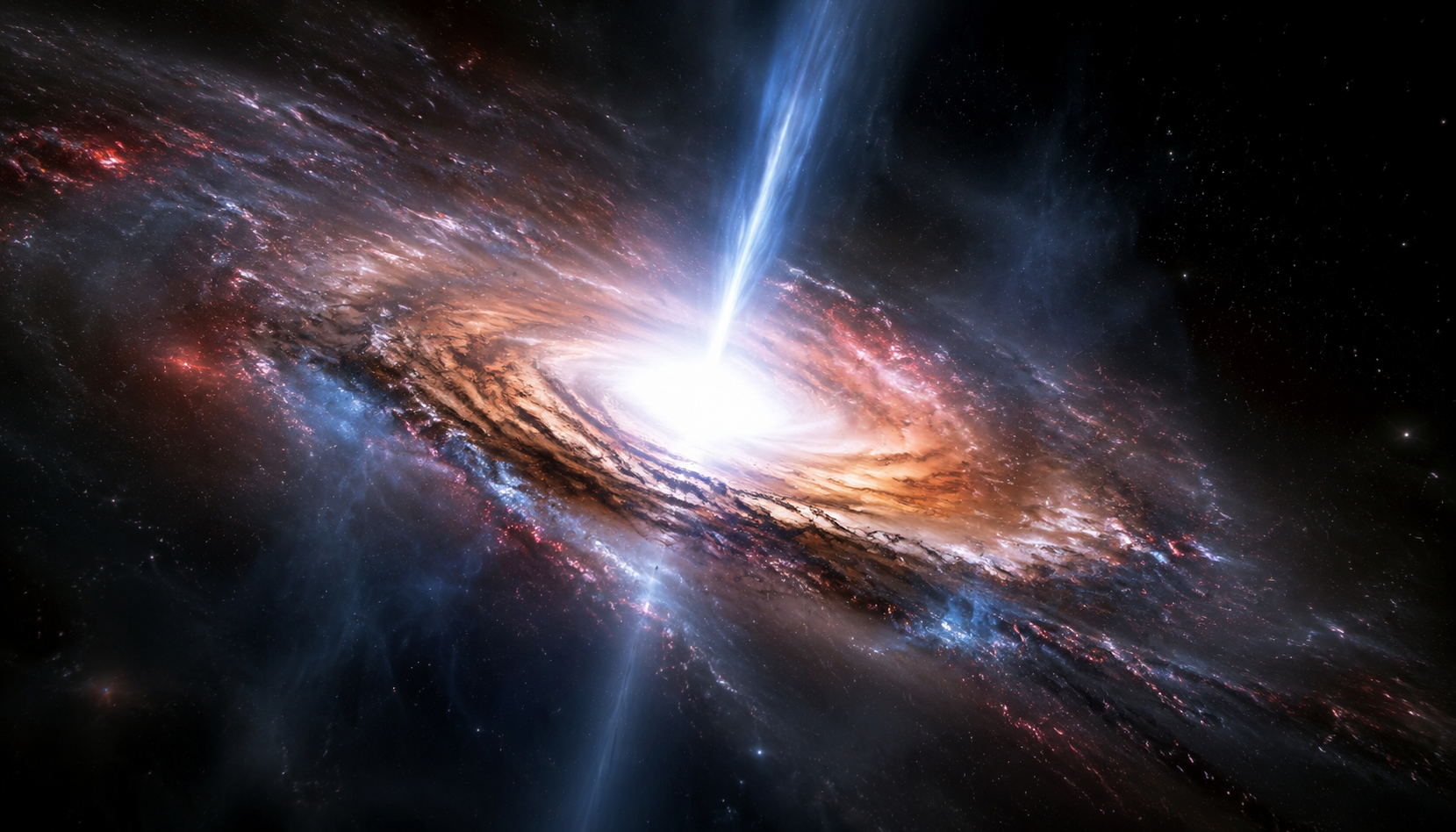
Researchers at MIT, in collaboration with several other institutions, have traced this newly studied object back to a period that astronomers call the cosmic dawn. Gene Leung, a postdoctoral researcher at MIT’s Kavli Institute for Astrophysics and Space Research, highlights the rarity of the event: “Although many quasars have been discovered in the cosmic dawn, this is the first time we’ve seen one twinkle.”
The Architectural Influence of Supermassive Black Holes
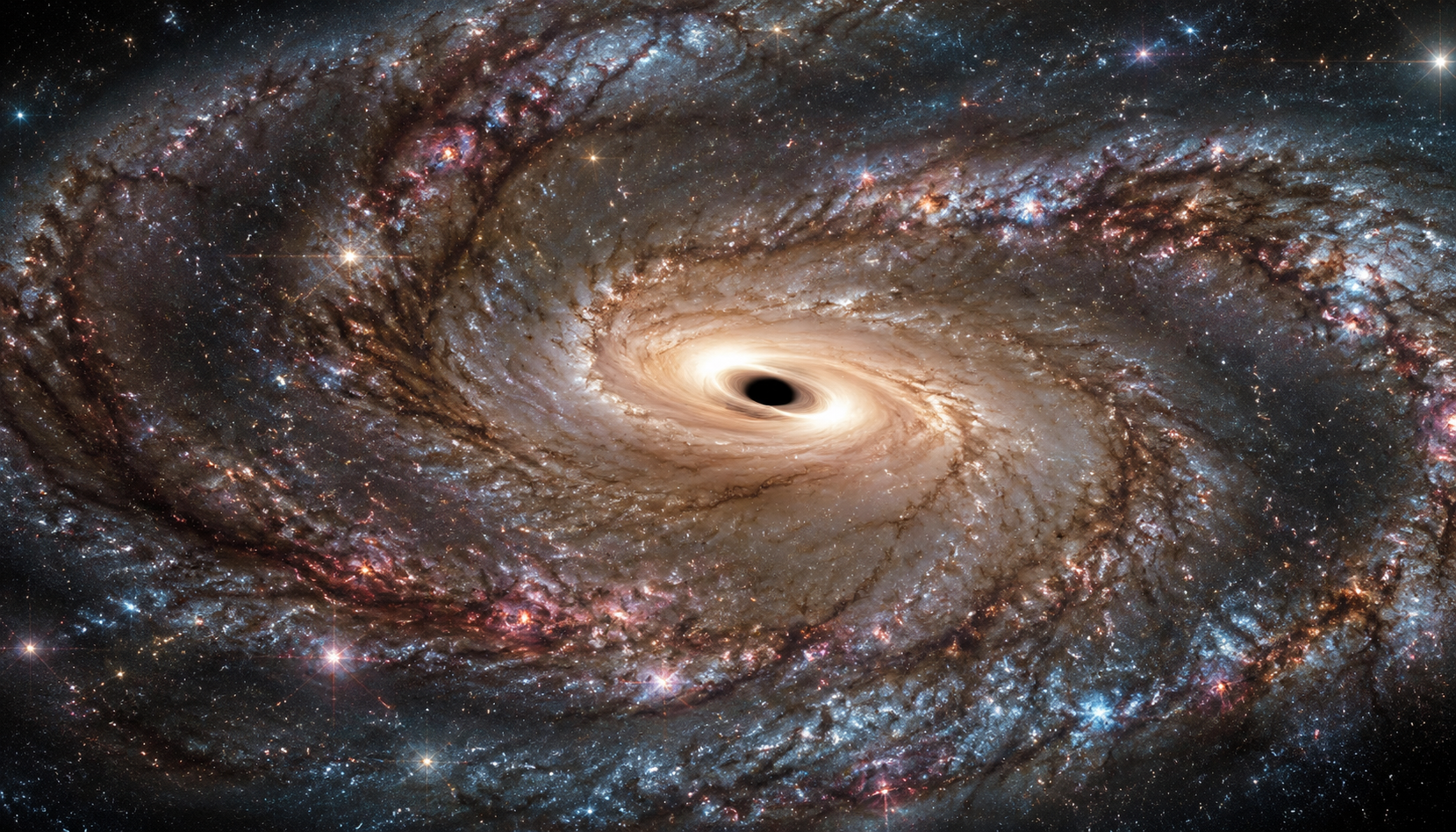
Anna-Christina Eilers, an assistant professor of physics at MIT, highlights their fundamental importance: “Without supermassive black holes, no galaxy would look the way it does today.” The researcher emphasizes this shaping impact: “Black holes play a major role in how galactic ecosystems take shape.”
Secrets Revealed by Variations in Brightness
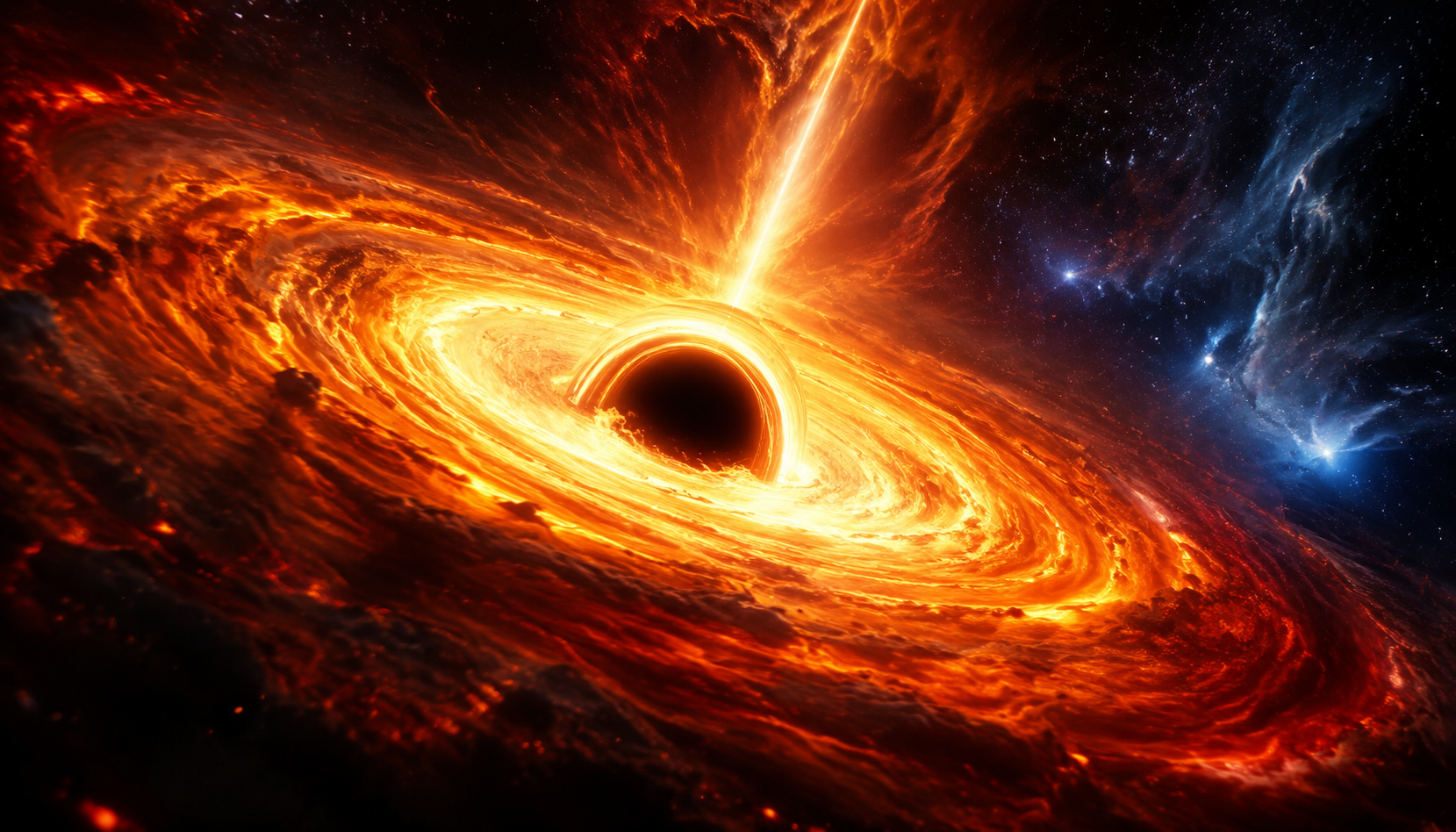
Observing this flickering radically changes researchers’ analytical capabilities. These variations in brightness reveal what is happening within the disk of gas and dust that feeds the central black hole. The discovery thus offers a rare opportunity to look beyond a mere distant point of light and obtain concrete structural data.
Gene Leung explains this specific physical phenomenon: “People know that quasars in the nearby universe can twinkle.” The scientist details the mechanism behind this luminous phenomenon: “The twinkling stems from fluctuations in the way gas is fed into the black hole.”
Analyzing these variations in brightness is an invaluable source of information for the scientific community. “And the way a quasar flickers tells us something about the structure of a black hole’s accretion disk, and the kind of ‘bites’ the black hole is currently eating,” explains the MIT postdoctoral researcher.
Fourteen years of far-infrared observations
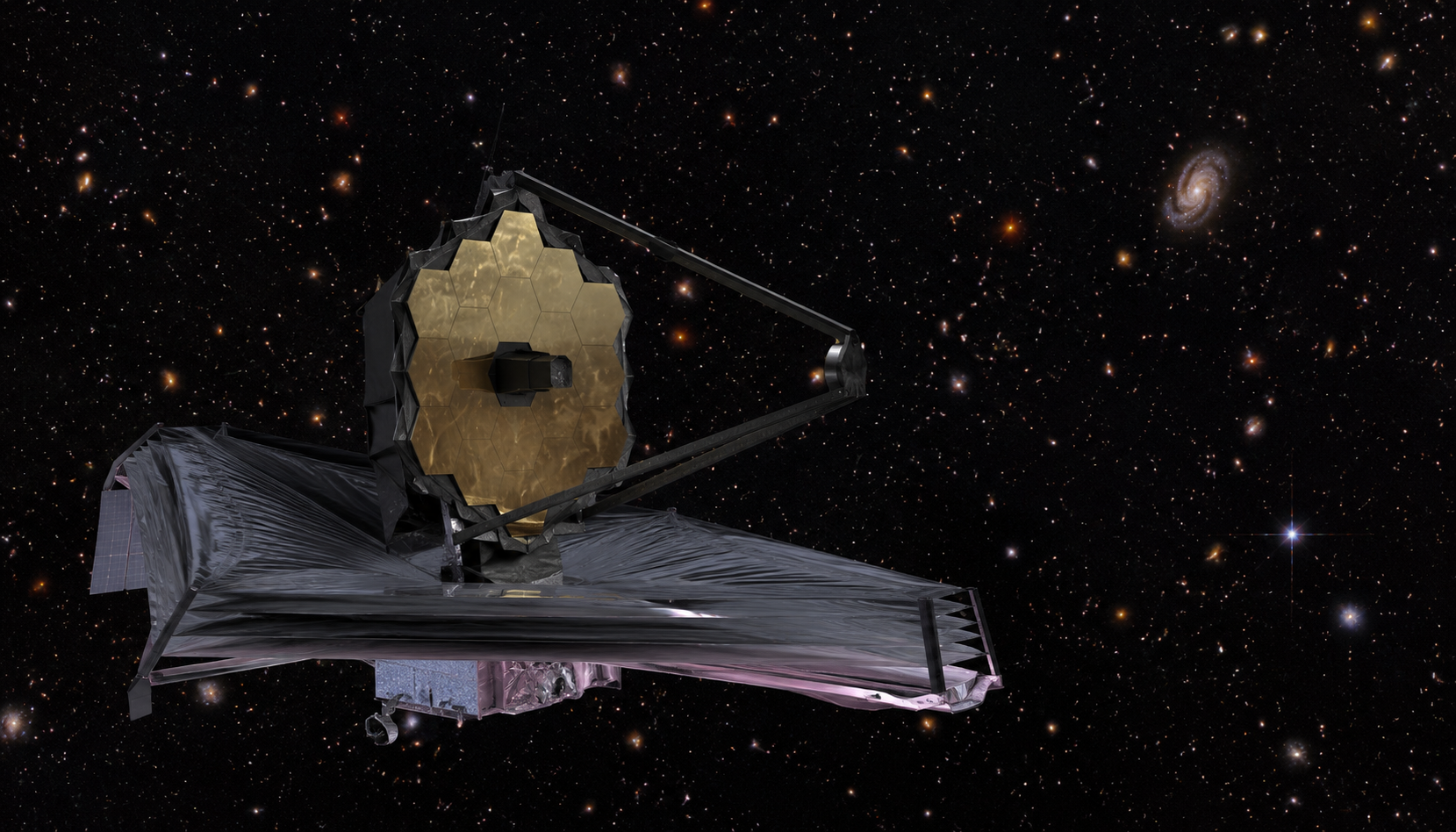
To detect this signal, the research team drew on many years of infrared observations. The astronomers used data collected by NASA’s NEOWISE (Near-Earth Object Wide-field Infrared Survey Explorer) space telescope. This specialized instrument repeatedly scanned the sky over a period of about 14 years.
By reanalyzing these archives, scientists identified this quasar, which dates back to 850 million years after the Big Bang. The object, whose brightness is estimated at 12,000 billion suns, fluctuates by about 20 percent—the equivalent of approximately 2,000 billion suns. “We saw the quasar twinkle randomly over the 14-year period, much like a candle flame flickering without a fixed pattern,” notes Gene Leung regarding this discovery.
A surprisingly mature structure for a primitive object
The flickering provided an unexpected surprise during the analysis phase. By studying the quasar’s brightness variations across different wavelengths, the team was able to map the structure of the accretion disk surrounding the black hole. Different wavelengths correspond to matter at different temperatures, allowing scientists to estimate the physical arrangement of the matter around the celestial object.
Commenting on these measurements, Anna-Christina Eilers said, “This provides direct evidence that the same feeding processes and structures observed in the nearby universe were already in place at very early epochs, despite very different cosmic environments—something that had never been seen before.” Gene Leung adds: “This means that something happened even earlier that caused these systems to appear so mature.”
The Unfinished Quest for the First Cosmic Giants
Professor Eilers shares her analysis of these implications: “I think what this suggests is that all the very rapid and chaotic growth phases that we expect all black holes to go through at some point occur very, very early on, before we see them as these very luminous quasars.” She summarizes the current state of scientific thought: “That’s the picture that’s emerging.”
Source: earth.com
A twinkling quasar reveals the existence of a mature black hole at the dawn of the universe


