

A Paradigm Shift in Cell Biology
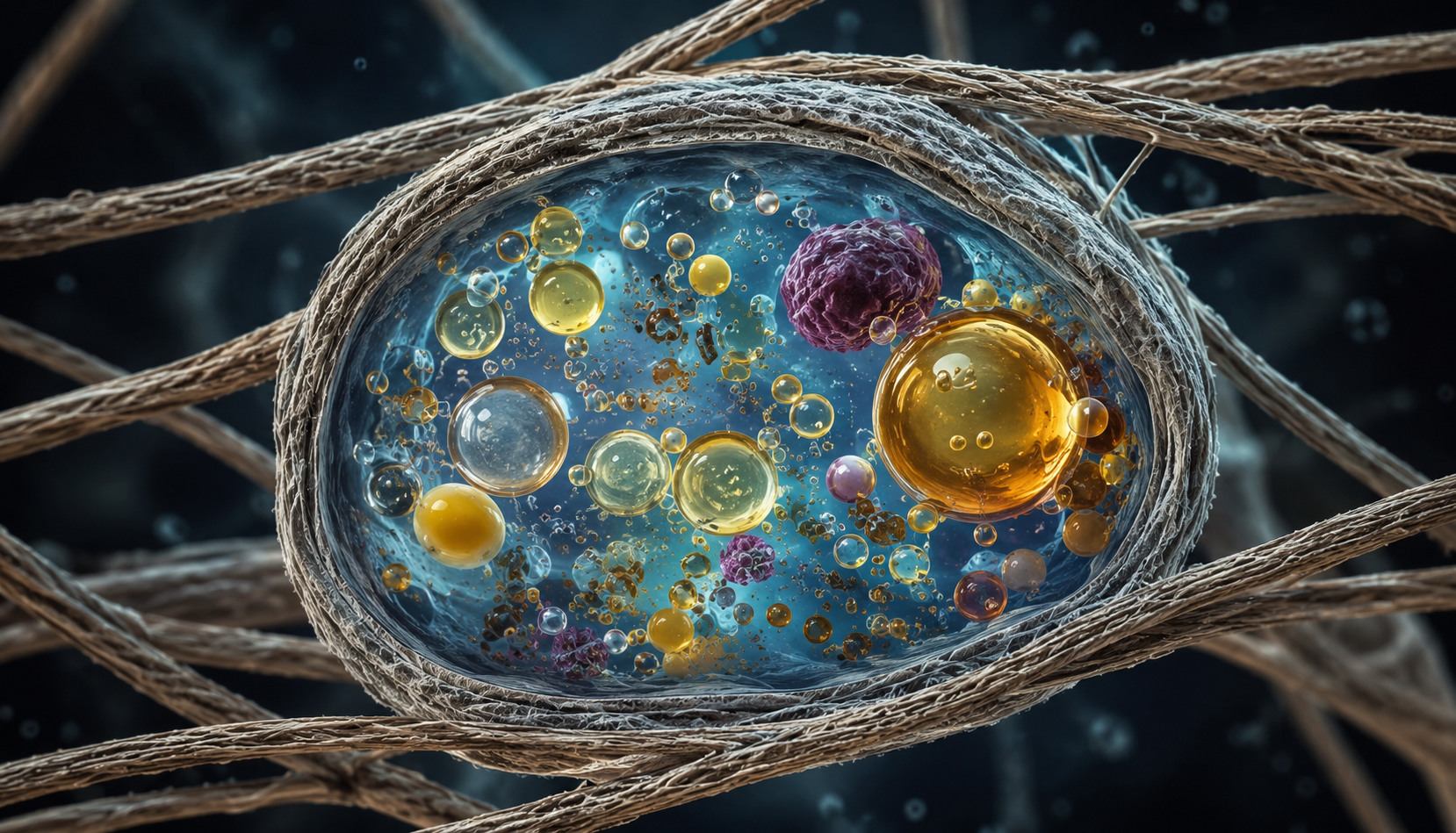
According to information reported by the original source, collagen—the fundamental protein responsible for building skin, bones, tendons, and organs—does not take the form of a long, rigid rod as taught in textbooks for the past half-century. New research conducted by the Center for Genomic Regulation (CRG) in Barcelona reveals that it actually exists in the form of a liquid-like droplet inside cells.
Published in the Journal of Cell Biology, this finding represents the very first direct observation of the natural state of the most abundant protein in the human body. This essential component accounts for about one-third of the body’s total protein mass. The direct observation of its internal behavior overturns established knowledge.
Vivek Malhotra, an ICREA Research Professor and lead author of the study at the CRG in Barcelona, explains: “Inside a cell, collagen molecules are not rigid, as had been assumed. They are actually very malleable, taking on a liquid-like form much like oil in a drop of water.”
This previously unknown liquid conformation serves a vital protective function for the body. The role of collagen, once outside the cell, is to assemble into rigid fibers to hold tissues together. If this same process were to occur inside the cell, the consequences would be disastrous. "This is another way in which cells ensure that collagen likely never becomes fibrous inside the cell," says Vivek Malhotra. He adds, emphasizing the gravity of the process: "Because if it became fibrous, it would kill the cell."
A 60-Year-Old Mystery Finally Solved
The complex mystery of how this fundamental structural building block is exported has finally been explained, putting into perspective theories validated by a 2013 Nobel Prize—theories based on research conducted in the 1980s and 1990s. These earlier models suggested that cells used conventional receptors and vesicles for transport.
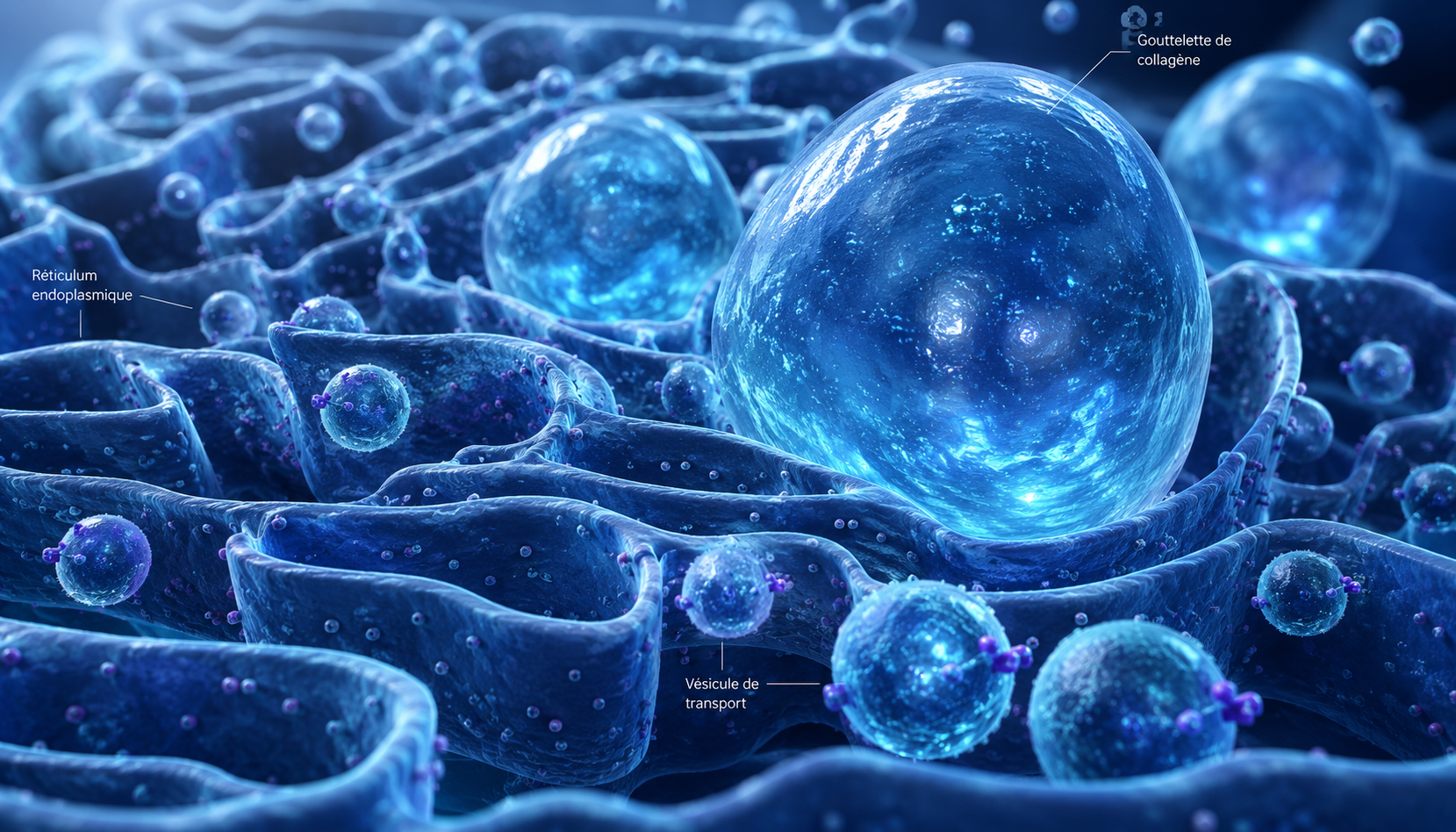
Collagen synthesis takes place in a specific cellular compartment called the endoplasmic reticulum (ER). Scientific analysis has focused on a precursor form called procollagen 1, which subsequently matures into type 1 collagen. The latter constitutes a massive portion of the human body, accounting for nearly 90% of the body’s total collagen.
The physical paradox was significant. Under a microscope, purified collagen resembles a long, rigid rod that can reach up to 400 nanometers in length. However, vesicles—the sacs used to transport proteins from their site of synthesis to the outside of the cell—measure only 60 to 90 nanometers in diameter. For more than fifty years, cell biologists have sought to understand how molecules of such a size could be expelled.
The answer lies in the fact that the protein is not yet a rod internally. Using high-resolution live-cell imaging on human hepatic stellate cells—which are responsible for collagen production and scar formation in liver fibrosis—the team demonstrated that collagen assembles into small droplets. These droplets are capable of fusing, dividing, and exchanging material with their environment, acting like condensates. Soumya Bhattacharyya, the study’s first author, notes: “We are just beginning to understand the condensates within the endoplasmic reticulum.”
Behind the Scenes of an Unexpected Laboratory Observation

These groundbreaking findings emerged from microscopic images captured in May 2024 by Dr. Soumya Bhattacharyya, a postdoctoral researcher in Vivek Malhotra’s lab. At the time, the scientist was using the liver cell system as a tool to examine the consequences of increased collagen production in fibrotic cells.
This serendipitous observation surprised the entire research team. “I had no idea where this would lead. But when we took the samples, what struck me were these shiny spherical structures that you just can’t miss,” recalls Dr. Bhattacharyya. Faced with such a challenge to established dogmas of cell biology, the lab’s initial reaction was extremely skeptical.
Vivek Malhotra admits to his initial caution: “I thought it must be an artifact.” In the months following this discovery, the researchers had to conduct rigorous tests to determine whether these protein clusters observed in the endoplasmic reticulum were simply cellular waste.
The fundamental role of the TANGO1 protein in export
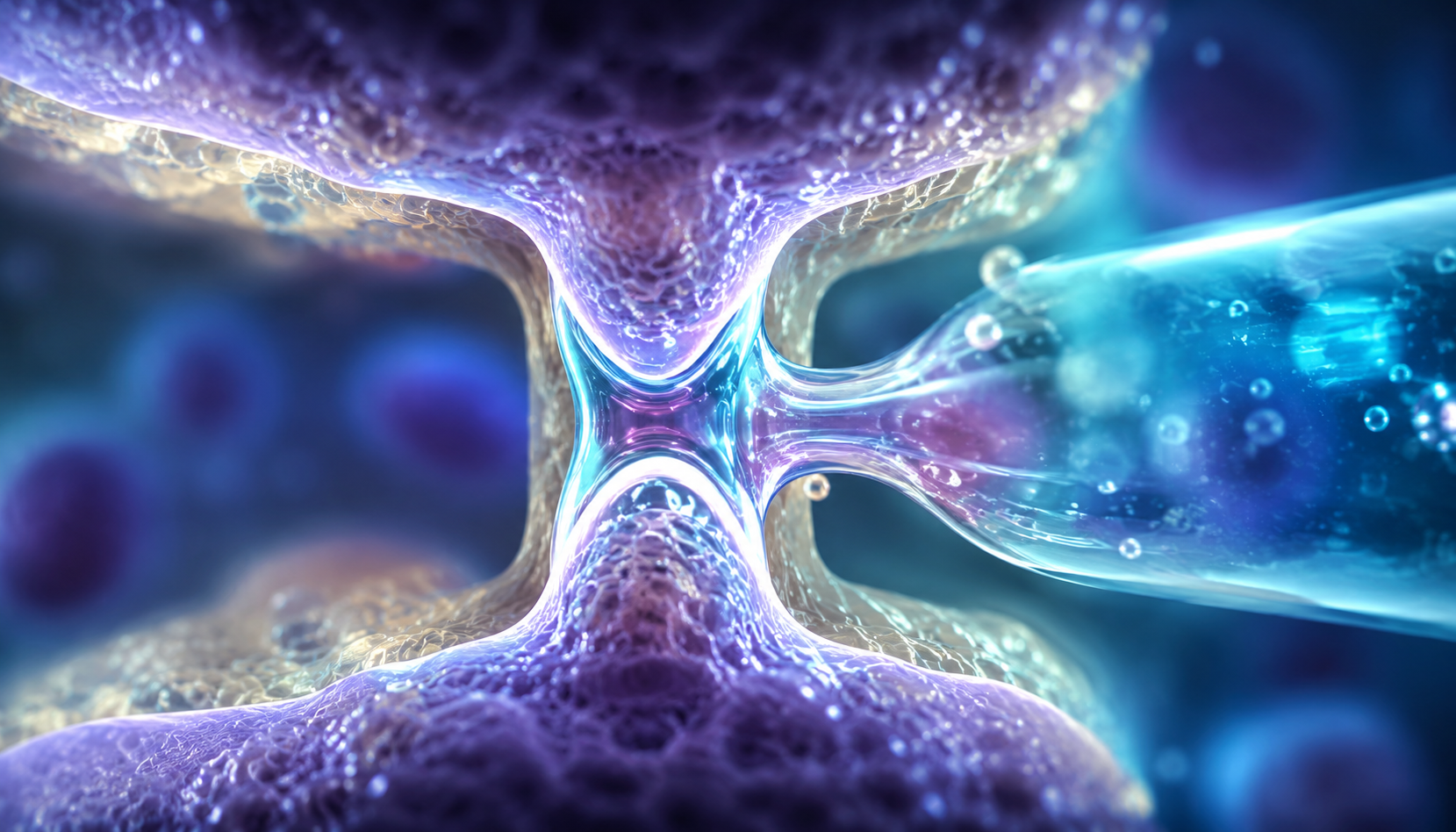
Research conducted at the Spanish institute also sheds light on the precise function of TANGO1. This protein was discovered by Vivek Malhotra’s laboratory about two decades ago and is recognized as essential for collagen export. In experiments to deplete the TANGO1 protein, collagen droplets still formed internally but no longer positioned themselves at the endoplasmic reticulum exit sites where the cargo leaves the compartment. Collagen secretion dropped as a result.
Vivek Malhotra proposes two physical mechanical hypotheses to illustrate this complex transfer. "Imagine you have a rubber ball with a nozzle, filled with liquid. You squeeze it, forcing the liquid out through that small opening. Is that the mechanism? Or does the liquid rise due to capillary forces, just as nutrients move upward against gravity in plants through capillary action?"
Unprecedented prospects for the treatment of fibrosis and cancer
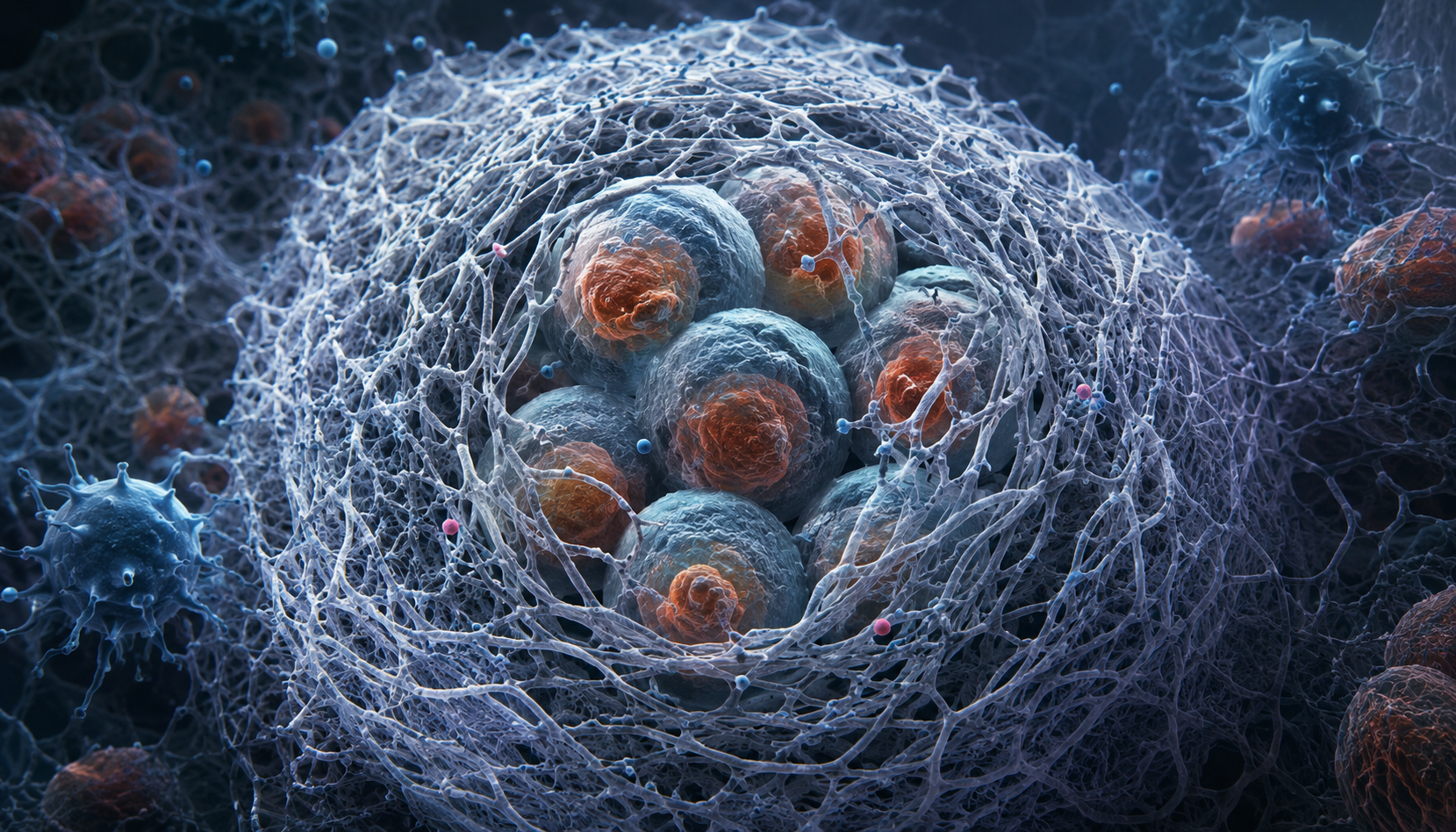
The implications also extend to oncology, particularly regarding the dense matrix that tumors use to protect themselves from chemotherapy and the immune system. Vivek Malhotra explains this insidious tumor defense mechanism: “One of the major problems in cancer is that cells secrete so much collagen and other proteins into the extracellular matrix that they hide within a shell made of these components and become resistant to chemotherapy and the immune system, meaning they are not detected by chemical therapies or by the immune system.”
The researcher outlines the ambitious medical goal of this basic research: “People are trying to find ways to break down this tissue cement, and our study could help shed light on these strategies.” This drive for therapeutic innovation could transform the approach to many chronic diseases.
Source: phys.org
Researchers have discovered that collagen, the most abundant protein in the human body, is liquid inside cells


