

A revelation hidden beneath the foliage
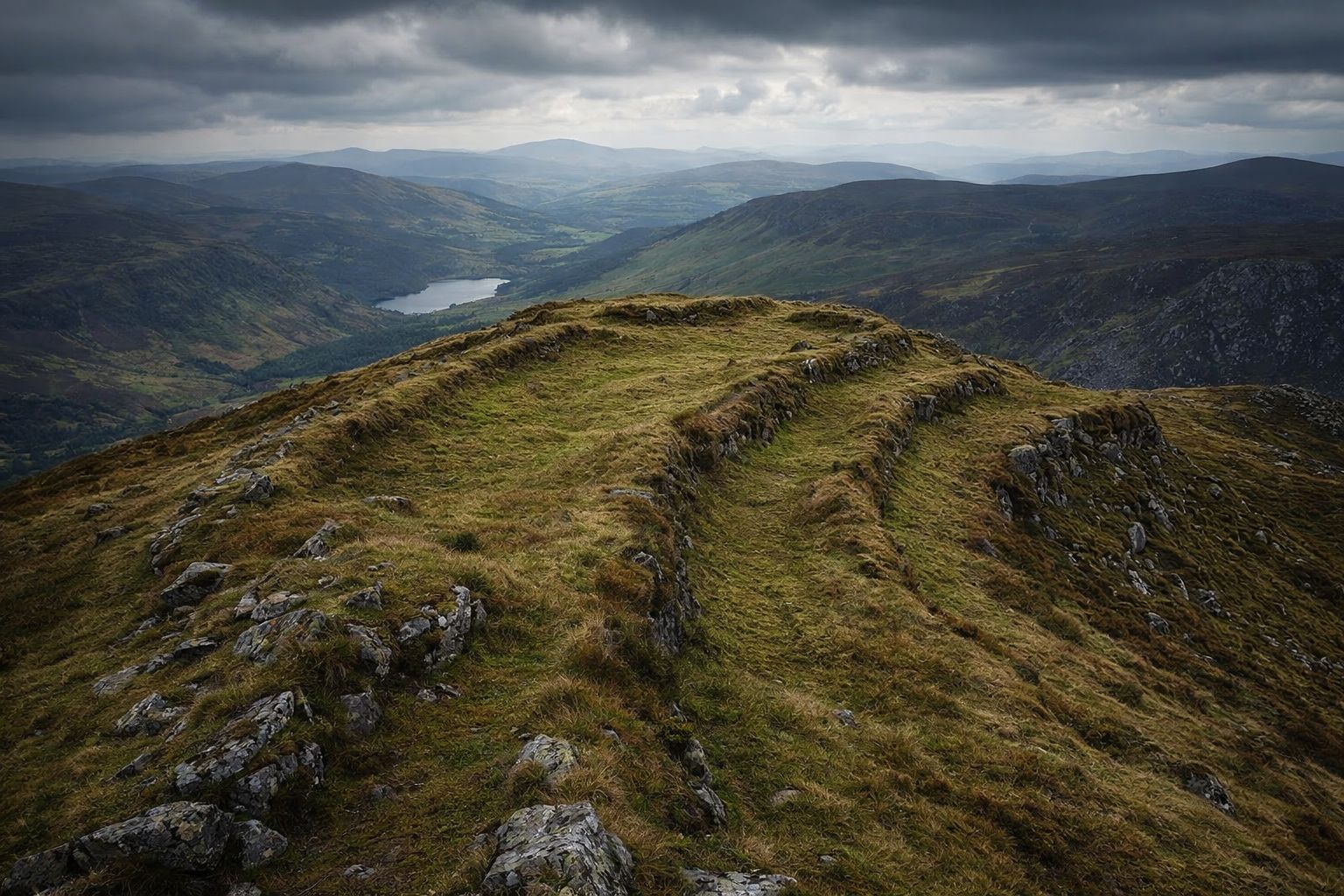
We all have that idyllic image of Ireland: wild, wind-swept green hills, where we imagine that only a few sheep or solitary warriors have ever set foot. For centuries, that’s exactly how these hills were viewed: as simple natural landmarks or, at best, temporary defensive shelters. But it seems history likes to play tricks on us. The Brusselstown Ring, as it’s called, has just shattered this somewhat romantic but false vision held by our ancestors.
Located in County Wicklow, this hill was not just an observation post for spotting the enemy. It was much more than that. An extensive aerial survey campaign combined with meticulous excavations has revealed something unexpected, almost unsettling: a settlement of incredible density. We’re not talking about a few scattered huts, but hundreds of houses crammed close together. The entire prehistoric landscape of the island is being redrawn before our eyes, forcing us to reconsider what we thought we knew about Bronze Age island societies.
A capital of fortresses encircled by stone
You have to grasp the scale of the site to understand why archaeologists are so excited. Brusselstown Ring dominates the landscape with its monumental double enclosure, but it’s not alone. It’s part of what experts have aptly dubbed “the Baltinglass necklace.” Imagine a cluster of thirteen hilltop enclosures perched on the surrounding hills… It’s impressive. The region is even described as the true capital of Irish fortresses—no less! Here, we see a remarkable continuity of human life, stretching from the Neolithic through the Bronze Age.
But what makes Brusselstown Ring unique is its sheer scale. Its inner perimeter already covers more than 41 hectares, which is enormous, but if you include the adjacent hills, it climbs to over 130 hectares. And the ground… the ground still speaks. It bears the scars of more than 600 circular platforms. They’re everywhere—in the main enclosure and even in the intermediate zone. Each of these structures, ranging from 3 to 12 meters in diameter, was likely a house. It’s mind-boggling when you think about it.
To give you an idea, no other site in Ireland or Great Britain comes close to these figures. Usually, researchers come across sites with about a hundred houses at most—and rarely fortified ones. Take Turlough Hill in County Clare or Mullaghfarna in County Sligo… Yet these are major landmarks, sites considered “major,” and even so, they don’t exceed 150 units. Here, we’re in an entirely different league.
Daily Life in an Egalitarian Community
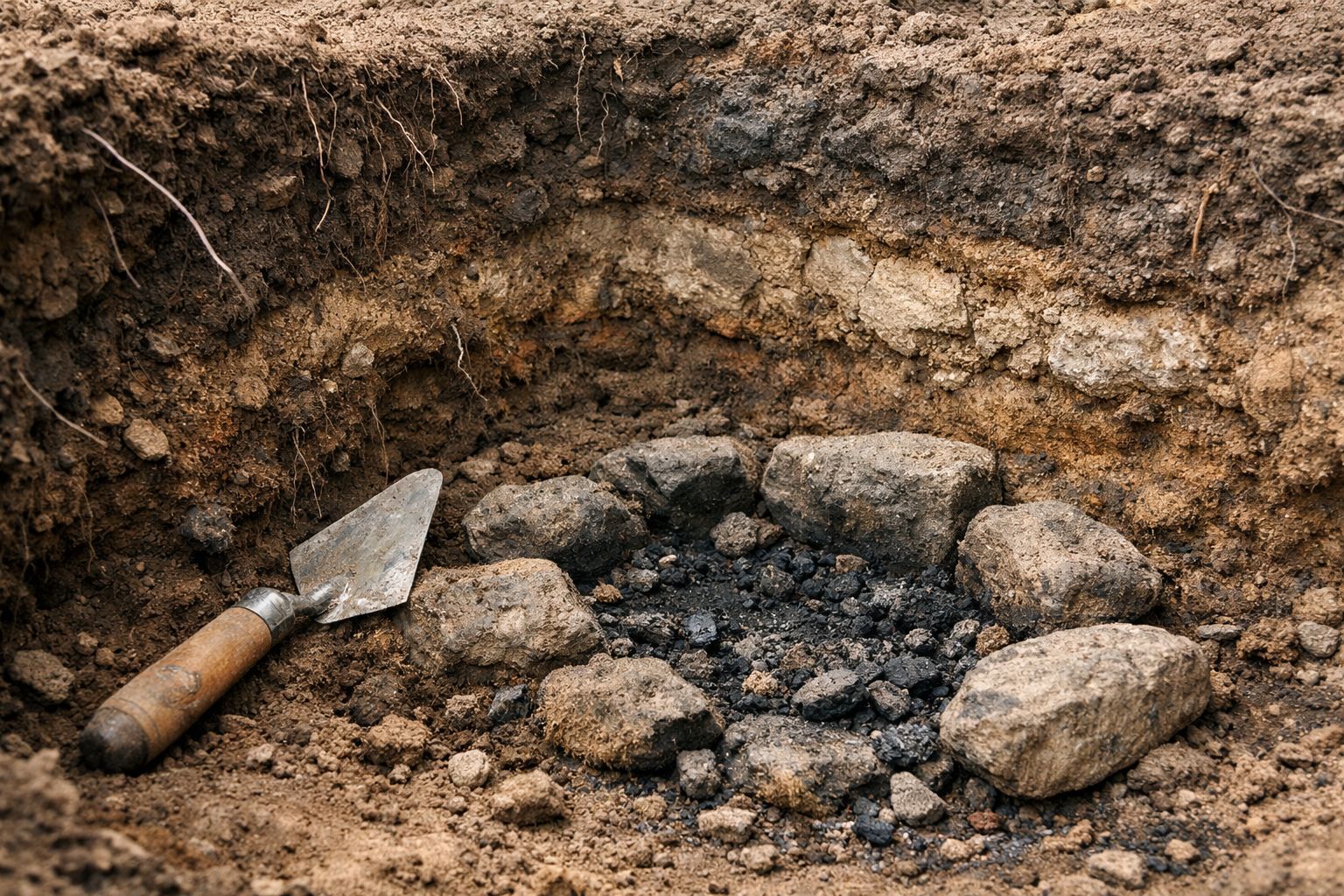
In an effort to understand who lived there—and, above all, how—a team led by Dirk Brandherm launched a series of targeted excavations in 2024. It’s always moving to imagine those daily activities… They excavated four platforms of varying sizes to see if there were leaders on one side and commoners on the other. The result? Fascinating. Everywhere, there were clear signs of domestic life: hearths for warmth, carefully paved floors, and post holes to support the roofs. According to Phys.org, which reported the news, there is no doubt about the residential nature of the site.
However, the objects found… that’s where things get curious. Artifacts are scarce. A few carved stones, bits of fired clay, but nothing ostentatious. Radiocarbon dating places this entire community between 1210 and 780 BCE, with even a few die-hards believed to have remained until 400 BCE. But what’s most striking is the total absence of any signs of hierarchy. No palaces, no treasures hidden in a large central house. Everything points to a perfectly egalitarian way of life, despite the population density.
This is a complete break from what we thought we knew. Traditional models from that period describe hamlets of five houses at most. Here, the word “village” seems almost too small. It is a planned, homogeneous settlement, built to last. We are looking at the embryonic form of organized collective life on a very large scale, long before the famous continental oppida of the Iron Age made their appearance.
Conclusion: Water, Evidence of Collective Intelligence
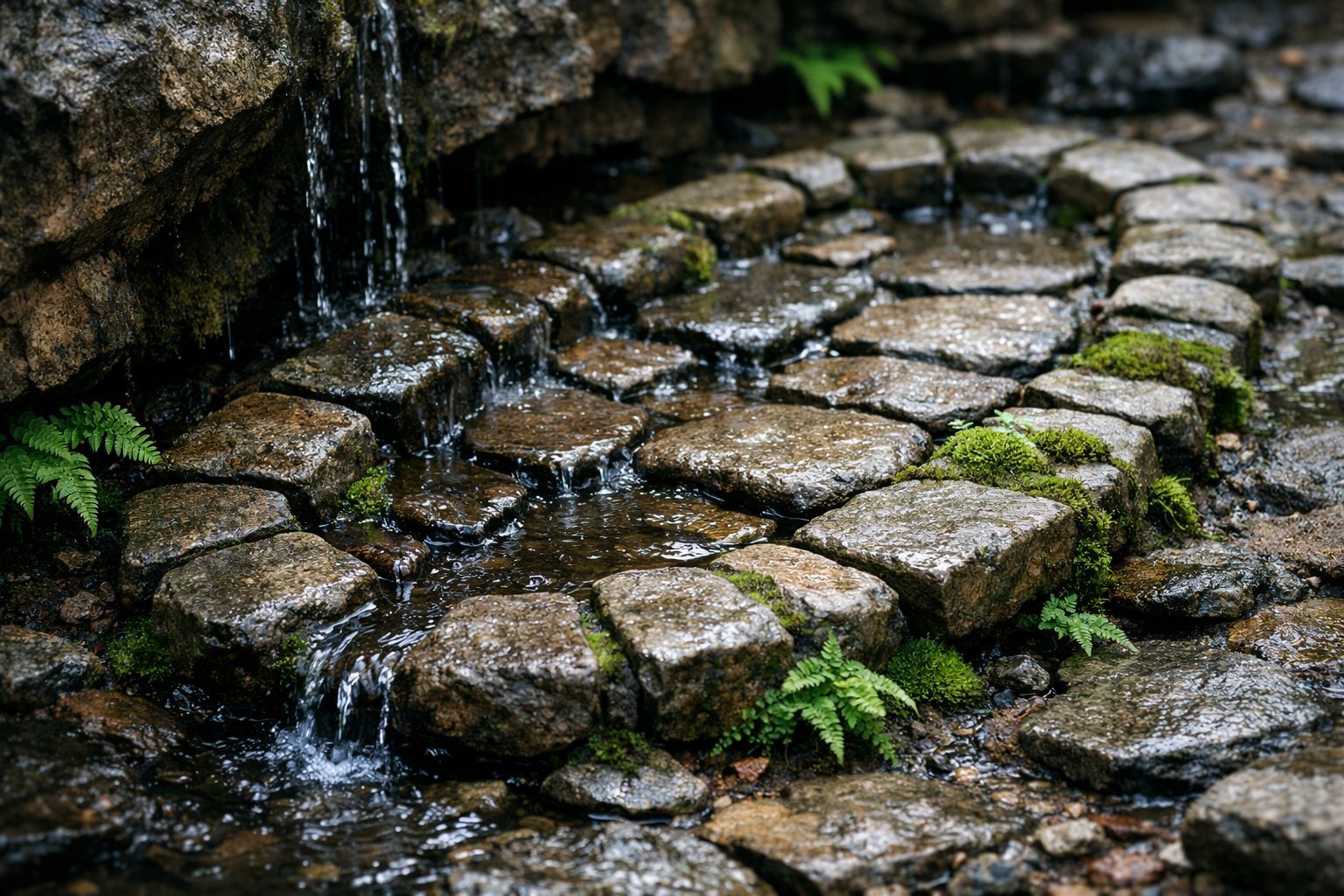
There is one final detail that really caught my attention in this study published in Antiquity. It’s not inside the houses that we should look, but right next to them, below a rocky outcrop. Researchers found a strange, oblong structure, bordered by large flat stones. Given the natural runoff from the slope, everything points to it having been a water storage basin. It’s commonplace today, but for an Irish fortress of that era, it’s unheard of! Other regions of Europe had such features, but not here.
Beneath an Irish hill, a discovery turns everything upside down
This content was created with the help of AI.


