

The previously unknown secret of tardigrades for withstanding extreme heat has finally been revealed


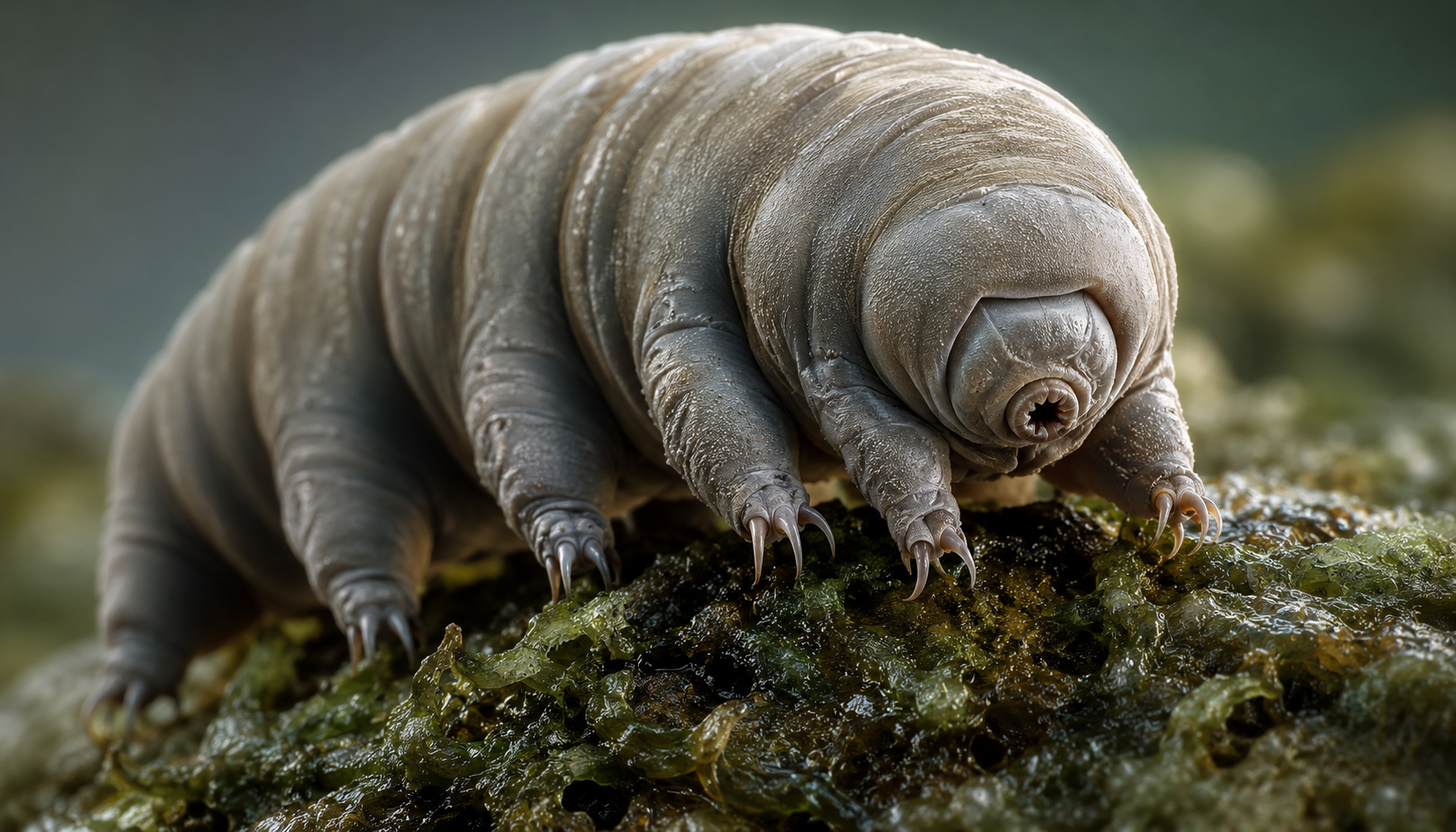
Microscopic creatures with extraordinary survival skills
Anhydrobiosis and Entering the “Barrel” State
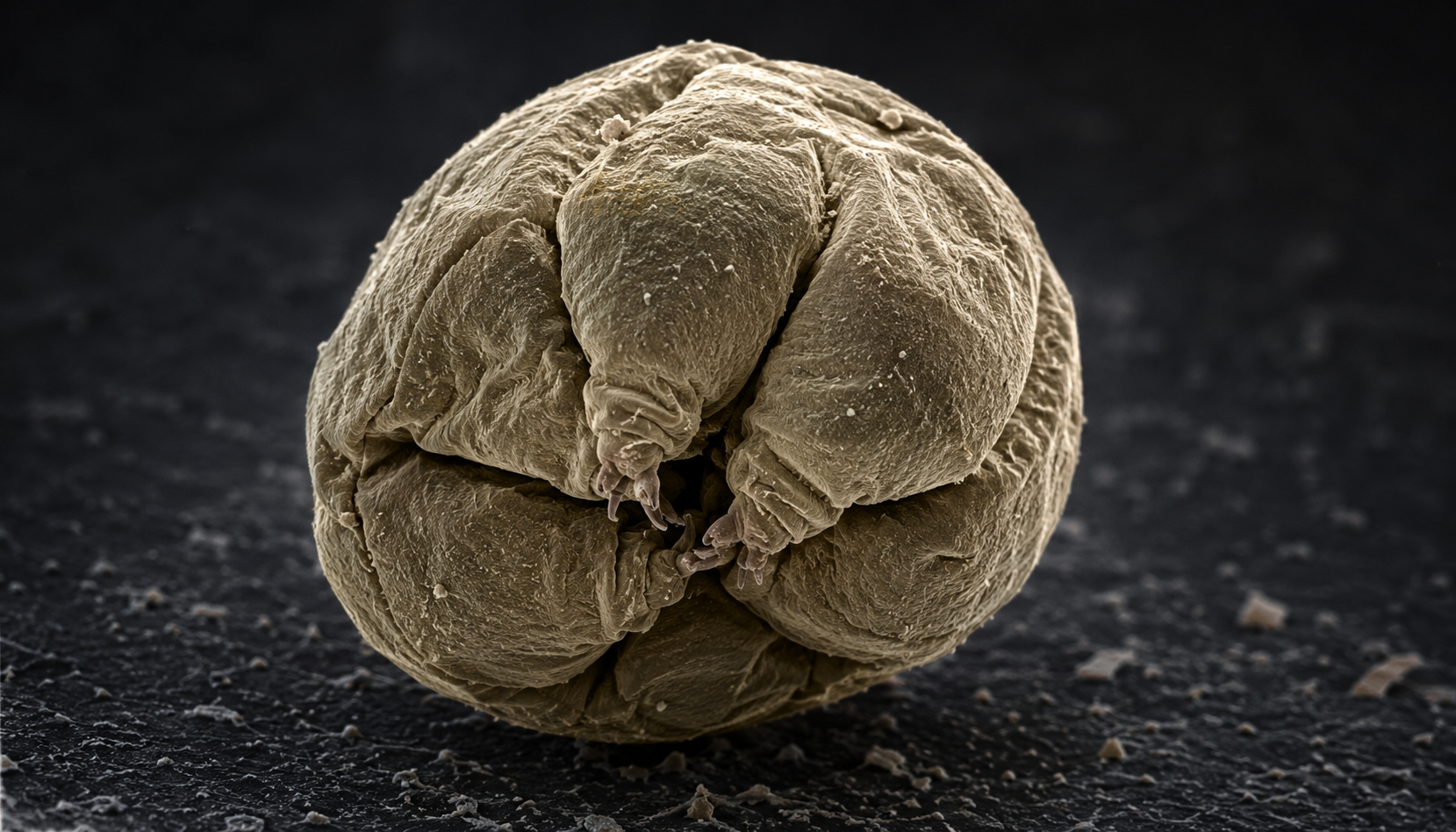
When tardigrades undergo this process of anhydrobiosis, their morphology changes drastically. They curl up into a ball and enter what is known as the “barrel” (or “tun”) state. In this contracted form, they prepare to withstand external stresses—a state of stasis that has just revealed new secrets.
An experiment conducted by the Indian Institute of Science

Researchers at the Indian Institute of Science recently conducted a study aimed at better understanding these creatures’ survival mechanisms. Their work focused on how a specific species of tardigrade, known as the Paramacrobiotus sp. BLR strain, survives extreme heat while in the “barrel” state.
The findings of their research were published in the Journal of the Royal Society Interface. According to the data collected, reductions in thermal conductivity play a central role in this species’ survival when exposed to high temperatures and extreme heat.
To investigate the mechanisms by which Paramacrobiotus sp. tardigrades survive, the researchers conducted a series of targeted experiments. They placed active tardigrades, as well as tardigrades in the “barrel” state, into small PCR tubes. These specimens were then exposed to extreme temperatures ranging from 45°C to 85°C for a precise duration of one hour.
Heat flux measurement and comparative results
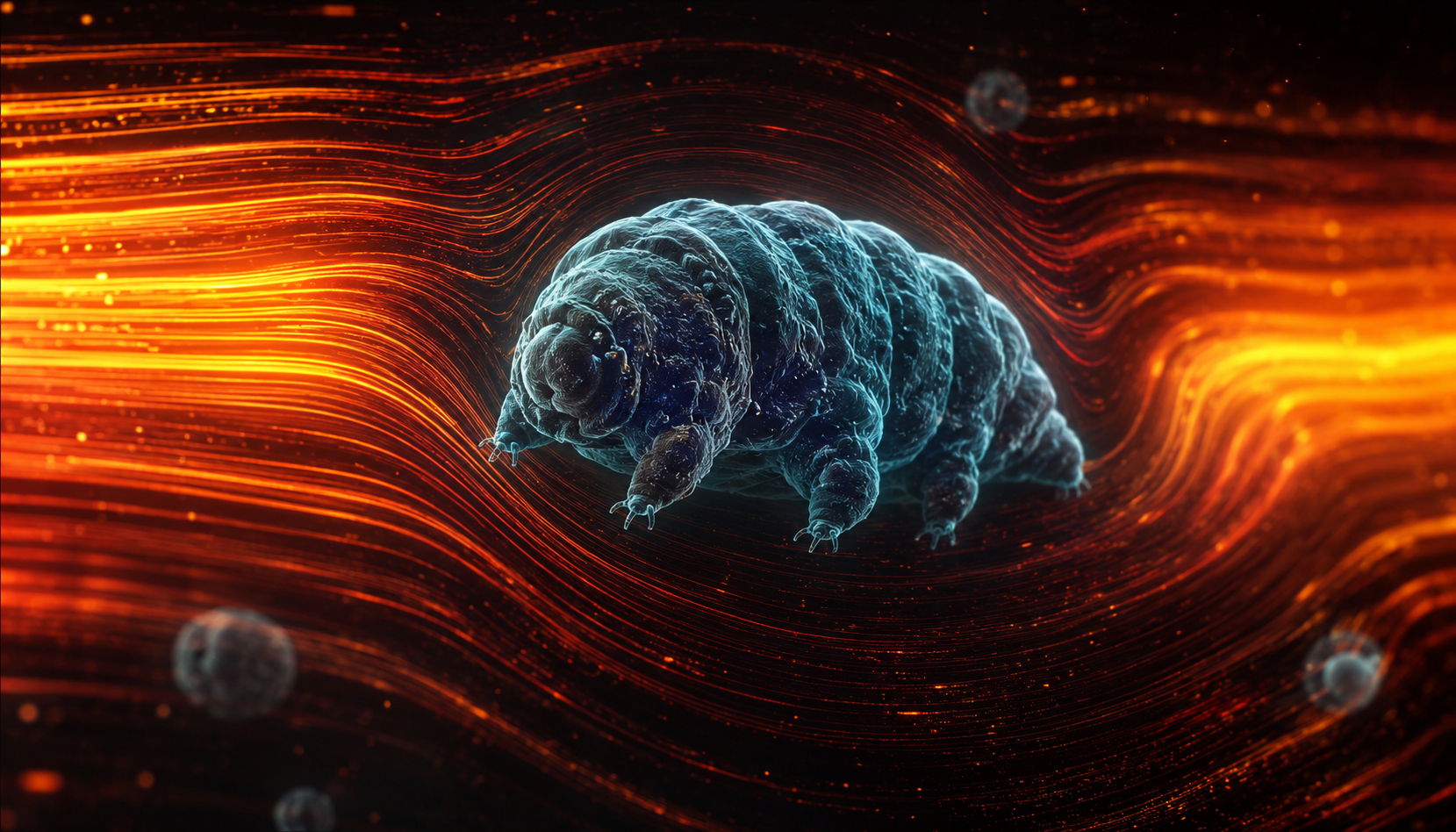
While the animals were exposed to these particularly high temperatures, the team measured the heat flux—that is, the thermal conductivity—flowing through their bodies. To do this, they used a specialized instrument they had developed themselves for this purpose. The scientists then compared the survival rates and thermal conductivity of active tardigrades with those of dehydrated tardigrades.
Sandeep M. Eswarappa, the paper’s lead author, explained the approach to Phys.org: “The goal of our paper was to discover the limit of the tardigrade’s heat tolerance and the mechanism behind it.” He went on to explain: “To do this, we built a vacuum apparatus to direct the flow of heat through the tardigrades. This helped us estimate the heat transfer rates at two different states of the tardigrades.”
The results obtained by Eswarappa and his colleagues are unequivocal. Active tardigrades did not survive the high temperatures for one hour, not even at the lowest experimental temperature of 45°C. In contrast, 90% of the tardigrades in the “barrel” state survived under the same conditions, and some of them were still alive after one hour at 85°C. The researchers found that tardigrades in this state exhibited higher thermal resistance and reduced heat flow through their bodies. In their paper, they propose that this lower thermal conductivity protects the animals’ internal cellular structures and prevents heat-related damage.
Toward a Better Understanding of Future Applications
The findings of this groundbreaking study suggest that the ability to survive extreme temperatures is supported not only by biochemical processes, but indeed by physical processes as well. Further research could now seek to validate the team’s observations across a broader range of extremotolerant animal species.
"Our observations suggest that tardigrades can adjust their thermal conductance to protect themselves from heat," explained Sandeep M. Eswarappa. The researcher also looked ahead to future work: "In our upcoming studies, we plan to identify the molecular mechanisms behind this phenomenon."
According to the source: phys.org
The previously unknown secret of tardigrades for withstanding extreme heat has finally been revealed
