

More Than Just a Matter of Appearance
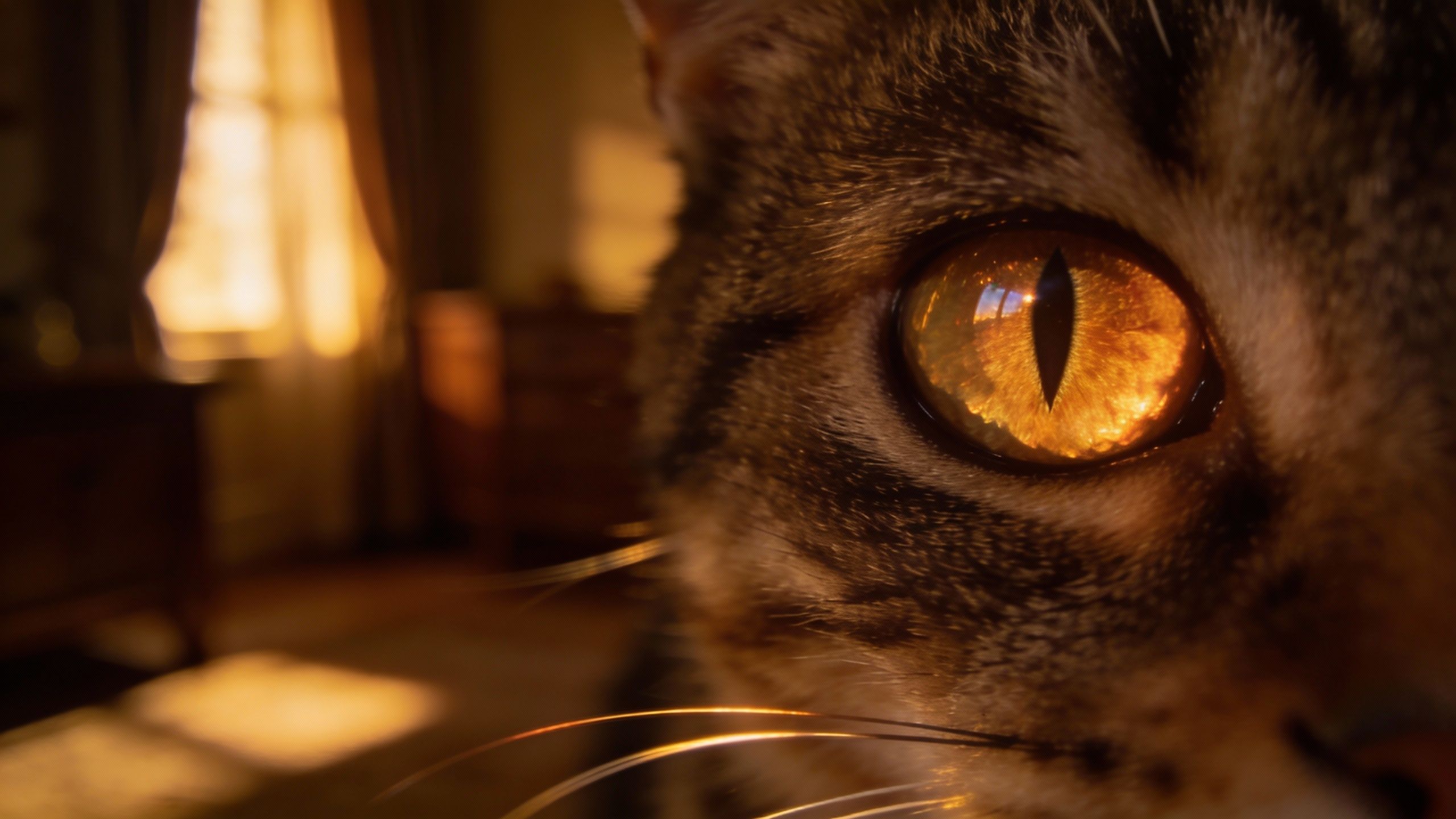
We often imagine that our vision is the pinnacle of evolution, don’t we? That’s a pretty common misconception. If we take the time to observe, nature gives us quite a wake-up call. Just take the cat sleeping on your couch. Its night vision is far superior to ours, thanks in large part to that famous vertical pupil that captures even the faintest glimmer of light. And what about the dog? The very structure of its eye, with a retina packed with light-sensitive cells, allows it to capture many more images per second than we can. It’s fascinating.
But honestly, cats and dogs are “classic” compared to what’s out there. The animal kingdom is home to visual systems so strange they seem straight out of a science-fiction movie. To survive, some species have developed eyes with mineral structures or detection capabilities that we’re only just beginning to understand. Hold on tight—we’re diving into the bizarre.
Marine creatures with eyes made of stone and prisms
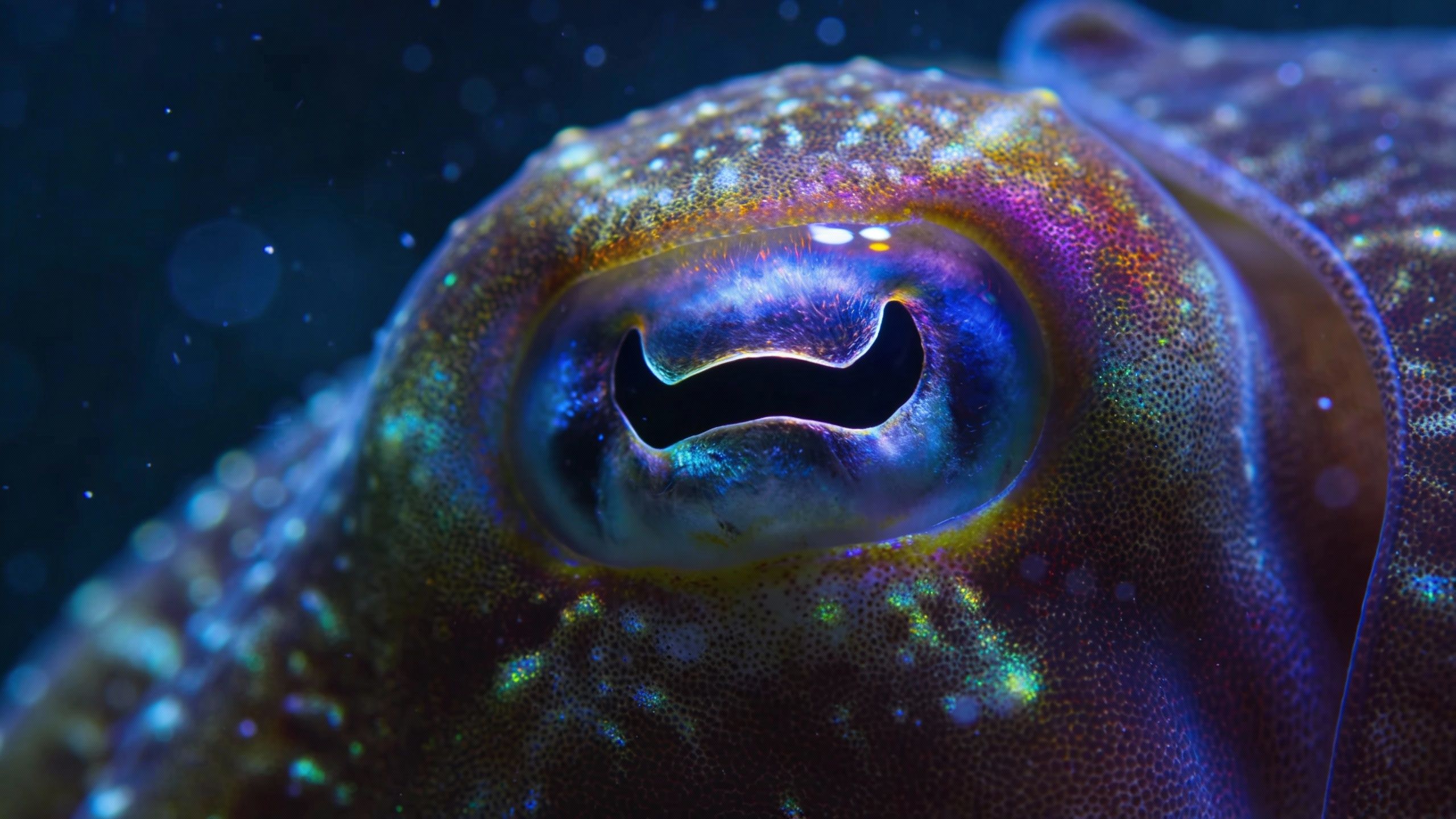
Let’s start with the ocean floor, where light behaves differently. Have you ever locked eyes with a cuttlefish? It’s… unsettling. This cephalopod has a single, “W”-shaped pupil. It’s not just for style: biologists say this shape helps balance a vertically uneven light field, which is quite common in the deep waters where it lives. But wait—this is where it gets weird. The cuttlefish has only one photoreceptor. In theory—and I mean in theory—it should see the world in black and white, completely monochrome. Except… no. It apparently uses light passing through a natural prism to split the rays into a rainbow, allowing it to perceive colors we probably don’t even know exist. Crazy, right? Plus, it’s the only cephalopod whose eyes can swivel, giving it stereoscopic 3D vision.
And while we’re on the topic of coastal life, we have to mention the chiton. It’s a small gastropod mollusk that looks a bit like an armored slug. Its eyes aren’t even made of living cells like ours. No, they’re literally embedded in its shell and made of minerals—specifically aragonite, a form of calcium carbonate. Imagine seeing the world through stone lenses.
A super-powerful shrimp and a “four-eyed” fish
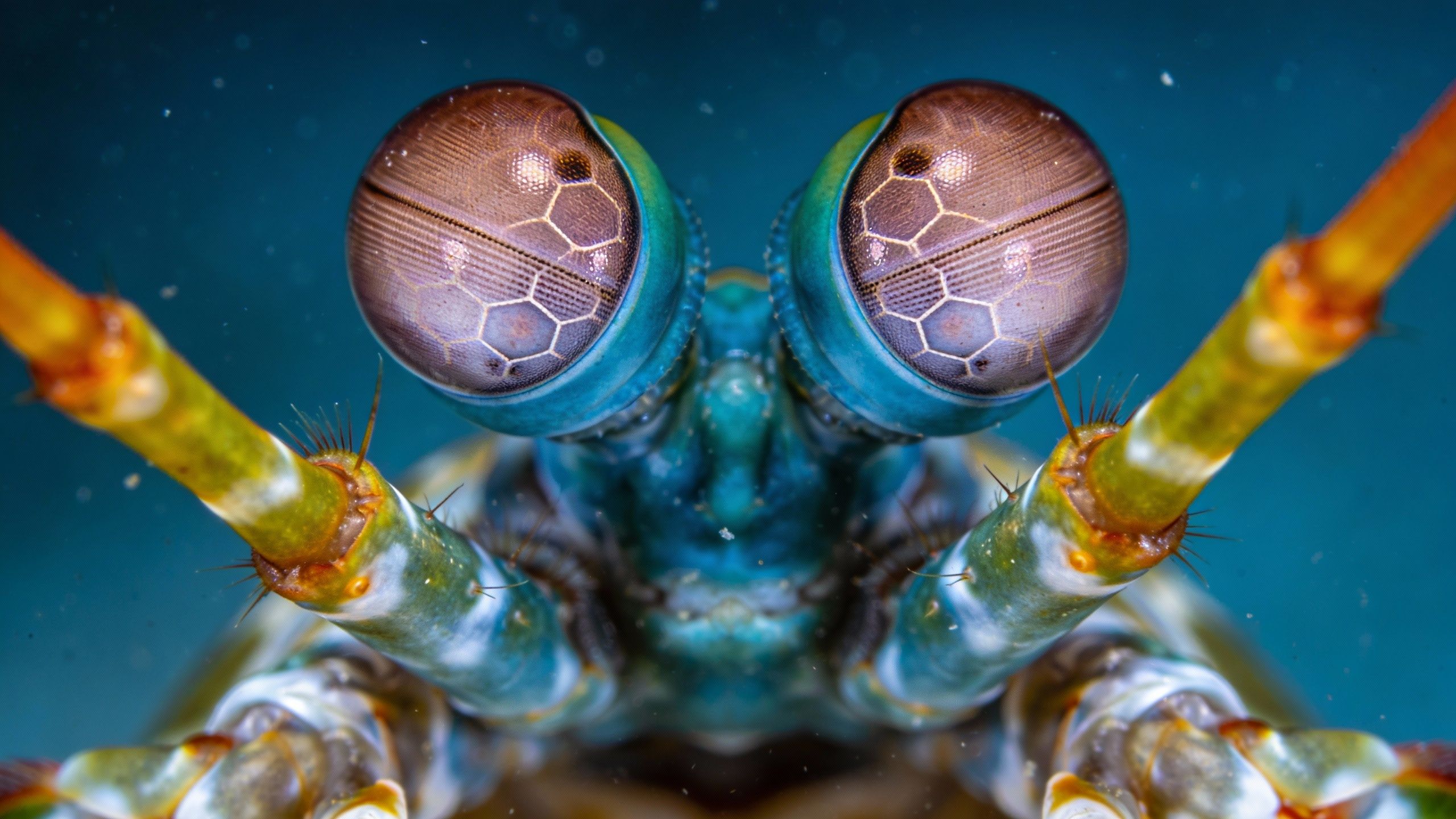
If you think the cuttlefish is impressive, the mantis shrimp will make you raise your standards even higher. This deep-sea crustacean has, without exaggeration, the most complex eyes in the animal kingdom. Just to give you a sense of scale: we have 4 photoreceptors, birds have 6… the mantis shrimp has 16. Sixteen! Its bulging eyes move independently, allowing it to perceive depth with just one eye. It sees the usual colors, of course, but also ultraviolet light and even circularly polarized light. Some experts even believe it’s capable of detecting cancer before symptoms appear. It’s almost scary.
Let’s shift our focus to the brackish waters of the mangroves. There we find anableps, nicknamed the “four-eyed fish.” Well, the name is a bit misleading—they technically have only two eyes—but they’re located at the top of their skulls. The brilliant evolutionary trick here is that each pupil is split in two. One part remains above the waterline to watch for insects and aerial predators, while the other part scans the murky depths. It’s pure biological multitasking. Their retinas are adapted accordingly: the cells at the top are more sensitive to green light, and those at the bottom—underwater—are more sensitive to yellow light.
Conclusion: Birds See the Invisible
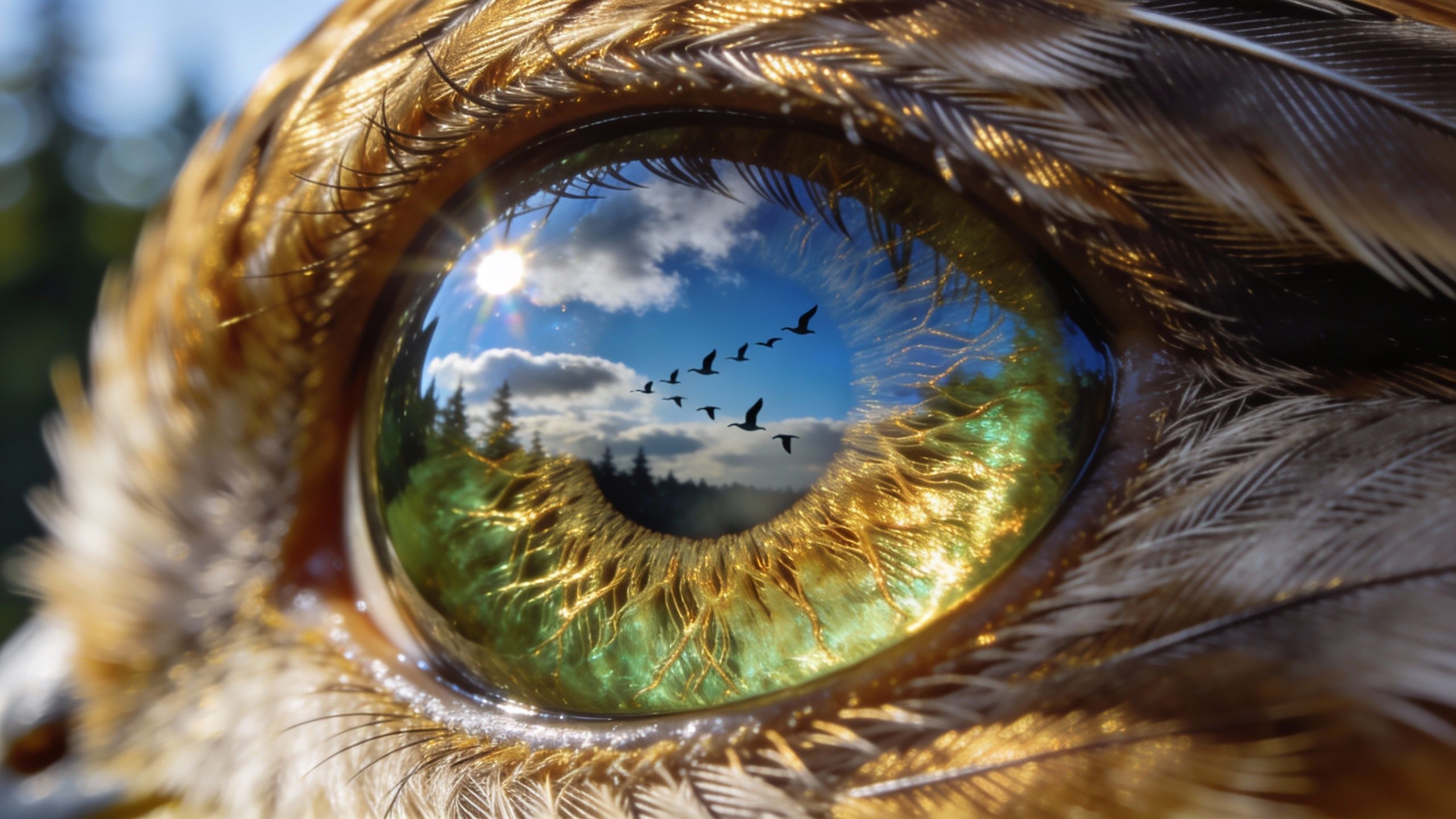
Finally, let’s look up at the sky for a moment. Birds, with their small, black, marble-shaped eyes that seem so simple, hide many secrets from us. With their six photoreceptors, they have tetrachromatic vision. Basically, they can distinguish a much wider range of colors than we can and perceive movement with remarkable acuity. But the most incredible thing is what we can’t see. Biologists explain that their eyes contain a special protein that, thanks to blue light, allows them to literally “see” the Earth’s magnetic fields. That’s how they cross the planet every year during their migrations. Ultimately, when we look at the world through our human eyes, we only see a tiny fraction of it—don’t you think?
These 5 animals have eyes so complex that they defy science
This content was created with the help of AI.


