

An exception that challenges the standard model
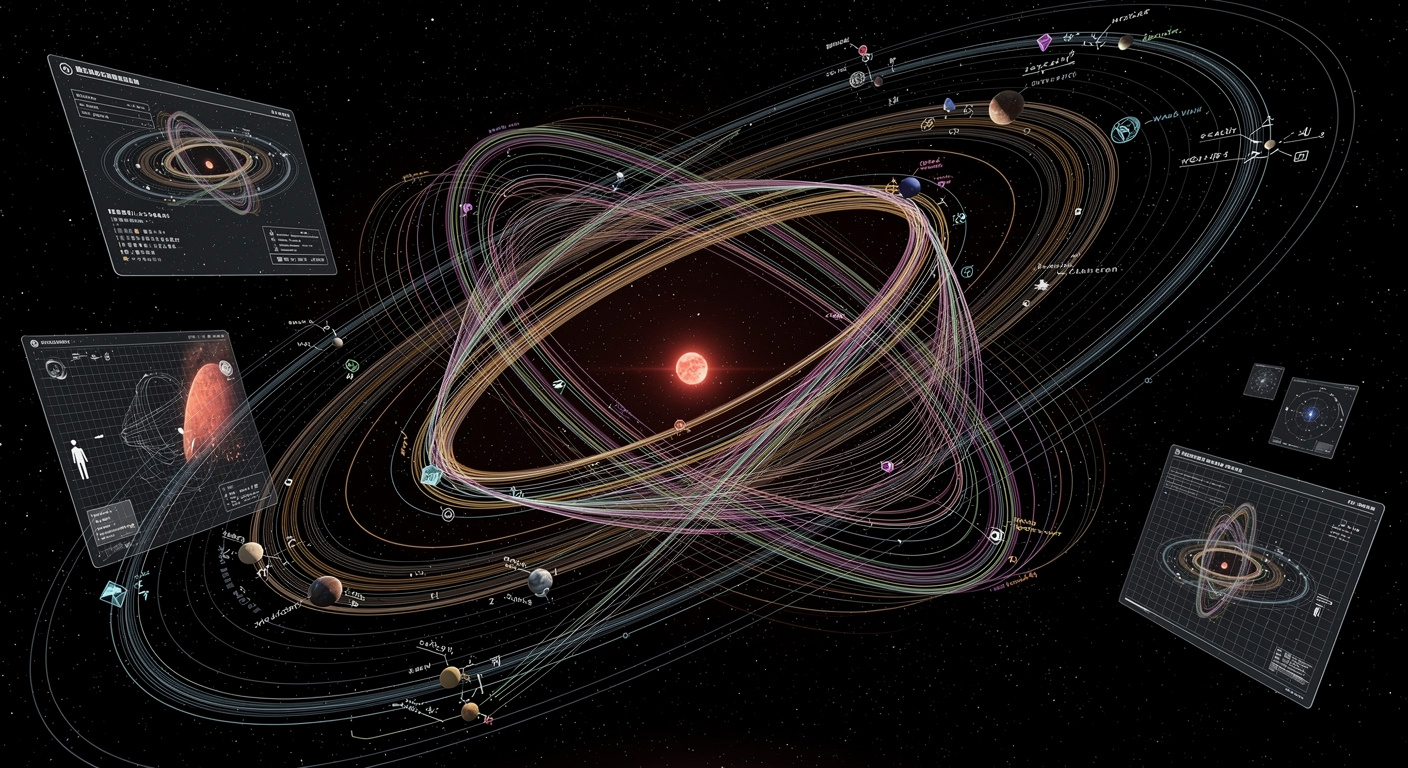
LHS 1903: A Puzzling Configuration
At the heart of this discovery lies LHS 1903, a star classified as a red dwarf—cold and low-luminosity. This system hosts four planets. So far, the observations seemed to follow a familiar pattern with the first planet, LHS 1903 b. This is the innermost world, a rocky super-Earth whose radius is 40% larger than that of our planet, and where temperatures are extremely high.
The Mystery of the “Sandwich” Planet
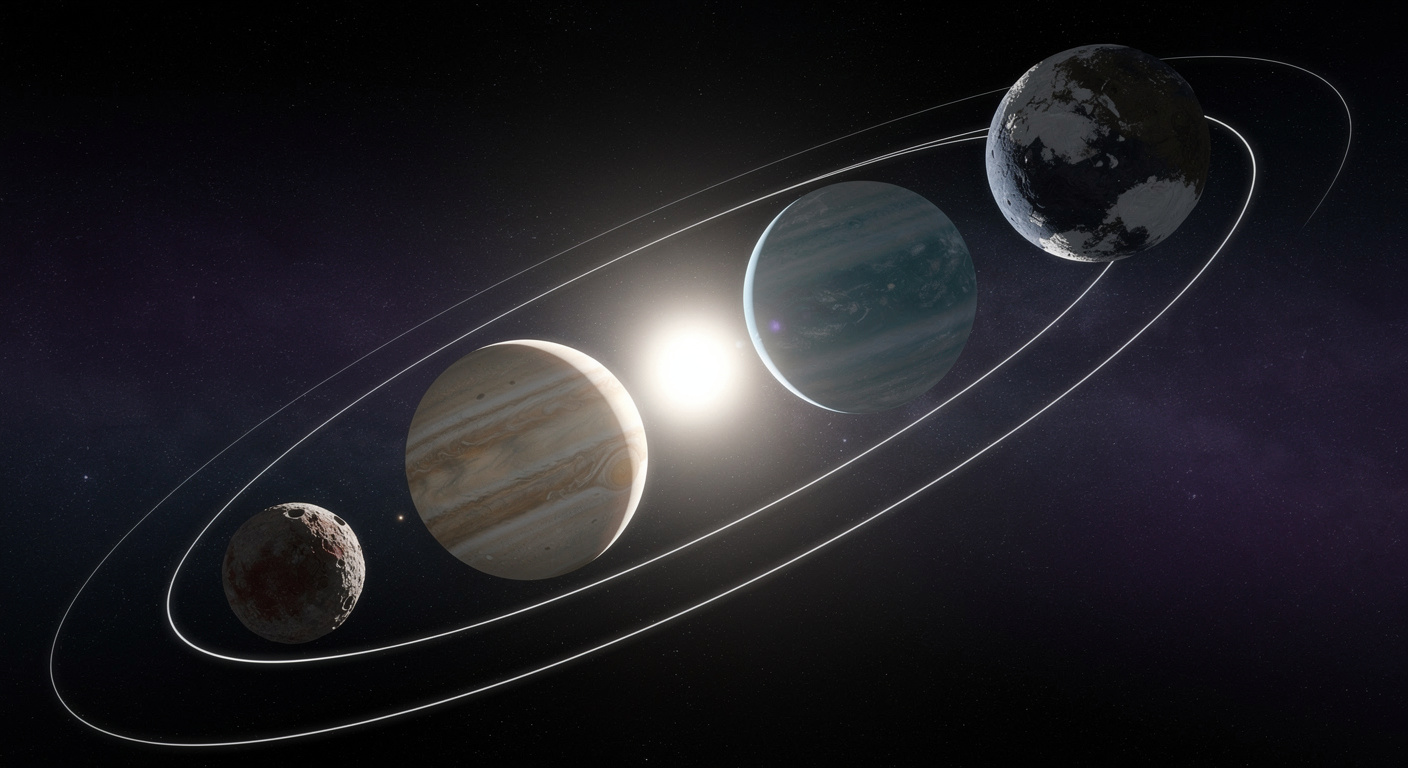
The planet LHS 1903 e is impressively large, with a radius about 73% larger than Earth’s. However, unlike its immediate neighbors, estimates of its density suggest that it is a rocky world. This is where the mystery lies: this system appears to consist of two gas giants sandwiched between two rocky worlds—a configuration we did not think possible.
Dr. Thomas Wilson, the study’s lead author and an assistant professor at the University of Warwick, highlighted the uniqueness of this discovery in a statement reviewed by IFLScience. He explains: “This strange arrangement makes it a unique, upside-down system. Rocky planets don’t usually form close to their star, on the outside of the gas giants.”
CHEOPS: The Tool That Revealed the Anomaly
Maximilian Günther, a CHEOPS project scientist at ESA, commented on this breakthrough: “Much of how planets form and evolve remains a mystery. Finding clues like this to solve that puzzle is precisely what CHEOPS set out to do.”
Isabel Rebollido, a research scientist at ESA, adds some historical context on the need for this reevaluation: “Historically, our theories about planet formation have been based on what we see and know about our solar system. As we observe more and more diverse exoplanetary systems, we are beginning to reevaluate these theories.”
Delayed Formation
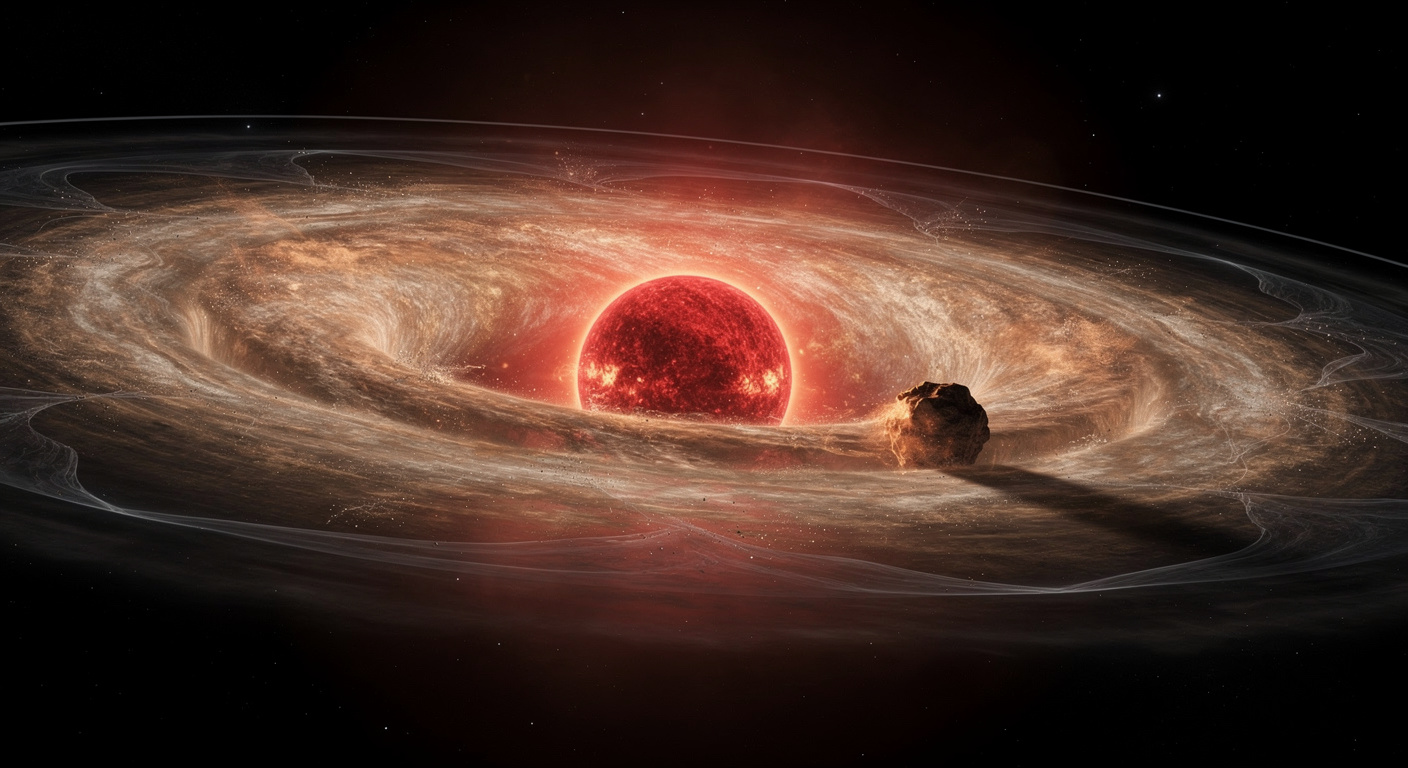
Dr. Wilson summarizes this scenario of material scarcity as follows: “By the time this outermost planet formed, the system may have already exhausted its gas reserves, which are considered vital for planet formation. Yet here is a small rocky world that defies expectations. It seems we have found the first evidence of a planet formed in a gas-depleted environment.”
Conclusion: The hunt is on
The hunt to track down these “inverted” systems is now underway. Astronomers will scan the sky with renewed attention, armed with the certainty that the universe still has many exceptions to reveal to us.
Source: iflscience.com
Created by humans, assisted by AI.
This "reversed" planetary system that defies all our theories about the formation of worlds


