

A ghost emerges from the woods
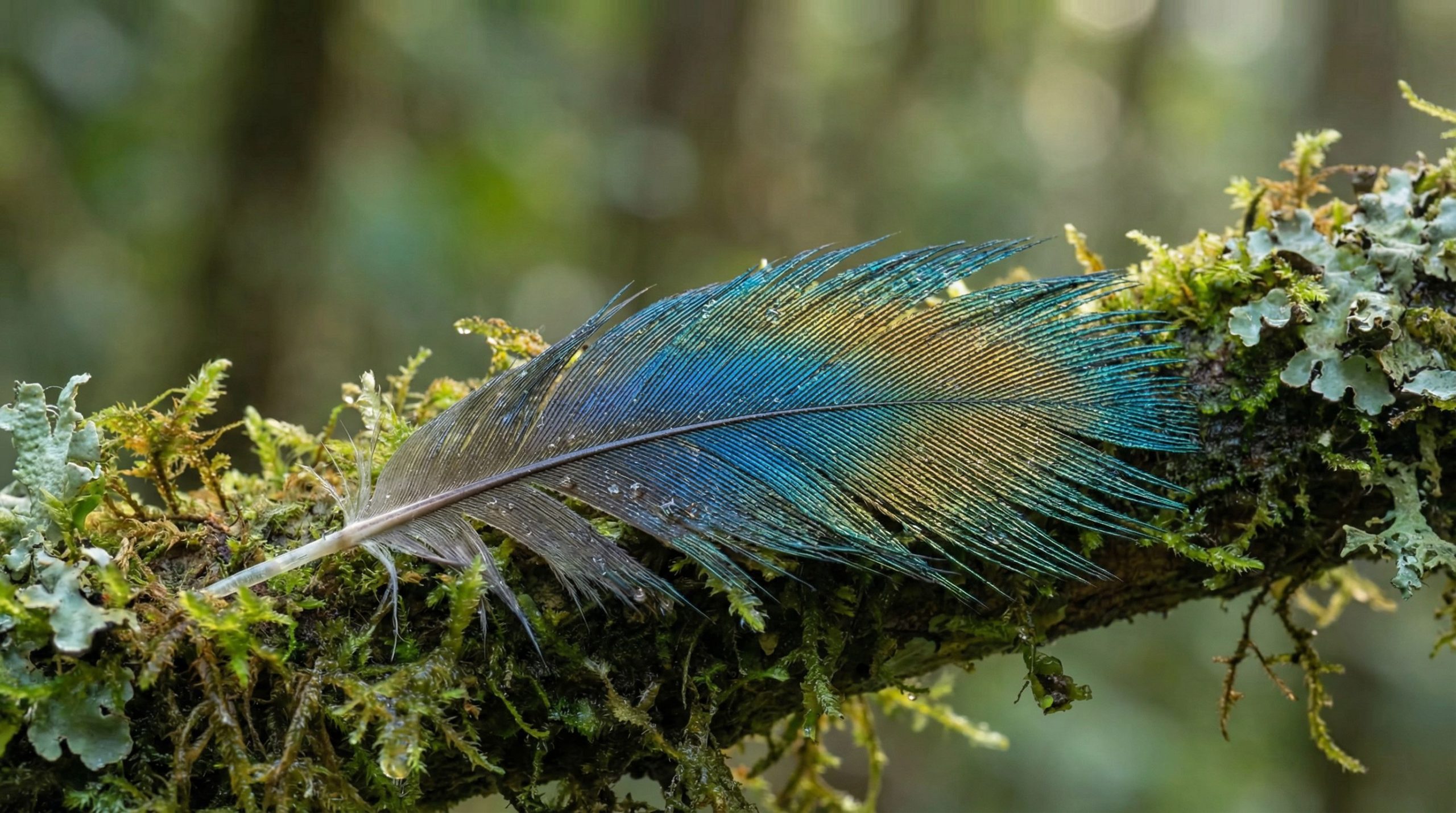
You’ve probably already felt that strange sense of finality when we talk about extinction. It’s like a book that’s suddenly closed, a story with no sequel. We tell ourselves it’s over, that evolution has turned the page. And yet… it happens—rarely, very rarely indeed—that nature thwarts our expectations.
That’s exactly what just happened in the Pacific. While we’re all, I suppose, used to bad news about the climate, a small glimmer of hope has shone in the heart of a Samoan forest. The manuméa, that pigeon with a serrated beak that we thought had almost been wiped off the map, has reappeared. It’s not just a bird—it’s a symbol. It’s a living reminder that as long as there’s still a breath of life left, the game isn’t quite lost.
This unexpected return forces us to ask ourselves a question—perhaps a bit naive, but essential: are we looking in the right place to save what can still be saved?
A five-year investigation finally finds its answer
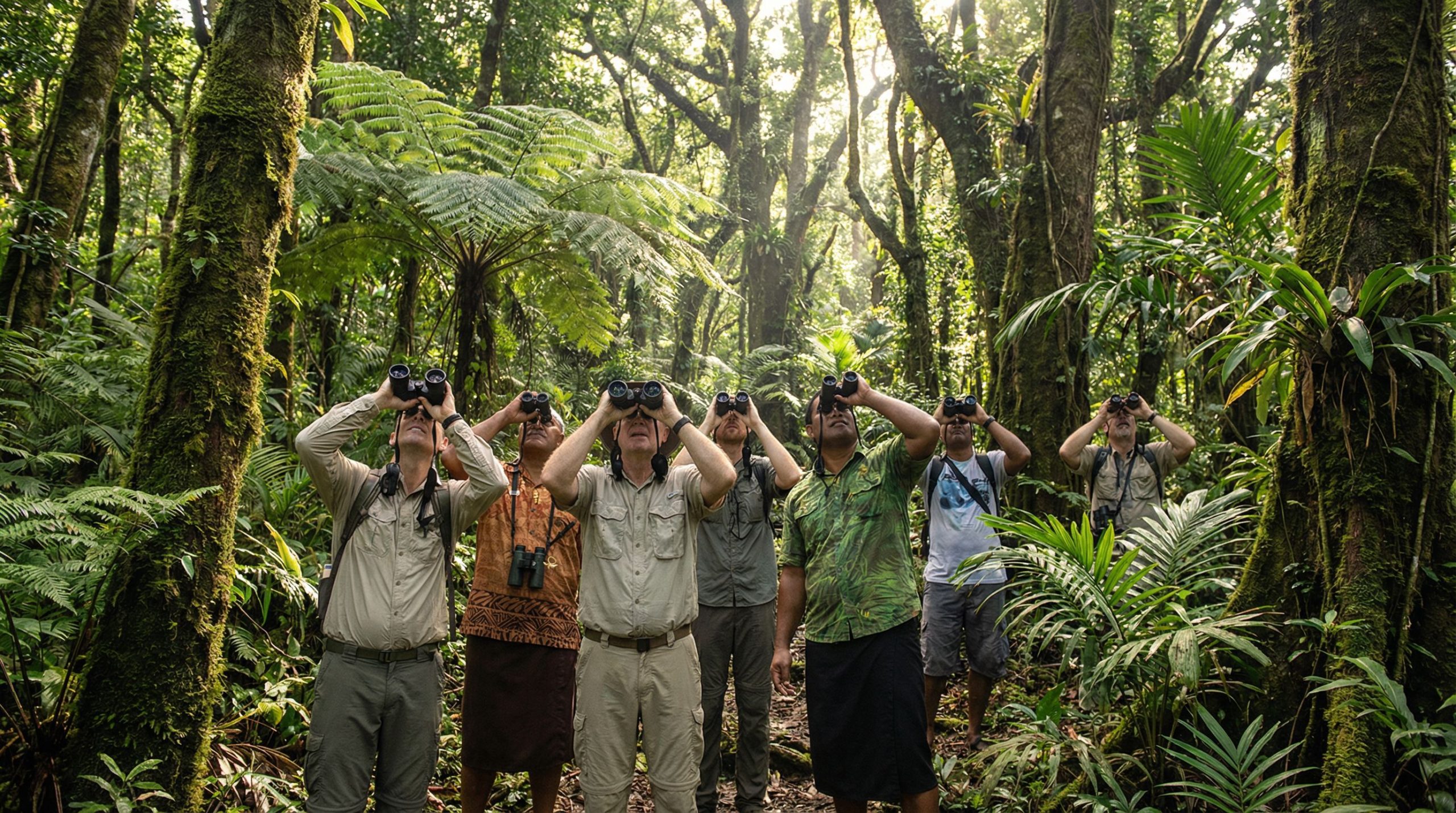
It had been five long years. Five years of silence. No one had laid eyes on the manuméa—or Didunculus strigirostris, for Latin purists—in all that time. No matter how optimistic one might be, after such a long wait, doubt inevitably sets in. But then, in October and November 2025, a miracle occurred. Field teams reported several sightings in the Uafato Forest, located in the northeast of the island of Upolu.
I must point out one important detail: there are no photos. It’s not for lack of trying, but the bird is utterly elusive, slipping through the canopy like a shadow. The Samoa Conservation Society broke the news, not without a palpable sense of emotion. They confirmed the bird’s presence despite the lack of photographs, thereby validating the accounts of several witnesses who, this time, observed the same individual. It’s a huge relief.
It must be said that the clues were starting to pile up, much like in a police investigation. Last May, believe it or not, artificial intelligence had validated an audio recording of its call! An amateur ornithologist also swore he’d seen it the previous year… but without proof, it’s always complicated. As the website IFLScience—which is covering the story—rightly points out, none of this would have been possible without the crucial help of local communities and Samoan guides. They are the true guardians of the temple.
The dodo’s cousin facing its demons
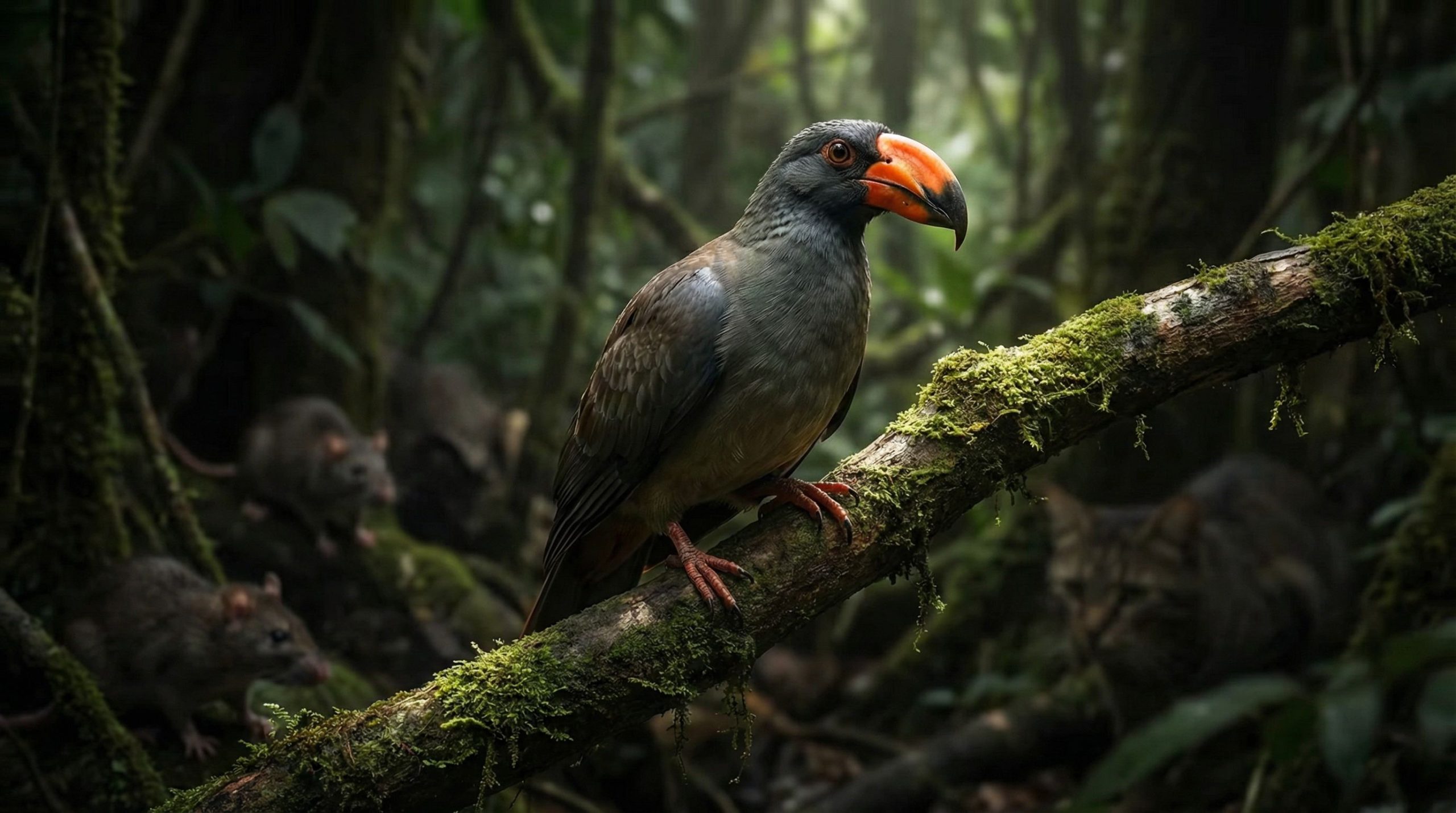
This story moves us not only because the manuméa is no ordinary creature, but also because it is, in a way, the tragic cousin of the famous dodo. A study published in the journal Science in 2002 proved this beyond a doubt: thanks to mitochondrial DNA analysis, we know it belongs to the same lineage as the dodo and the Rodrigues solitaire. A sort of very exclusive club of pigeons that, isolated on their islands, have somewhat forgotten how to fly or defend themselves.
Unfortunately, this uniqueness is also their Achilles’ heel. Until the 1980s, the manuméa was common. And then… everything fell apart. It’s the usual sad story: deforestation, climate change, but above all—and this is the tragedy of the islands—the arrival of invasive species. Rats, cats, pigs… introduced by humans, these predators have ravaged the nests. It’s terrible when you think about it.
Yet this bird plays an ecological role that cannot be ignored. It disperses large seeds that other birds simply cannot swallow. Without it, the very balance of the Samoan forest is threatened. It’s still critically endangered—let’s not kid ourselves—but it’s still here.
Resurrect the dead or save the living?
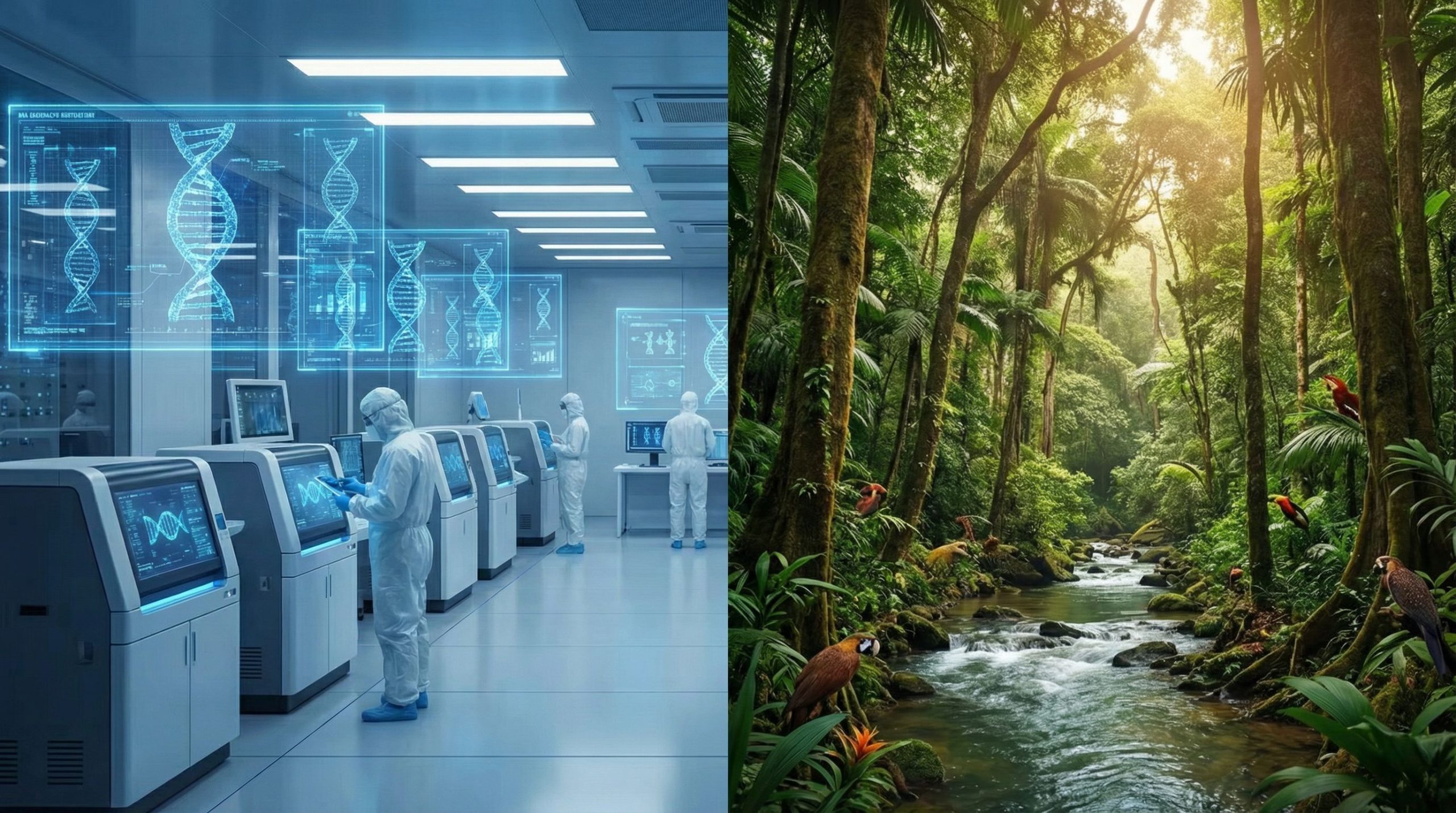
This is where the story takes a slightly… let’s say, futuristic turn. Have you perhaps heard of Colossal Biosciences? It’s that American company that’s set out to bring the dodo back to life (no less!) by pouring millions of dollars into biotechnology. It’s fascinating, to be sure, but it raises questions.
Officially, Colossal claims it wants to help preserve current biodiversity. And it’s quite ironic, but the manumea is now benefiting from the funding of this “de-extinction” project. Why? Well, to recreate the dodo, they need to understand its living cousins. The manuméa, long neglected by major international programs, has thus found itself in the spotlight—and receiving funding—as a result.
But not everyone agrees with this approach. The website Mongabay published a rather critical investigation on the subject. Many ecologists see this as a dangerous distraction. It’s true, after all… Is it really reasonable to spend fortunes bringing back ghosts when we’re struggling to save those who are still breathing? Believing that we can “fix” extinction through technology risks making us complacent in the face of the urgent need to protect very real species.
Conclusion
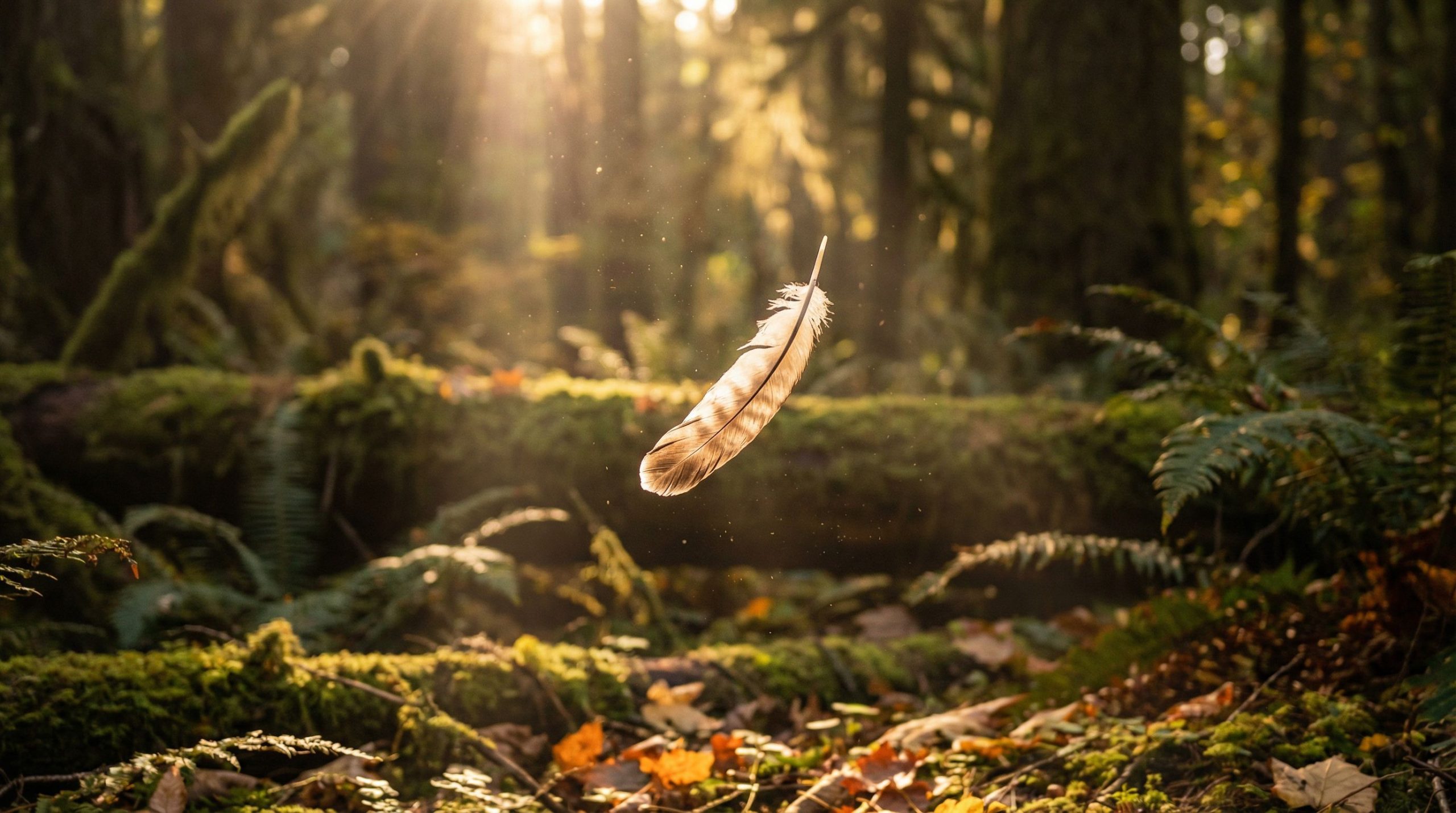
Deep down, this rediscovery in Uafato is a lesson in humility. It reminds us that a bird we thought was lost can still survive, against all odds, if we just give it a little space. It’s a fragile glimmer of hope, to be sure.
But perhaps the true scientific feat—the one we should be most proud of—is not playing at being sorcerers’ apprentices by bringing the dead back to life. It is simply preventing the living from disappearing. Let’s not bury them too quickly.
We thought it was extinct: this cousin of the dodo has miraculously reappeared in the forests of the Pacific
This content was created with the help of AI.


