

Geographical proximity that fuels myths

According to a recent analysis published in the American press, the immediate proximity between the United States and Canada gives rise to a curious phenomenon: a sense of familiarity that fuels misconceptions. Most people can name a few iconic aspects of this neighboring country—hockey, freezing winters, Tim Hortons, or a politeness so legendary it borders on mythology.
Canada seems so close and so similar that we rarely feel the need to dig deeper. Some of these beliefs—such as a joke about an accent or a vague idea of the weather—are harmless. Others stem from much deeper misunderstandings regarding health, language, culture, or the very size of the country. A clarification is needed to dispel these misconceptions.
A country whose size is often underestimated
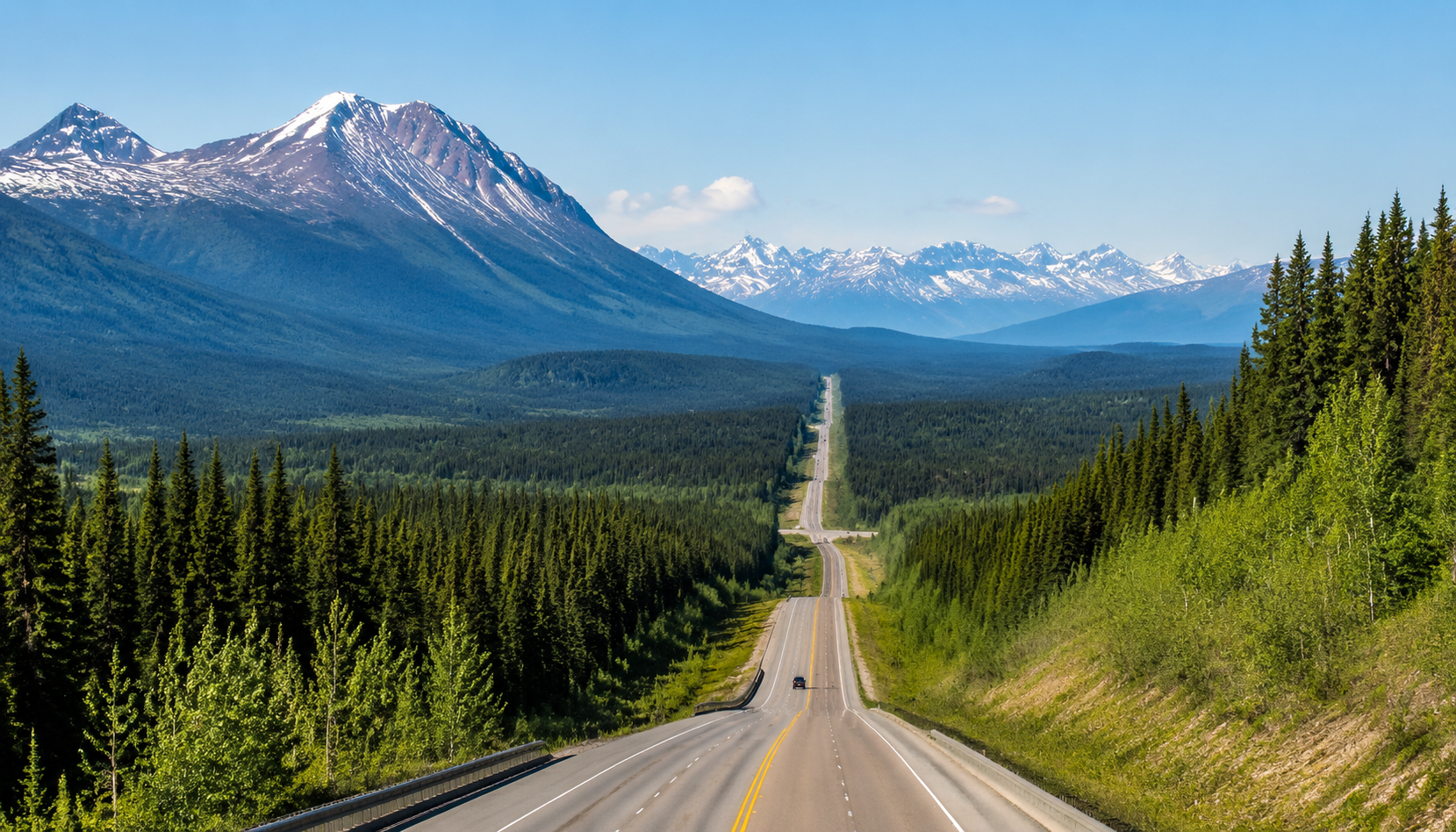
One of the most persistent factual errors is imagining Canada as a small patch of land wedged above the northern states. In reality, it is one of the largest places on the planet. Including its waters, the country ranks second in the world in terms of total area, just behind Russia. It covers exactly 9,984,670 square kilometers and has the world’s longest coastline, stretching 243,042 kilometers.
To put this into perspective, the entire continental United States could fit within Canada’s borders, with room to spare. The vast majority of this territory consists of sparsely populated wilderness. The population density is only 3.5 people per square kilometer, among the lowest in the world. Despite this vast expanse, nearly 80% of the population lives in urban areas.
A climate that’s far from being just a perpetual winter

The stereotype of a frozen country is probably the most immediate reaction. Ask someone to picture Canada, and they’ll instantly imagine blizzards, parkas, and a frozen tundra. The reality of the weather is infinitely more nuanced across the seven major geoclimatic regions that make up the country.
Conditions vary drastically depending on the region and season. Cities like Vancouver experience mild winters with very little snow and are characterized by a temperate, rainy climate in British Columbia. In contrast, summer temperatures in Toronto regularly exceed 30°C, or about 86 degrees Fahrenheit. This is a far cry from the desolate Arctic lands suggested by the stereotype.
The Maritime provinces enjoy moderate temperatures and magnificent fall colors, while southern Ontario has a climate very similar to that of many northern U.S. states. In the Prairies, summers are marked by extreme heat. While it’s true that the north remains very cold, the country does not have a single climate, but rather the equivalent of the climates of an entire continent. To picture Canada as a vast expanse of snow is to look at only one small corner of it.
The Myth of the Accent and Linguistic Reality

Few things amuse locals less than the famous imitation of the word “about” being pronounced as “aboot.” It’s a phonetic caricature that foreigners love to repeat. Canadians themselves find this confusing because, to their own ears, they don’t pronounce that sound that way at all. The Canadian accent may certainly sound different, but the use of “oot” or “aboot” is a myth.
The origin of this misconception lies in a phonetic feature called “Canadian raising.” This very real linguistic characteristic refers to the way the vowels in words like “about” and “house” shift slightly before certain consonants. It is a subtle variation that has nothing to do with the comical accent often parodied.
Spelling often causes similar confusion. According to Oxford’s Guide to Canadian English Usage, it is stated that “Canadian English is a distinct variety of English,” shaped by political, cultural, historical, and geographical realities that require its own conventions. The inclusion of a “u” in “colour” and “favour,” or the “re” ending in “theatre” and “centre,” is neither a mistake nor an incoherent imitation of British English. It is a purely Canadian linguistic identity.
Bilingualism is not the norm in everyday life

The image of a country where citizens switch fluently and effortlessly between English and French is persistent. However, this picture does not reflect the daily reality of the overwhelming majority of the population. French-English bilingualism is not as widespread as is often imagined from outside the country’s borders.
A universal healthcare system that is not entirely free

The system has significant gaps in coverage. Public health insurance covers approximately 70% of the population’s medical needs, with the remaining 30% funded by the private sector. This portion generally covers prescription drugs, vision care, dental treatments, medical devices, and psychotherapy. It is the only country with a universal health care system that does not include prescription drugs.
A Distinct Geopolitical and Cultural Identity
The notion that this country is merely a calmer, more polite version of its southern neighbor—often condescendingly referred to as “America’s back yard”—is a perception that Canadians notice and do not appreciate. Although the popular culture of the two nations seems indistinguishable in many respects, the fundamental differences run deep.
The 20th-century literary critic Northrop Frye wrote in his collection of essays The Bush Garden that the distinctive local attitude “might be traced back to the central fact of Canadian history: the rejection of the American Revolution.” Contemporary society tends to favor an orderly central government and a sense of community, as opposed to American individualism.
A sports scene that goes far beyond hockey

The enthusiasm for hockey is immense; no one disputes that. However, reducing an entire nation’s passion for sports to this single discipline is an oversimplification that many find tiresome. History and legislation offer a very different perspective on the subject.
Lacrosse is officially the national summer sport—a fact that surprises those who think hockey holds all the titles. In 1994, Parliament passed the National Sports of Canada Act, designating lacrosse as the national summer sport and ice hockey as the national winter sport. Lacrosse has its origins in a sacred practice of First Nations peoples, used for spiritual, ceremonial, and diplomatic purposes. Known as Baggataway or Tewaarathon, it held deep cultural significance among many Indigenous nations.
In addition to hockey and lacrosse, Canadians are passionate about football through the CFL, basketball—an interest largely fueled by the Toronto Raptors’ 2019 NBA championship win—and, increasingly, soccer. Not everyone plays hockey, nor does everyone know how to skate. The public actively supports a wide variety of competitions.
Maple syrup: a global economic issue

The very idea of a strategic reserve for maple syrup may seem fanciful, but it makes perfect sense given the world’s dependence on this crop. A poor maple syrup season disrupts the global supply in the same way that a disastrous olive harvest in Spain impacts olive oil prices in American kitchens.
Proximity That Invites Authentic Discovery
Yet it is a truly distinct nation, with its own healthcare system, complex linguistic realities, a deep Indigenous history, and a unique national sport. It asserts its foreign policy positions independently, across a territory whose vastness surpasses that of nearly every other country in the world. Not to mention its significant control over the world’s maple syrup reserves.
Properly grasping this reality is more than just a trivial anecdote. For anyone crossing the border—whether to visit, work, or settle there—understanding how the country truly functions and what drives its people ensures a richer and more respectful experience. While locals generally don’t confront visitors aggressively when a misunderstanding arises, rest assured that they will inevitably notice it.
Source: theheartysoul.com
8 Common Misconceptions Americans Have About Canada


