

Introduction: Climate Pathways at a Crossroads

Climate “pathways”—the scenarios for future emissions that shape global climate debates—do much more than describe possible futures. They help determine who must reduce emissions first, who receives financial support, and which development needs are considered negotiable. A new study warns that when these scenarios neglect equity and justice, even technically sound climate plans may struggle to gain political support.
The Real Political Influence of Modeling

Mitigation scenarios might seem like nothing more than abstract modeling exercises. In reality, they help set the tone for negotiations and national plans. They influence assumptions about what constitutes “reasonable” targets, acceptable costs, and who is expected to act first. The article highlights that these tools shape real-world policy choices: who reduces emissions, who pays, and who benefits from climate action.
The Reality Gap: Unequal Starting Points

If models ignore these disparities, the “optimal” path may look right on paper but appear unbalanced in reality. Lead author Shonali Pachauri of IIASA said the study aims to bring together the growing—but often scattered—criticisms of climate mitigation modeling on a single page.
She explains her approach: “We wanted to bring together existing critiques, assess where current approaches fall short and where current scenarios already go further than some critiques suggest, and define a clear agenda for integrating equity and justice into future climate mitigation scenarios. ” Rather than debating whether models should include equity, the article treats this issue as settled and focuses on what needs to be done next.
First Blind Spot: Structural Limitations

The authors group these gaps into three broad categories. The first concerns structural limitations: who builds the models, what data shape the assumptions, and which perspectives are treated as “central” rather than “local.” This is a question of representation and the origin of the information used to construct these projections.
Second blind spot: Methodological issues

The second category concerns methodological issues. A strong focus on cost-effectiveness can sideline equity and distributional impacts. This approach risks producing so-called “low-cost” solutions that impose heavier burdens on communities already under strain or that assume an unrealistic capacity for governance.
By seeking pure economic optimization, models may overlook the social and economic realities of the most vulnerable populations. Mathematical calculations of efficiency do not necessarily account for societies’ actual capacity to withstand the changes imposed by these scenarios.
Third Blind Spot: Epistemological Limitations

A Roadmap for Fairer Pathways
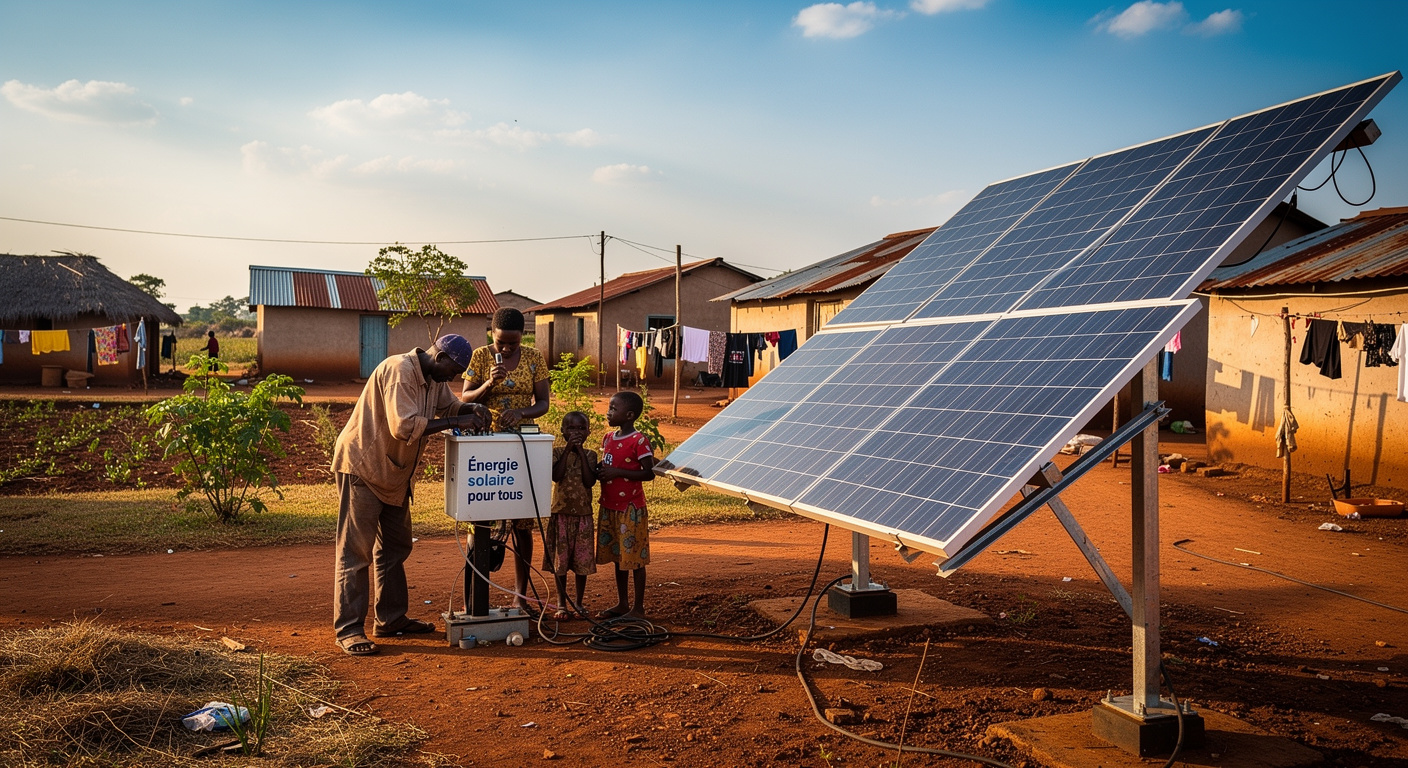
The article advocates for integrating effort sharing and climate finance directly into the scenarios, so that models do not implicitly assume cooperation without showing how it occurs. It also emphasizes safeguarding decent living standards for all, so that “mitigation success” does not depend on a silent decline in expectations regarding basic well-being in the poorest regions.
Conclusion: Models Are No Substitute for Moral Judgment

One of the article’s clearest messages is also the most direct: models are useful, but they have limitations. They can explore trade-offs, test sensitivities, and show how assumptions change outcomes. But they cannot decide what is “right.”
Shonali Pachauri emphasizes this crucial point: “Models are indispensable tools, but they cannot replace deliberative negotiation or moral judgment. Transparency, pluralism, and co-production are just as important as technical sophistication.” This line of thinking is important because it reframes the role of scenario work. It is not a neutral forecasting machine. It is a structured way of imagining futures, shaped by choices about what to measure and what to treat as fixed.
Co-author Keywan Riahi, director of IIASA’s Energy, Climate, and Environment Program, concludes on the political aspect: “Climate mitigation scenarios shape what policymakers believe is possible and acceptable. They are visions of who gets what kind of future. Greater attention to equity can help ensure that these pathways are robust, transparent, and socially grounded.” Without equity, even technically feasible pathways could fail in the face of public opposition.
Source: earth.com
Created by humans, assisted by AI.
Climate: Why the Success of Global Plans Doesn’t Depend Solely on Science


