

From Science Fiction to Clinical Reality
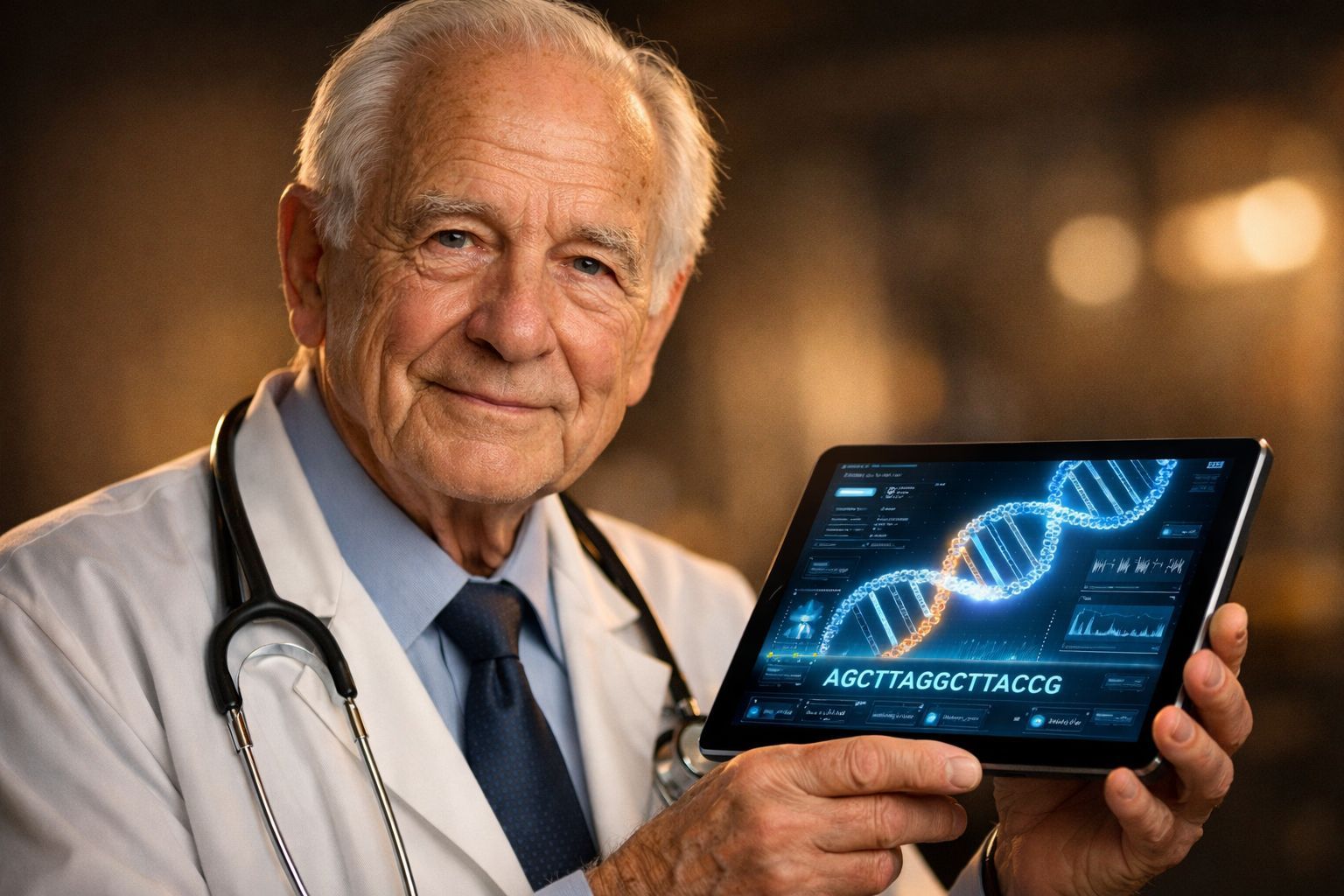
Just a few years ago, the very idea of “rewriting” a human being’s genetic code to treat them was the stuff of pure science fiction. You know, the kind of thing you see in the movies. And yet, here we are. What seemed impossible has become, almost without us noticing, a tangible clinical reality. Genome editing using the famous CRISPR-Cas9 molecular scissors is beginning to cure diseases once thought incurable. It’s fascinating, isn’t it?
But let’s not get too carried away just yet. Where does this revolution—which we’ve been promised for a decade—really stand? Between the initial successes that make us want to cry with joy, the technical limitations that still persist, and the ethical questions that gnaw at us, the landscape of CRISPR therapies is complex. It’s a mix of wild promises and absolutely necessary caution. Carole Arnold, Ph.D. in Biological Sciences at the University of Haute-Alsace, helps us see more clearly through this medical fog.
From molecular scissors to magic erasers: a meteoric evolution
We are currently witnessing an incredible surge of hope for rare diseases—conditions often referred to as “orphan diseases” because medicine has long neglected them. Take this heartbreaking case from 2025: an infant suffering from a rare metabolic disorder caused by a mutation in the CPS1 gene. It’s a devastating genetic disease in which an essential enzyme fails to function properly. Well, this baby received a “tailored” treatment using a technique called “base editing.” And guess what? The biological results are encouraging. It’s literally life-changing.
To understand how we got here, we need to rewind a bit. It all began—or rather, exploded—in 2012 with the development of CRISPR-Cas9. It’s a combination of an endonuclease (Cas9) and small guide RNAs (sgRNAs). Basically, a GPS and a pair of scissors. This invention revolutionized biology so much that its creators won the Nobel Prize in Chemistry in 2020. Well-deserved, I’d say. Since then, labs around the world have been using it to create disease models or understand mysterious genes.
But—and there is a “but”—that first system was imperfect. From a clinical standpoint, the idea of modifying or inactivating a gene was brilliant, but the precision sometimes left something to be desired. There was a risk of off-target cuts—imagine accidentally crossing out the wrong spot in a precious book—and, more importantly, the method involved a “double-strand break” in the DNA. That’s a bit rough on the cell. Homologous recombination, the natural mechanism supposed to piece the DNA back together, is often finicky and unreliable.
That’s where things get really interesting. Starting in 2016, a new technological breakthrough emerged: base editors. No more need to break everything! These modified versions of CRISPR can change a single letter in the DNA without causing that infamous and risky double-strand break. Finally, precision almost as precise as surgery! However, let’s be honest, they still had limitations: it was impossible to insert complex sequences; they could only make substitutions.
The “Prime Editing” Breakthrough and Sky-High Costs

It was in 2019 that the game really changed with the arrival of the successors to the basic editors: “prime editors.” This is no joke. These new molecular machines not only allow us to change letters, but also to insert or delete short DNA sequences—all without breaking the double helix! It’s a bit like going from a typewriter to a modern word processor. Over the past six years, the technique has been refined, and 2025 marks its official entry into clinical practice. Doctors are calling it a true turning point.
Speaking of which, let’s talk about what’s already on the market. The drug Casgevy, based on classic CRISPR, was approved in Europe in 2024 for sickle cell disease and β-thalassemia. The results of the 2019 trials were promising: a single injection, and symptoms improved dramatically. But brace yourselves… the cost is around 2 million euros per patient. Yes, you read that right. Two million. That’s the price of innovation, apparently.
But let’s get back to the year 2025. It’s a historic year. Prime editing now makes it possible to replace or restore an entire gene. On May 19, 2025—mark this date well—Prime Medicine, founded by David Liu (the genius behind prime editing), announced the first human administration of its therapy. The patient? A young man suffering from chronic granulomatosis, a rare immune disorder. The initial results of this “ultra-powerful CRISPR” are very promising, though we must remain cautious. We still lack sufficient long-term data on safety and the absence of side effects. That’s the problem with new technologies: you have to be patient.
Conclusion: Toward Personalized Medicine?

We are clearly entering the era of personalized medicine. Each treatment is tailor-made for your specific mutation. It’s incredible when you think about it, isn’t it? We’ve gone from a lab prototype to a versatile technology in record time. The scope of application is expanding: hepatitis B, metabolic diseases… everything is being addressed.
However, let’s not expect immediate miracles for everyone. Complex or multifactorial diseases remain difficult to treat. And then there’s the colossal economic challenge. Treatments costing several million euros raise questions about access to care. The future? Companies now aim to administer the treatment directly into the body (in vivo), without having to harvest and modify cells in the lab. That’s the next step. Promising, certainly, but there’s still a long way to go.
Rewriting DNA to Cure Diseases: Has the Medical Revolution (Finally) Arrived?
This content was created with the help of AI.


