

Understanding the Role of the Tau Protein
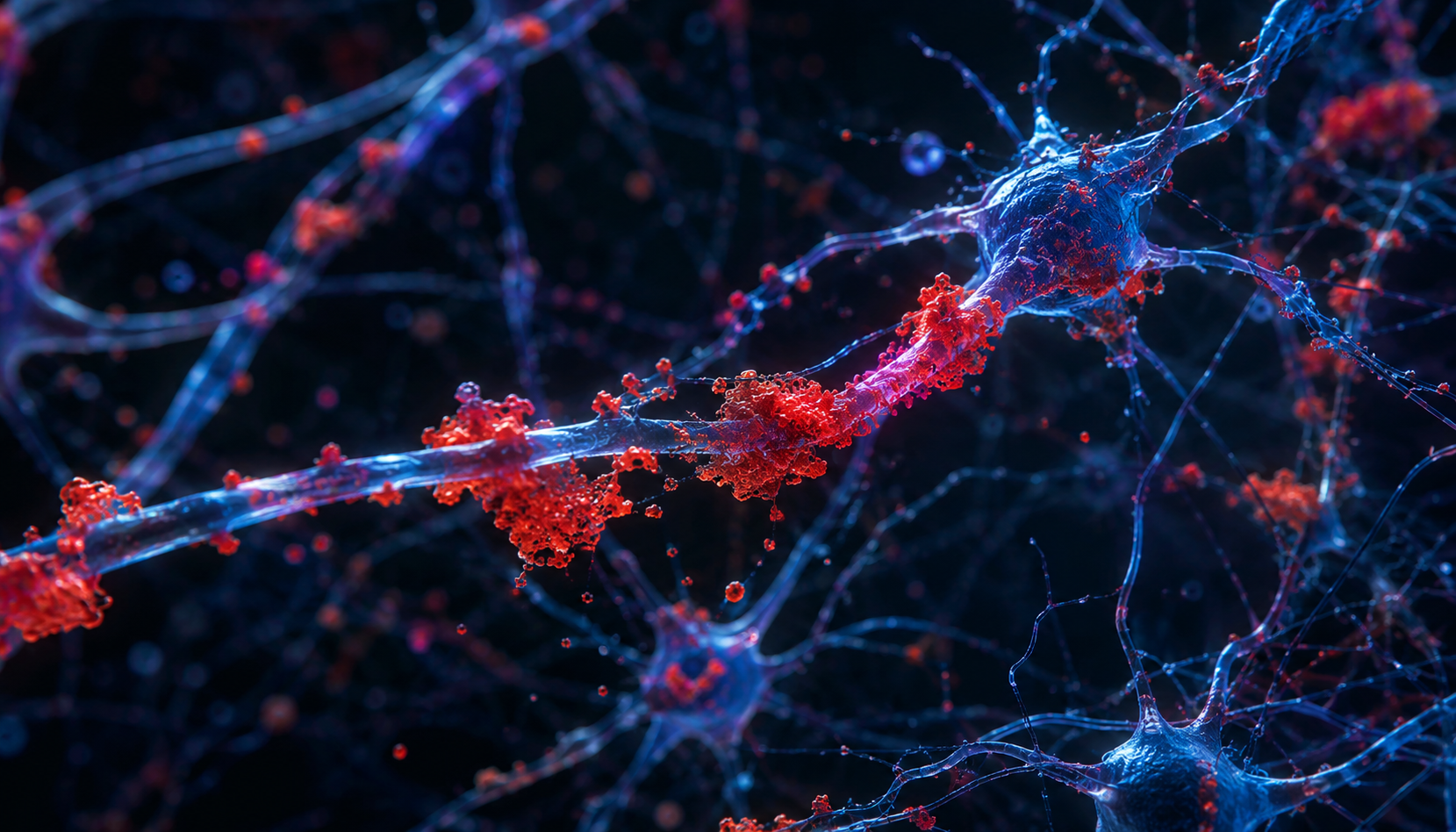
Alzheimer’s disease is a complex neurodegenerative disorder, primarily characterized by a progressive decline in mental function and memory loss. An article written by journalist Ingrid Fadelli for Medical Xpress notes that this disease, like frontotemporal dementia and other neurodegenerative disorders, is directly linked to the abnormal accumulation of a specific protein inside neurons called “tau.”
In its natural state, the tau protein plays a fundamental role in brain health. Its primary function is to stabilize internal structures within neurons called microtubules—a precise mechanism that ensures proper cellular function.
This balance is disrupted in Alzheimer’s disease and other tauopathies—a term referring to all diseases linked to the abnormal accumulation of this protein. Tau proteins aggregate to form toxic, insoluble clumps. These clumps then become harmful to brain cells, triggering a slow process that inevitably leads to their death.
A major breakthrough from Asian laboratories

Researchers from Zhejiang University, Xiamen University, and other research institutes in China recently conducted an ambitious study. Their goal was to better understand the exact processes by which tau aggregation contributes to neuron death in patients with Alzheimer’s disease. The results of their work, published in the journal Nature Neuroscience, suggest that these tau aggregates trigger the reactivation of transposable DNA elements in neurons, which in turn leads to their destruction.
“Once tau aggregates are formed, their neurotoxicity contributes significantly to neuronal death and cognitive decline in tauopathies, with Alzheimer’s disease being the best-known example,” wrote scientists Wei Liu, Song-Ang Wu, and their colleagues in their research paper.
“However, despite its central pathogenic role, effective therapeutic strategies targeting tau neurotoxicity remain limited. We demonstrate the pathogenic role of neuronal cell death in tau-related neurodegeneration (PS19 mouse model),” the researchers explained. To support this demonstration, the scientists conducted experiments on genetically modified mice, known as PS19 mice. These animals exhibit abnormal tau aggregation in neurons similar to that observed in humans and display behaviors indicative of a progressive decline in memory and brain function.
DNA disruption as a trigger

"Tau-expressing neurons undergo cell death through the activation of Z-DNA-binding protein 1 (ZBP1) triggered by endogenous Z-RNAs," the study’s authors explain. “These Z-RNAs derive from reactivated transposable elements that are typically silenced within heterochromatin. Tau aggregates exhibit a strong affinity for H3K9me3-modified chromatin, effectively sequestering these epigenetic marks from heterochromatin protein 1 (HP1), thereby disrupting the condensation of constitutive heterochromatin."
A New Approach to Preventing Neuronal Death

The researchers have also established a direct link to observations made in humans. “Clinically, an inverse correlation between ZBP1 expression levels in excitatory neurons and cognitive performance in individuals with Alzheimer’s disease has been observed,” explain Wei Liu, Song-Ang Wu, and their colleagues.
The results obtained in animal models are particularly encouraging for future research. “It is important to note that Zbp1 haploinsufficiency significantly improved cognitive deficits in aged (24-month-old) tau transgenic mice, highlighting the therapeutic potential of ZBP1 inhibition for combating neurodegeneration in tauopathies,” the researchers add in their report.
Future Prospects and Publication Details

Other research teams may soon step in to further investigate these new mechanisms brought to light by the Asian team. If these fundamental discoveries are validated in human clinical trials, they could ultimately guide the development of new treatments designed to slow cell death and halt the decline in mental function in patients with Alzheimer’s disease or other tauopathies.
The full details of this research have been documented in the paper titled “Tau aggregates cause reactivation of transposable DNA elements, leading to Z-RNA–ZBP1-mediated neuronal death,” authored by Wei Liu and colleagues. This work was published in the scientific journal Nature Neuroscience and is dated 2026. The article is accessible via its digital identifier: DOI: 10.1038/s41593-026-02299-9.
All information regarding the publication and the journal’s archives is also available directly on the official Nature Neuroscience portal at http://www.nature.com/neuro/.
Source: medicalxpress.com
In neurons affected by Alzheimer’s disease, the tau protein may trigger a genetic response leading to cell death


