

An Unexpected Discovery After Six Decades of Silence

It’s a story that was thought to be frozen forever in the polar cold. After spending 66 years lost in the ice, the body of Dennis “Tink” Bell, a 25-year-old British meteorologist, was finally recovered last year. The young man had gone missing after falling into a glacier off the Antarctic Peninsula, and his remains had been trapped by the elements for more than half a century.
Fate finally intervened to bring closure to the deceased’s loved ones. A team from the Polish Henryk Arctowski Antarctic Station discovered the remains, making it possible to recover not only the body but also more than 200 personal items that had belonged to the scientist. Formal identification was made possible through DNA analysis, compared to samples provided by his two surviving siblings.
This account, produced in collaboration with Biography.com, brings an end to a long wait for the Bell family. Dennis’s story, frozen in time since 1959, now has an unexpected epilogue thanks to the joint efforts of international scientific teams on the White Continent.
From the suburbs of London to the ends of the earth

Dennis “Tink” Bell was the eldest of three children, raised in Harrow, a town northwest of London. His brother David remembers him as a naturally curious man with many talents. According to a press release from the British Antarctic Survey (BAS), David said that Dennis “seemed capable of doing anything with his hands, from maintaining gasoline engines to photography, including developing his own film.”
After finishing school, the young man spent some time in the Royal Air Force to fulfill his national service. However, in 1958, he chose to pursue a more adventurous path by joining the Falkland Islands Dependencies Survey (FIDS), the predecessor of today’s British Antarctic Survey. He was seeking exploration and a change of scenery far from the British mainland.
The Tragedy of July 26, 1959
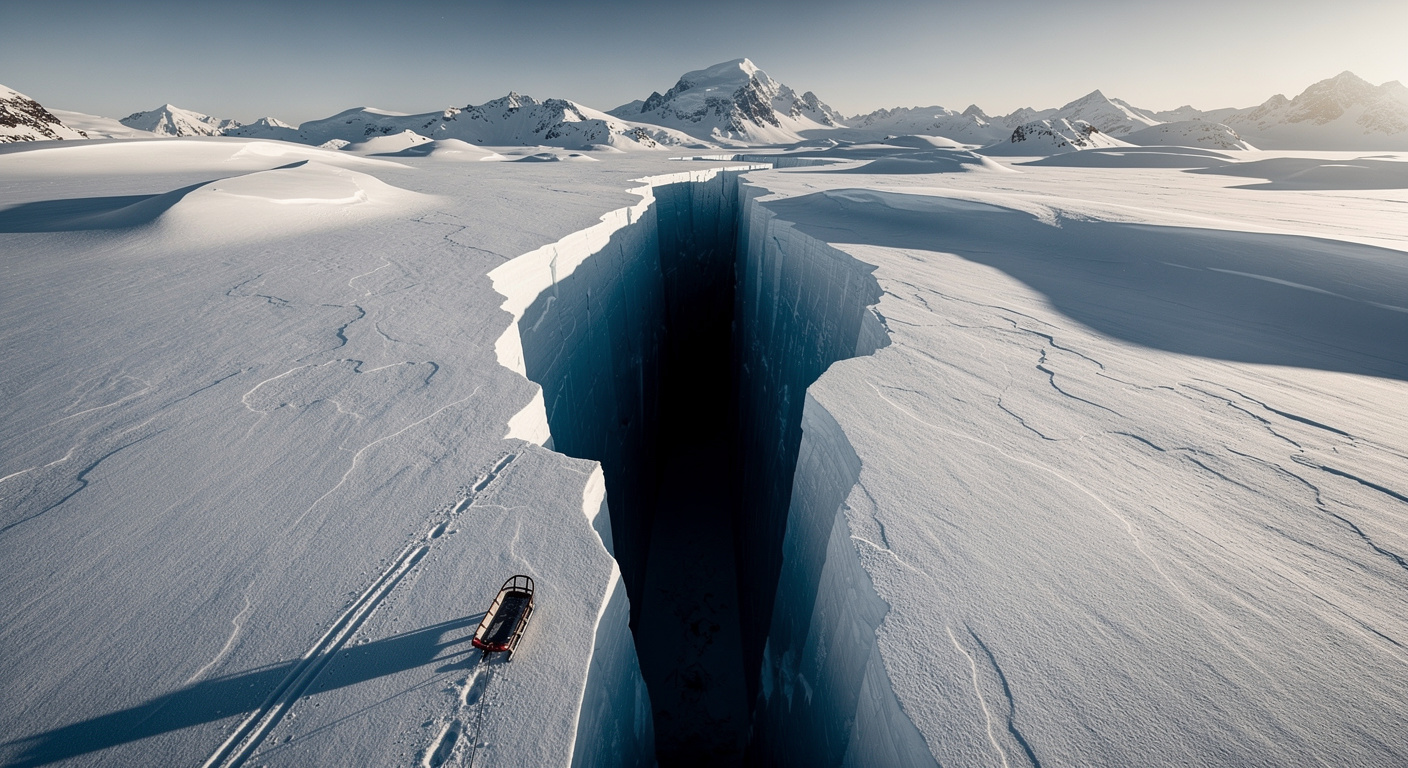
The BAS report summarizes the tragic incident that followed: “To encourage them, Bell went ahead to urge them on… tragically without his skis. Suddenly, he disappeared, leaving a gaping hole in the crevasse bridge through which he had fallen.” This decision to remove his skis to motivate the team proved fatal, as his weight was no longer distributed evenly across the fragile surface.
The rescue efforts attempted immediately after the fall were meticulously documented in the book Of Ice and Men. This account details the critical minutes that followed the young meteorologist’s disappearance into the depths of the glacier.
A Desperate Rescue Attempt
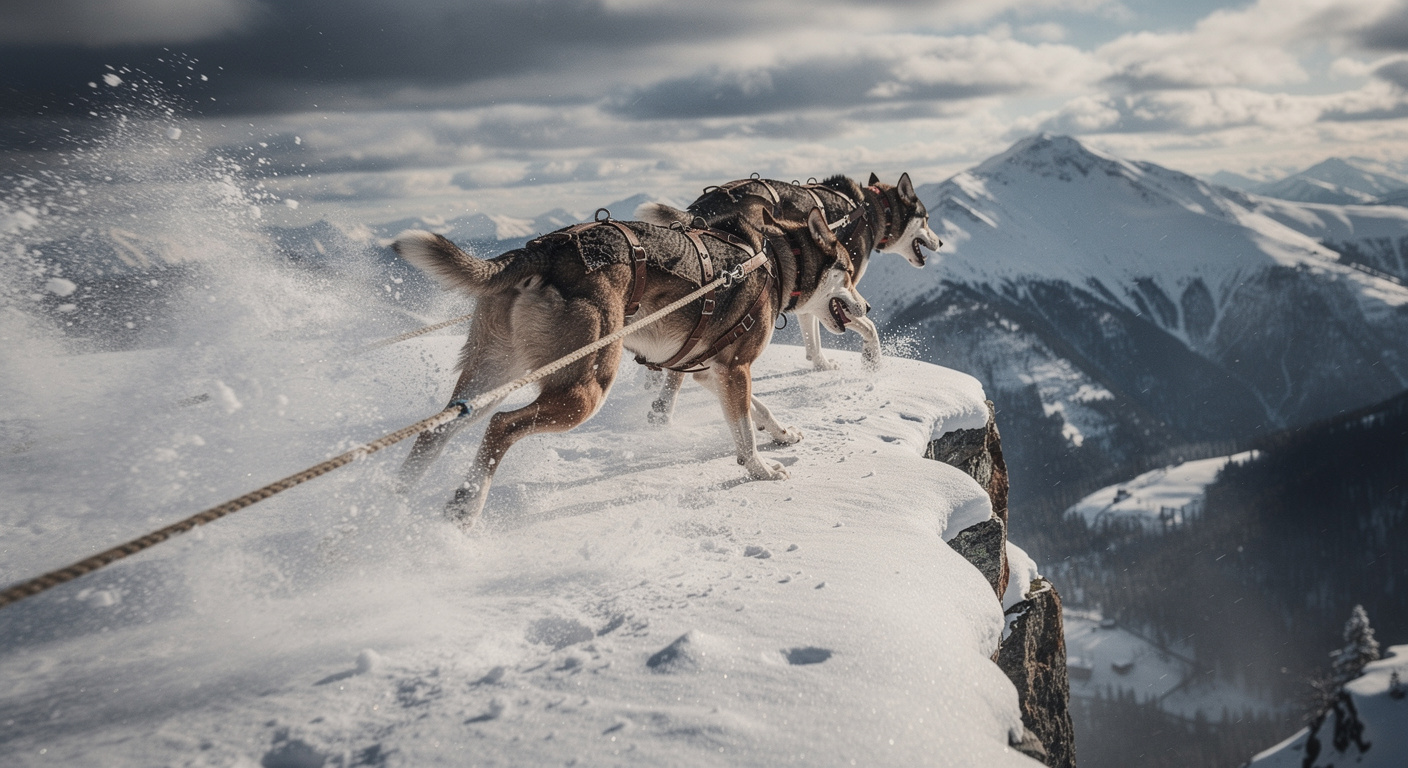
The book recounts: “Looking down into the depths, Stokes called out several times and was greatly relieved to get a response. Lowering a rope nearly one hundred feet [about 30 meters], he told Bell to tie himself in. Since he couldn’t pull the weight back up on his own, he tied his end of the rope to the team. The dogs took the tension and began to pull. It was now easy, and everything was going well. But Bell had tied the rope to his belt rather than around his body, perhaps because of the angle at which he was lying in the crevasse. When he reached the top, his body jammed against the lip, the belt snapped, and he fell back down. This time, there was no response to Stokes’s calls. It was a particularly tragic accident that—one truly felt—should never have happened, and was therefore doubly painful.”
For more than 50 years, this account marked the end of Dennis Bell’s story. The silence of the glacier had swallowed the young man whole, leaving his companions and family to grieve without a body.
The 2025 Recovery Expedition
In early February 2025, an expanded team traveled to the site. The group included an archaeologist, a geomorphologist, an anthropologist, and a glaciologist. They were able to recover additional human remains as well as more than 200 personal items that had belonged to Bell. Among the items found were “the remains of a radio, a flashlight, ski poles, an engraved Erguel wristwatch, a Mora Swedish knife, and an ebonite pipe stem.”
The remains were then transported by the BAS research vessel, the RRS Sir David Attenborough, to be examined by a coroner. The coroner subsequently sent them to Denise Syndercombe Court, a professor of forensic genetics at King’s College London, to conduct the DNA tests necessary for formal identification.
Identification and Memory: The Return of the Prodigal Son
Genetic analyses compared the DNA from the recovered remains with samples provided by Dennis’s siblings. The results concluded that it was “more than a billion times” more likely that they were related than the opposite, confirming beyond a shadow of a doubt the meteorologist’s identity.
Dennis’s brother, David, shared his emotions: “When my sister Valerie and I were informed that our brother Dennis had been found after 66 years, we were shocked and stunned. The British Antarctic Survey and the British Antarctic Monument Trust have been a tremendous support, and together with the Polish team’s sensitivity in bringing him home, they have helped us come to terms with the tragic loss of our brilliant brother.”
The current director of the BAS, Professor Dame Jane Francis, noted that “this discovery brings closure to a decades-old mystery and reminds us of the human stories embedded in the history of Antarctic science.” Although it is up to the family to decide the fate of the remains, the intrepid meteorologist is already commemorated geographically: the BAS press release notes that Bell Point, located at coordinates 62° 06′ 41” S 58° 51′ 56” W on King George Island, is named after him.
Source: popularmechanics.com
Created by humans, assisted by AI.
Inside the deadly Antarctic glacier that swallowed a scientist… before spitting him out
This content was created with the help of AI.


