

A Resignation That Marks the End of an Era
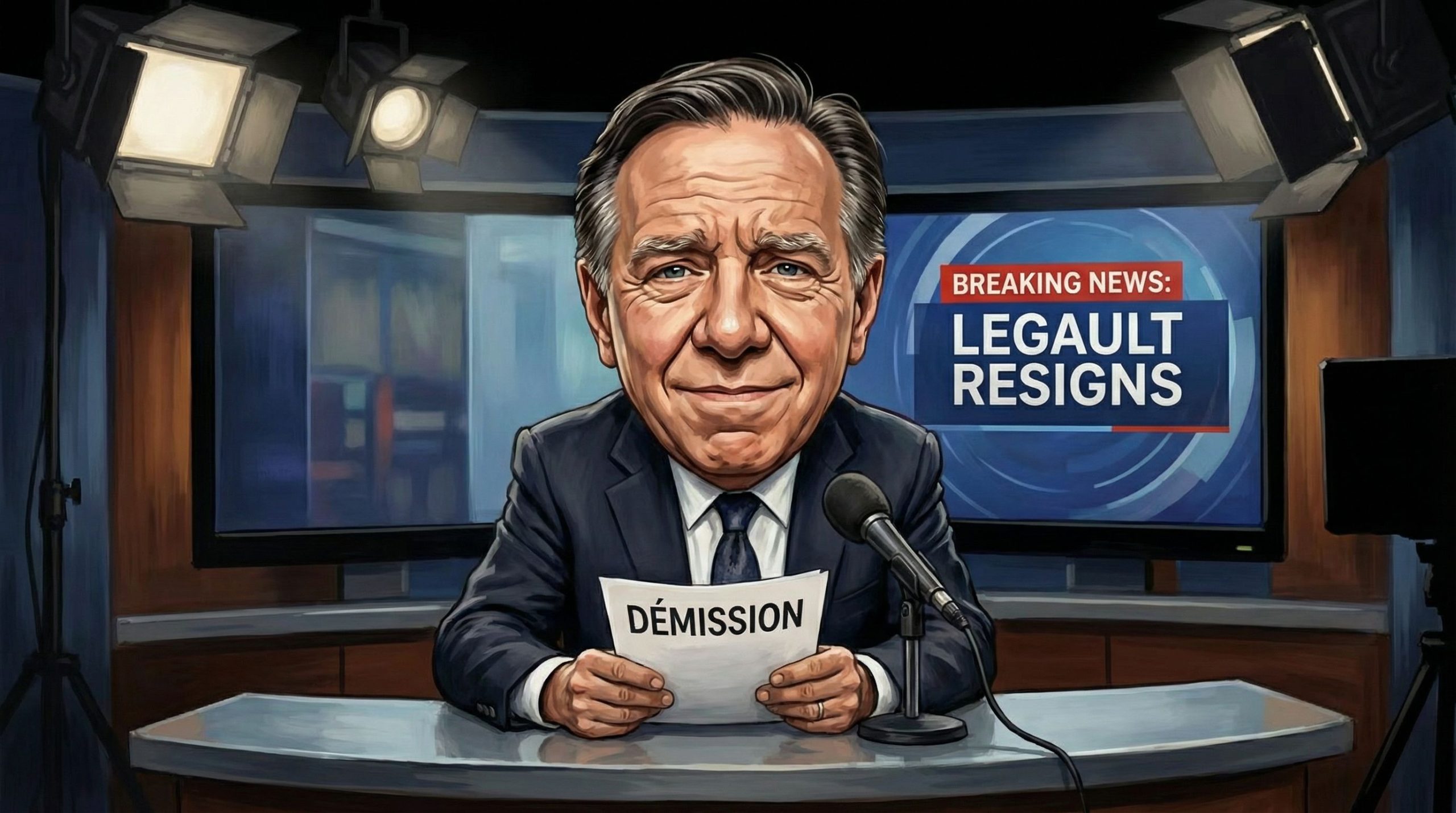
It happened on a Wednesday, January 14, 2026—a date that will likely be remembered for a long time in the annals of Quebec’s political history. François Legault has finally made his decision: he is leaving politics. After 28 years of public service, it was clear that the moment was approaching, but the official announcement still came as a shock. He is leaving after two terms that were anything but smooth sailing—marked by a global pandemic, repeated crises, but also, it must be said, some good times.
His departure marks the end of a unique era for the “Coalition Avenir Québec” (CAQ), the political party he built from the ground up. Photos by Ivanoh Demers and text by Stéphane Bordeleau, compiled by Radio-Canada, allow us today to take a look back. It’s fascinating to see how far we’ve come, the faces that have changed, and the trials that have shaped the outgoing premier.
From Difficult Beginnings to the Height of Power

We tend to forget it over time, but success wasn’t immediate. Far from it. Look back to 2014. François Legault was enjoying a moment of rest—perhaps a bit melancholic—with his partner Isabelle Brais aboard his campaign bus. The results were disappointing, not to say hard to swallow: the CAQ had won only 22 seats. It was the Quebec Liberal Party, under the leadership of Philippe Couillard, that had swept the election, leaving the CAQ as the second-largest opposition party, behind the Parti Québécois. A six-year dry spell in the opposition benches.
But the tide turned. In 2018, the wind shifted. The Coalition Avenir Québec finally took power with 37.4% of the vote, securing a comfortable majority of 74 seats in the National Assembly. I remember that image from June 2019, when the premier was cheered by his MLAs after the review of the first parliamentary session. The atmosphere was electric. It was also a time when rising stars were making their mark. Think of Geneviève Guilbault, then Minister of Public Safety and Deputy Premier, or Simon Jolin-Barrette at the Ministry of Immigration, Francization, and Integration. They were subsequently entrusted with high-stakes issues, a testament to the confidence Legault had in them.
When Nature and the Virus Collide
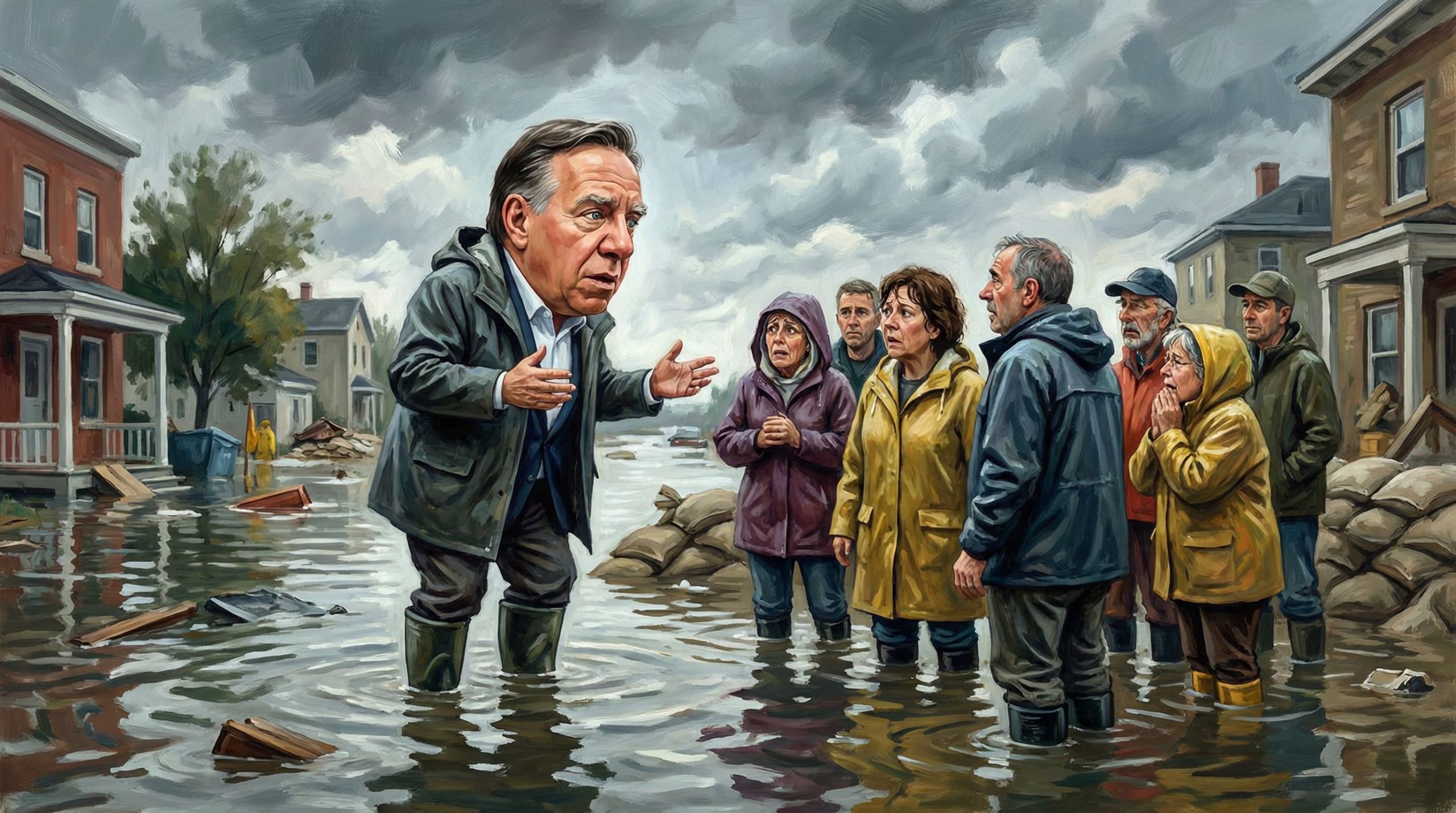
Disasters, however, do not wait for political approval. As early as the spring of 2019, nature unleashed its fury. Exceptional high water levels caused major flooding not only in Quebec, but also in Ontario and New Brunswick. The toll? Heavy. More than 9,000 homes were flooded in the province, affecting 310 municipalities and leaving more than 13,000 people displaced. We see François Legault, boots on, assessing the damage alongside elected officials and distraught residents of Mercier Island, west of Montreal. It was the first real test of compassion on the ground.
And then… March 2020. COVID-19. This virus, which spread at breakneck speed, plunged the entire world—and Quebec along with it—into an unprecedented health crisis that defined Legault’s first term. Who could forget those daily press conferences? In a photo from January 2021, he is seen alongside Dr. Horacio Arruda, then the national director of public health. It had become our ritual.
The public health emergency, declared in March 2020, granted the government immense powers. It was renewed—brace yourselves—55 times by decree, until it was finally lifted on June 1, 2022. Another striking image from June 2021 shows the premier greeting his colleague and friend, Health Minister Christian Dubé. It was an intense, exhausting period of crisis management.
Triumph, Hockey, and Final Turbulence

As the pandemic came to an end, one might have expected the government’s popularity to wane, but that was not the case. Quebecers renewed their confidence in him in spectacular fashion. In the October 2022 election, the CAQ won over 41% of the vote and returned to the National Assembly with an overwhelming majority of 90 out of 125 seats. On the evening of his reelection, October 3, 2022, he was seen celebrating with his chief of staff, Martin Koskinen, and the party’s executive director, Brigitte Legault. The euphoria was palpable.
François Legault is also a sports fan and a proud supporter of the Montreal Canadiens who never hesitated to talk about hockey. On May 1, 2022, he was among the first to arrive at the Bell Centre to pay tribute to the legend Guy Lafleur, who had passed away at the age of 70. It was a moment of national unity, set aside from politics.
However, the end of his tenure was marred by setbacks. On September 28, 2023, he proudly announced, alongside his minister Pierre Fitzgibbon, the construction of a battery plant by the Swedish company Northvolt. A flagship project… that ended with Northvolt’s bankruptcy and the abandonment of the project. A major setback. And what about the SAAQclic scandal? The Auditor General reported cost overruns of at least $500 million. A public inquiry was ordered, forcing Legault himself to answer questions. It shook the very foundations of the government. Finally, it was on ICI RDI’s “Zone info” program that it all came to an end on January 14, 2026. A page has been turned for good.
Conclusion
Looking at these images, one can appreciate the magnitude of the task accomplished and the weight of the responsibilities shouldered for nearly three decades. From floods to the global pandemic, from landslide election victories to end-of-term scandals like SAAQclic, François Legault has seen it all. His departure leaves a definite political void and kicks off the race for his successor, but above all, he leaves behind a transformed Quebec—for better or for worse.
François Legault: The Curtain Falls After 28 Years of Storms and Glory
This content was created with the help of AI.


