Skip to content

A Window into Invisible Futures
Scientists have discovered how to defy the laws of gravity using a new kind of machine. In China, an innovative hypergravity centrifuge now makes it possible to compress time and space, giving researchers the opportunity to observe future scenarios that would otherwise remain invisible for decades, or even millennia. Far removed from the centrifuge experiments seen at high school science fairs, this device pushes the boundaries of physics as we know it.

The machine’s capabilities are staggering: it can handle up to 1,900 G-tons, a unit combining mass and gravitational acceleration. With such power, it generates gravity levels hundreds, even thousands of times greater than the single G-force we experience on Earth. This technical feat makes it possible to simulate and accelerate the outcomes of complex phenomena such as earthquakes or climate change. In nature, observing these events would require traveling long distances or waiting for time to take its course over extremely long periods.

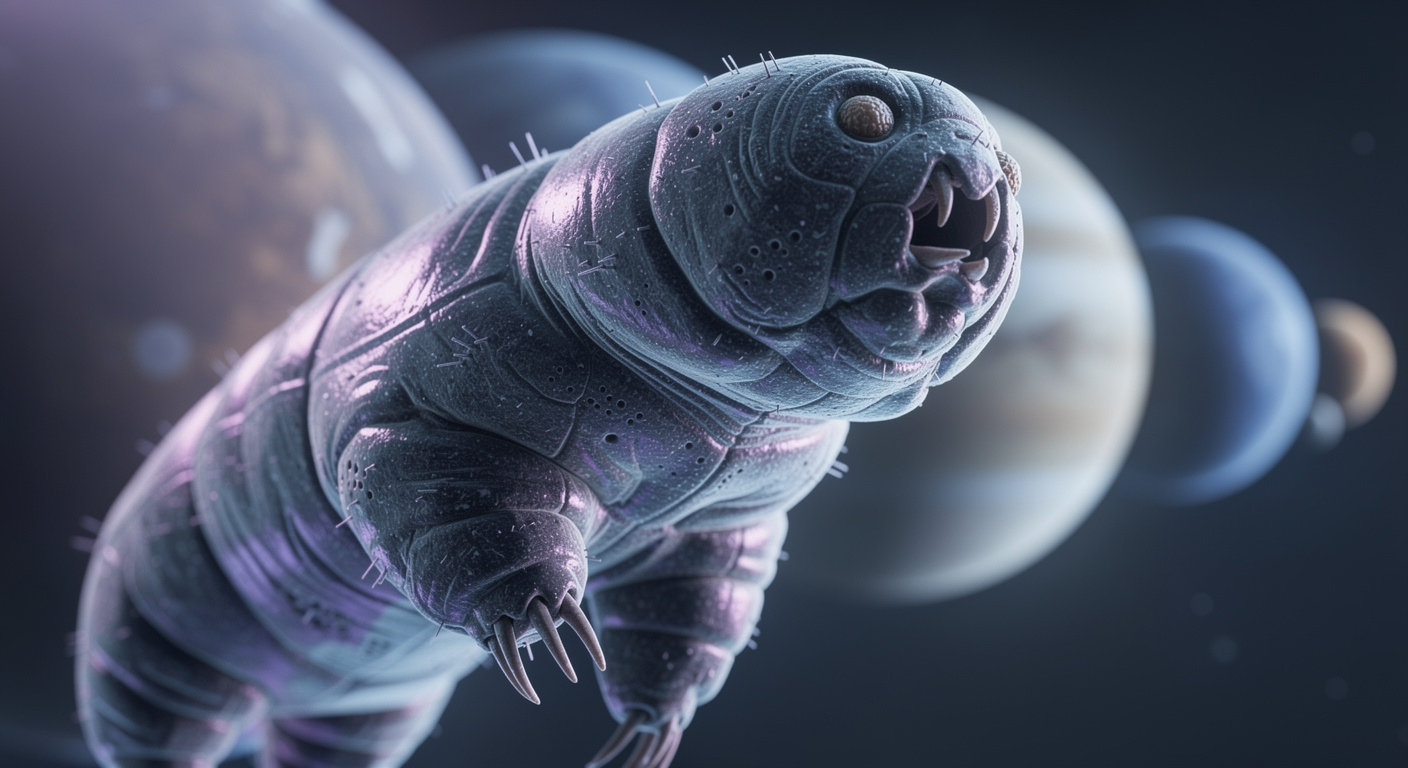
Beyond our planet, this device could also give us a better understanding of the effects of the crushing gravity characteristic of large planets or stars. It also opens a window into the lives of extremophile organisms, such as tardigrades. These microscopic animals are capable of surviving forces that would tear a human being apart, and this machine allows us to study their biological limits under extreme conditions.

A Giant Buried Beneath the Earth

This technology is now operating 49 feet (about 15 meters) below ground at Zhejiang University in Hangzhou, eastern China. Named CHIEF1900, it is the latest addition to the underground facility known as CHIEF (Centrifugal Hypergravity and Interdisciplinary Experiment Facility). As soon as it went into operation, this machine quickly outperformed its two predecessors, the CHIEF1500 and CHIEF1300 accelerators, asserting its technological dominance within the complex.

Manufactured by the Shanghai Electric Nuclear Power Group, the CHIEF1900 is more than just massive. According to experts, its weight capacity of 1,900 G-tons, while daunting, is not its most impressive feature. The device possesses even more decisive advantages for researchers who rely on it to conduct predictive experiments. It is equipped with critical testing capabilities, including load actuators that convert the energy supply into mechanical force, as well as sophisticated climate controls to prevent overheating during operations.

This infrastructure can accommodate scaled-down models of civil engineering structures, such as bridges and dams. These models can then be subjected to rotation that generates intense G-forces. The goal is clear: to predict potential damage caused by structural stress even before these structures are put to the test in the field.

A Global Scientific Competition

The arrival of the CHIEF1900 marks a major milestone in the field of geotechnical modeling. Dan Wilson, who holds a Ph.D. in civil and environmental engineering, is closely monitoring this development. He is an associate director at the Center for Geotechnical Modeling (CGM), a laboratory funded by the National Science Foundation at the University of California, Davis. A specialist in centrifuge modeling and geotechnical seismic engineering, he is delighted to see this machine usher in the next generation of colossal hypergravity centrifuges.

Dan Wilson’s laboratory itself boasts world-class facilities, housing two centrifuges designed to simulate how earthquakes, waves, winds, and storms affect soil systems. One has a radius of 29.5 feet (9 meters) and the other a radius of 3.3 feet (1 meter). Both machines are equipped with vibrators capable of simulating the impact of an earthquake. These experiments are crucial because they can lead to improvements in predicting these phenomena and mitigating their destructive effects.

Dan Wilson places the Chinese machine within this narrow competitive landscape. He states: “CHIEF 1900 will be one of the four largest dynamic centrifuges in the world—that is, centrifuges equipped with shakers for seismic testing.” He notes that the other facilities of this caliber are located at UC Davis, the Obayashi Corporation in Japan, and K-water in South Korea.

Precision Mechanics and Industrial Applications
The CHIEF1900 operates using enormous arms controlled by a central mechanism that spins them at incredible speeds. As they rotate, they generate centrifugal force—an outward-directed force that always acts on an object moving in a circular path and moving away from its center. The principle is similar to that of a fast-spinning amusement park ride, which presses passengers against the sides and prevents them from falling even as the ground recedes beneath their feet.

Precision is at the heart of this mechanism. The machine’s arms are balanced with extreme precision to prevent any undesirable high-resonance effects. Resonance can cause an increase in the amplitude—or maximum vibration—of an object, which could potentially force another object to begin rotating and sustain damage in the process. This stability is essential for advanced industrial applications, such as the development of new alloys. The intense gravity allows every part of a mold to be filled with liquid material, resulting in a solid casting free of defects.

Beyond manufacturing, hypergravity centrifuges can assess pressure levels in the depths of the ocean and underground. This data is a key factor in plans for constructing new underground spaces. At a time when concern about climate change is greater than ever, these machines also serve as models for understanding how pollutants will seep into the environment if left unchecked, replicating geological processes that are beyond the reach of most laboratories.

Addressing the Climate Emergency

The CHIEF1900 implements new capabilities to address pressing environmental challenges. According to Dan Wilson, the machine is designed “to meet an urgent need for physical data” that would help scientists better understand the drivers of Earth’s changes. He specifically cites “the dynamics of glaciers and ice shelves, permafrost thaw, and coastal erosion” as priority areas of study that will benefit from this technology.

The implications for public safety are direct and significant. Simulating potentially catastrophic natural phenomena is just one of the benefits of this tool. By replicating these events in the laboratory, researchers hope to anticipate future crises.

Dan Wilson concludes by discussing the societal impact of this research: “Expanding our capabilities will also help us strengthen society’s resilience to climate-driven processes, such as debris flows and wildfires, thereby creating new opportunities across a wide range of scientific questions.” ” Thus, beneath the ground in Hangzhou, the future of our world above ground is being shaped.

Source: popularmechanics.com

Created by humans, assisted by AI.

The Chinese machine capable of compressing space-time and defying gravity

This content was created with the help of AI.

facebook icon twitter icon linkedin icon
Copied!

Commentaires

0 0 votes
Article Rating
Subscribe
Notify of
guest
0 Comments
Newest
Oldest Most Voted
Inline Feedbacks
View all comments
More Content