

An invisible threat in the air we breathe
Problems arise when defenses weaken, temperatures rise, and the widespread use of fungicides tips the balance. Suddenly, the very same fungus that quietly breaks down dead leaves in your yard can trigger incessant coughing, damage corn silos, and resist the drugs that once kept it in check. A threat that, according to some descriptions, could “eat you from the inside out.”
Aspergillus’ Rapid Adaptation to Climate Change
After studying fungal threats for years, Dr. Norman van Rhijn and his colleagues at the University of Manchester mapped out how three notorious Aspergillus species—A. flavus, A. fumigatus, and A. niger—might spread by the end of the century. They incorporated climate change scenarios into global models, observing the virtual drift of spores. The MaxENT model accurately described the global distributions of Aspergillus.
The Global Map of Molds Redrawn
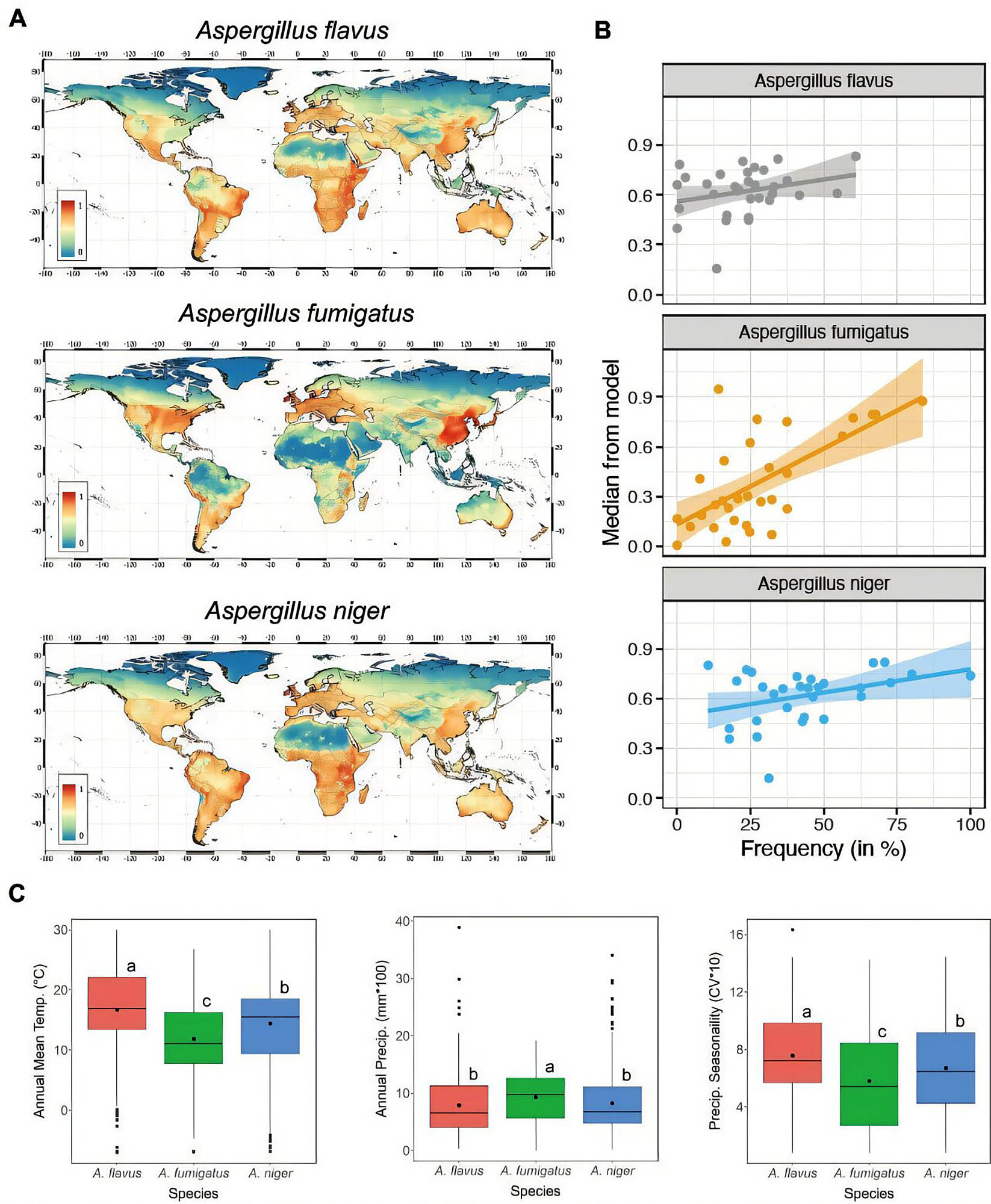
Temperature, humidity, and extreme weather events dictate where spores settle. Dr. van Rhijn explains: “Changes in environmental factors, such as humidity and extreme weather events, will alter habitats and promote the adaptation and spread of fungi.” He notes that we have “already seen the emergence of the fungus Candida auris due to rising temperatures, but until now, we had little information on how other fungi might respond to this change in the environment.”
The researcher adds that fungi remain “relatively understudied compared to viruses and parasites,” yet the new maps show that they will likely reach “most regions of the world in the future.” These maps reveal striking figures. Under the high-emissions scenario, the range of A. flavus in Europe could surge by about 16%, potentially putting an additional one million people at risk of infection.
Economic Costs and Hospital Realities
The Deadlock of Drug Resistance
This feedback loop—more fungicide, stronger resistance—complicates both food safety and patient care. Aspergillus isn’t the only organism changing its form. Fusarium, which devastates wheat and oat fields, and Cryptococcus, an opportunistic pathogen in AIDS patients, are also responding to global warming.
"Fungal pathogens pose a serious threat to human health by causing infections and disrupting food systems. Climate change will exacerbate these risks,” explains Viv Goosens of Wellcome. She continues: “To address these challenges, we must fill significant gaps in research. By using models and maps to track the spread of fungi, we can better allocate resources and prepare for the future.”
Toward Coordinated Global Surveillance
Researchers are now calling for coordinated surveillance—combining air-quality sensors, agricultural sampling, and hospital monitoring—to track the movement of spores in near real time. Such efforts could identify hotspots, guide fungicide regulations, and stimulate investment in rapid diagnostics.
Without these measures, today’s manageable mold could evolve into tomorrow’s silent pandemic. No single solution will eliminate the risk. Reducing greenhouse gas emissions limits the environmental changes that favor the Aspergillus fungus. Smarter fungicide policies slow the development of resistance on farms. Better ventilation in buildings reduces the number of spores indoors, while new classes of antifungals expand the toolbox available to doctors. Step by step, these measures can prevent an ancient decomposer from becoming a disproportionate threat in a warming world. The study was published on the preprint platform Research Square.
According to the source: earth.com
This deadly fungus that "eats you from the inside" is spreading worldwide


