

A Race Against Time to Save Our History
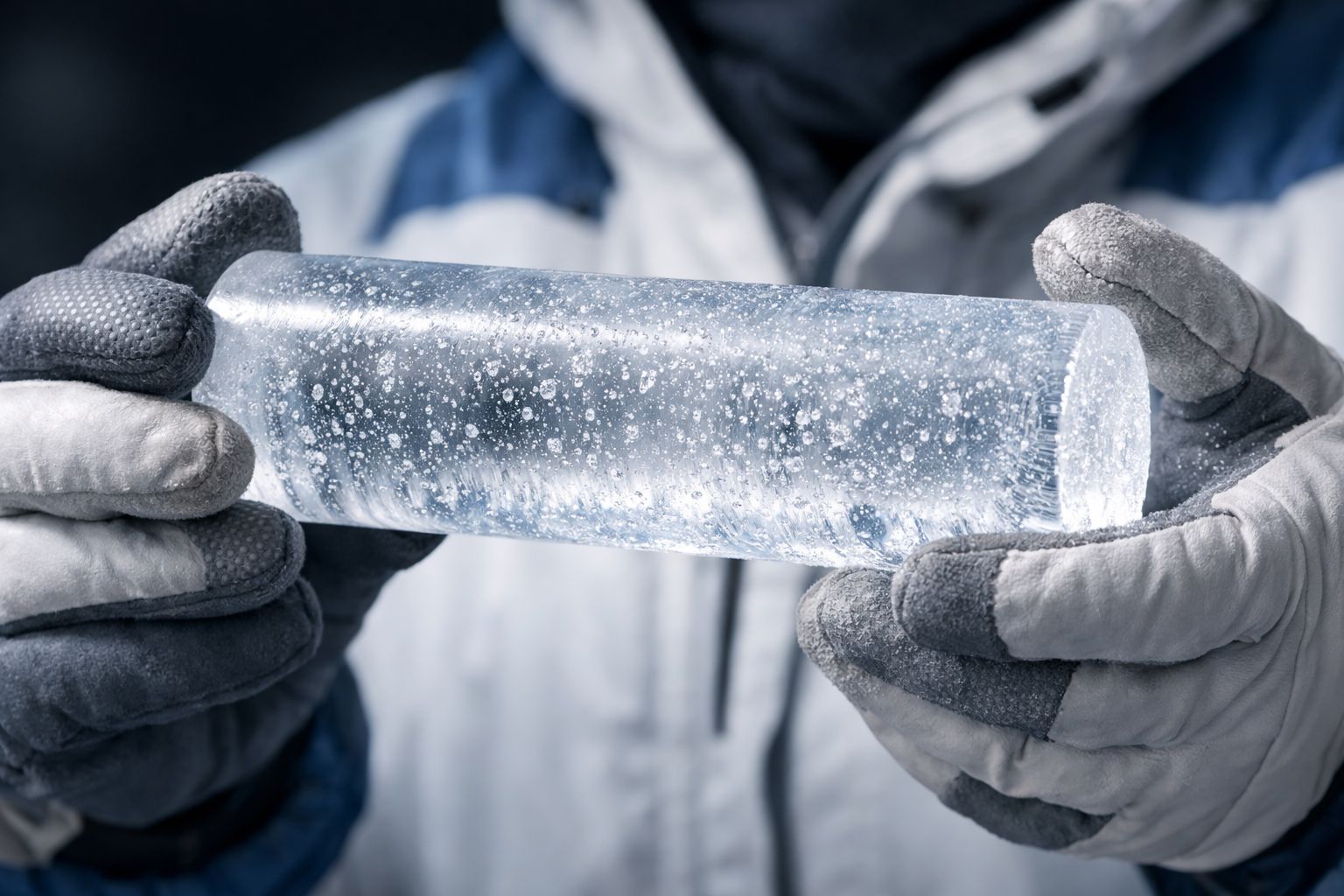
You’ve surely noticed how quickly our mountain landscapes are changing, haven’t you? It’s frightening to see the snow receding year after year. Faced with this grim reality, a slightly crazy but brilliant idea took root in the minds of a few researchers: if the ice is melting, we need to preserve it somewhere else. That’s exactly what just happened with the inauguration, on January 14, 2026, of a one-of-a-kind sanctuary at the Concordia station, right in the heart of Antarctica. The goal is simple, yet staggering: to store pieces of glaciers from around the world before they disappear forever.
The goal here is to preserve what scientists call “climate memory.” These ice cores—which are actually long cylinders extracted from deep within the ice—come from the Andes, the Alps, the Caucasus, and the Pamir Mountains. They contain everything: the history of our temperatures, traces of ancient volcanic eruptions, and even the pollutants we’ve emitted. It’s a bit like the Earth’s hard drive. To save this precious data, the Ice Memory Foundation—born from a partnership between the University of Grenoble-Alpes, Ca’ Foscari University of Venice, and the University of Bern—has succeeded in bringing together 13 countries. It’s a remarkable achievement, not only technical but also diplomatic, as the CNRS has pointed out. It’s reassuring to see that, in the face of this emergency, we still know how to cooperate.
An ice bunker without electricity or concrete
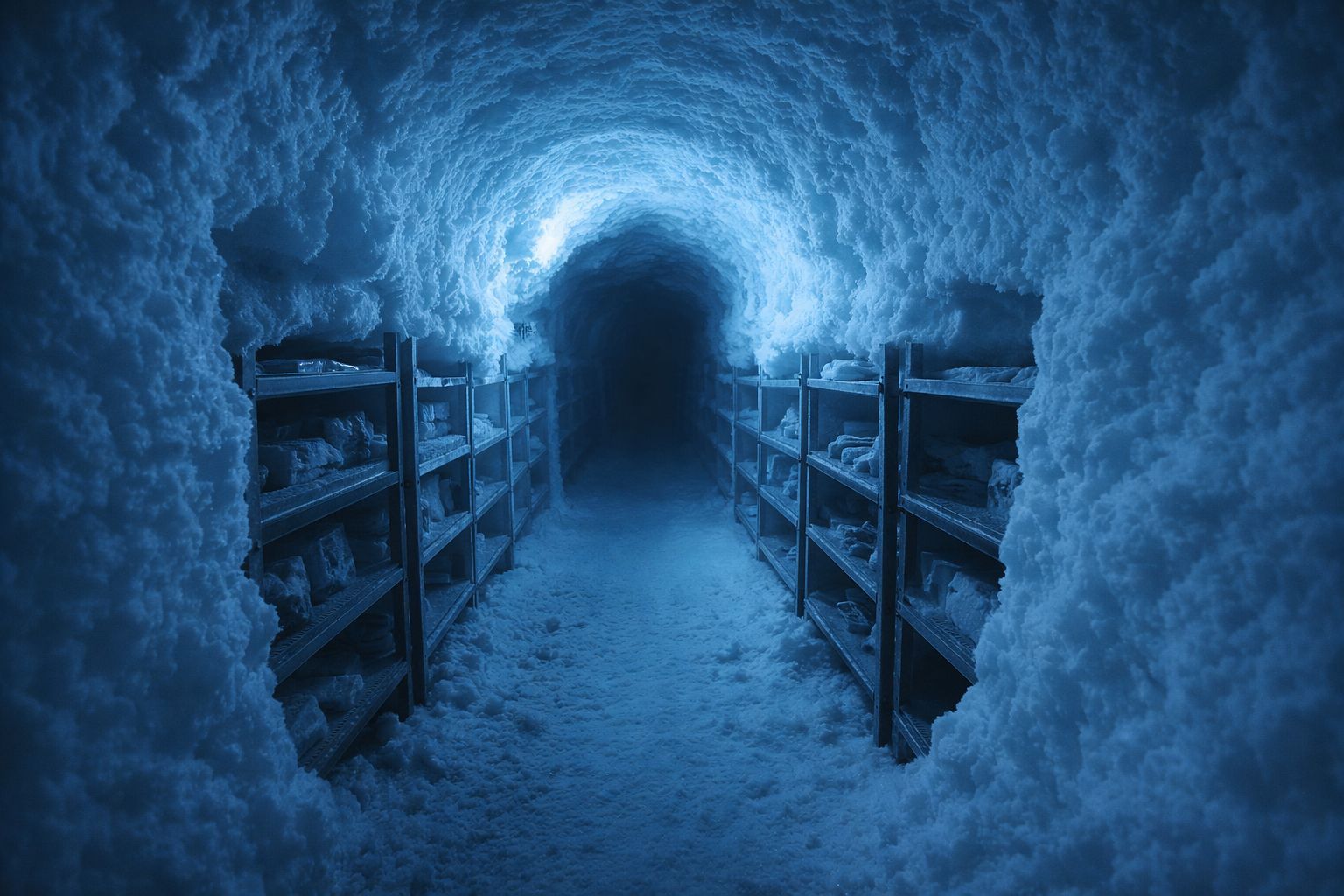
What’s fascinating about this project is the chosen location. Imagine a place where the temperature naturally ranges between -50 °C and -54 °C all year round. We’re at an altitude of 3,200 meters on the Antarctic Plateau. The site is jointly managed by the French Polar Institute Paul-Émile Victor (IPEV) and its Italian counterpart, PNRA-ENEA. Why there? Quite simply because it’s the best freezer in the world—and it’s free! No need for energy-guzzling refrigerators, no risk of power outages. It’s a 100% passive solution. It’s common sense applied to high science, I think.
The infrastructure itself is a small marvel of low-tech engineering. They didn’t build a building—they dug it out. The structure lies 9 meters beneath the compact snow. It’s an artificial cave 35 meters long, 5 meters wide, and 5 meters high. And get this: not a single drop of concrete was poured. No weird industrial materials. Everything is held together by reinforced snow arches to keep the ceiling from caving in on us. This ensures strict compliance with the Madrid Protocol and the Antarctic Treaty, which prohibit polluting this pristine continent. The environmental impact assessment was approved in 2024. It’s clean, it’s sustainable, and it allows the ice to be preserved for centuries without anyone being able to lay claim to these lands—legal neutrality being the rule.
The Absolute Emergency: When the Mountain Weeps
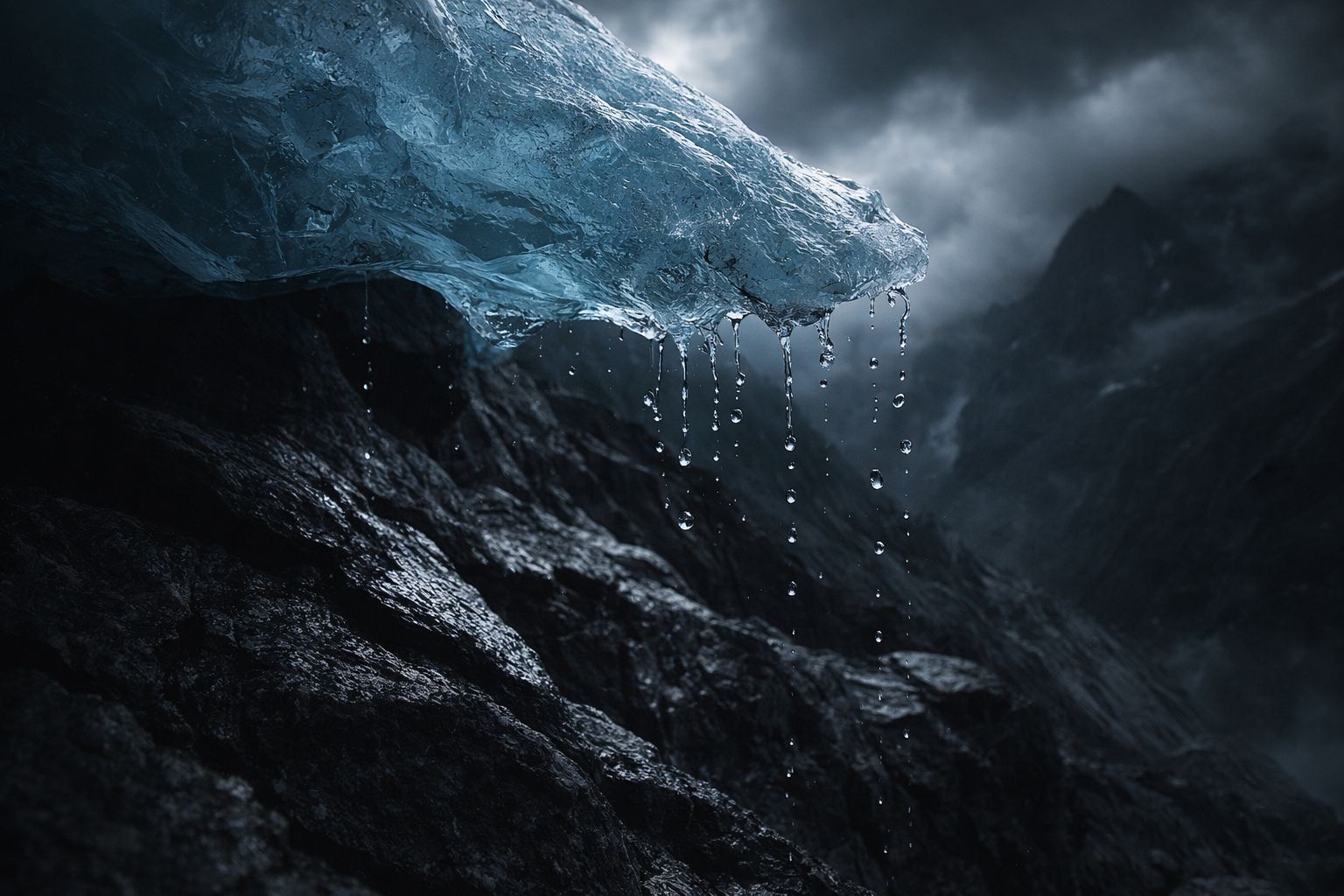
It’s important to understand why they’re going to such great lengths. The situation is critical. Since the year 2000, mountain glaciers have lost between 2% and 39% of their volume—depending on the region—but the trend is alarming. The CNRS is unequivocal on this point. In our Alps, for example, temperatures are rising twice as fast as in the rest of the planet. The problem isn’t just that the ice is melting on the surface. It’s that the meltwater seeps deep inside and “washes away” the older layers. It’s as if you were pouring a bucket of water over a book written in ink: the pages become unreadable. These alterations mean that, scientifically speaking, some ice cores are simply no longer usable.
Thomas Stocker, a climatologist at the University of Bern and president of the foundation, puts it very aptly: losing these glaciers means losing millennia-old archives. Once it’s melted, it’s gone—we’ll never be able to recover information about greenhouse gases or desert dust from 500 years ago. The journal Nature has even set a deadline: the peak of glacier loss is projected for 2040. After that? There won’t be much left to melt. That’s why Ice Memory has launched ten drilling campaigns since 2015, from Mont Blanc to the Grand Combin. We need to salvage what we can now, before the house burns down completely. Each sample is an irreplaceable relic.
A time capsule for future scientists
This project is also a magnificent bet on the future. That’s where it gets almost philosophical. Today’s researchers know they don’t yet have the tools to understand everything. Thomas Stocker explains it very well in The Conversation: in fifty years, our grandchildren will have technologies we can’t even imagine. They’ll be able to see things in this ice that are invisible to us today, such as ancient DNA, forgotten viruses, or minute chemical markers. It’s mind-boggling to think about. The sanctuary is a reservoir of raw material for the biology, chemistry, and paleogenetics of tomorrow.
In the meantime, governance is being established. It belongs to no one; no country can claim, “This is my ice.” Access to the samples will be extremely strict, based solely on science, within the framework of the Decade of Cryosphere Sciences (2025–2034). We’re aiming high: 20 drilled glaciers by 2045. Tajikistan, in fact, was the first country to officially donate an ice core from the Pamir Mountains. It’s a beautiful symbol. Carlo Barbante, the Foundation’s vice president, emphasizes that this transcends petty national squabbles. With the help of patrons such as the Prince Albert II of Monaco Foundation, we are literally building a legacy for an era we will likely never see. This, I believe, is the most beautiful form of transmission possible.
This "eternal" freezer at -50°C preserves humanity’s memory: here’s how
This content was created with the help of AI.


