

A Disturbing Observation on Our Bike Lanes
We all have that idyllic image of a Parisian woman riding a bike, hair blowing in the wind. But when we look at the reality on the road, it’s a whole different story. In France—and frankly, it’s the same almost everywhere else—women cycle far less than men. That’s a fact.
David Sayagh, a lecturer at Paris-Saclay University, has stirred things up with a 2023 survey that challenges common assumptions: 11% of adult women admit they don’t know how to ride a bike, compared to just 5% of men. Worse still—or at least more concerning—38% of women report having poor control of the handlebars, while only 23% of men fall into this category. This inevitably affects how often they ride: barely a quarter of women (25%) get on their bikes at least once a week, compared to 38% of men.
And what about the pros? It’s a virtual wasteland. Bike delivery is almost exclusively a male-dominated field, and within the French Cycling Federation, women account for only 12.8% of licensed members. In competition, that figure drops to 7%. It’s a drop in the bucket.
Equipment and Habits: The Gap in the Numbers
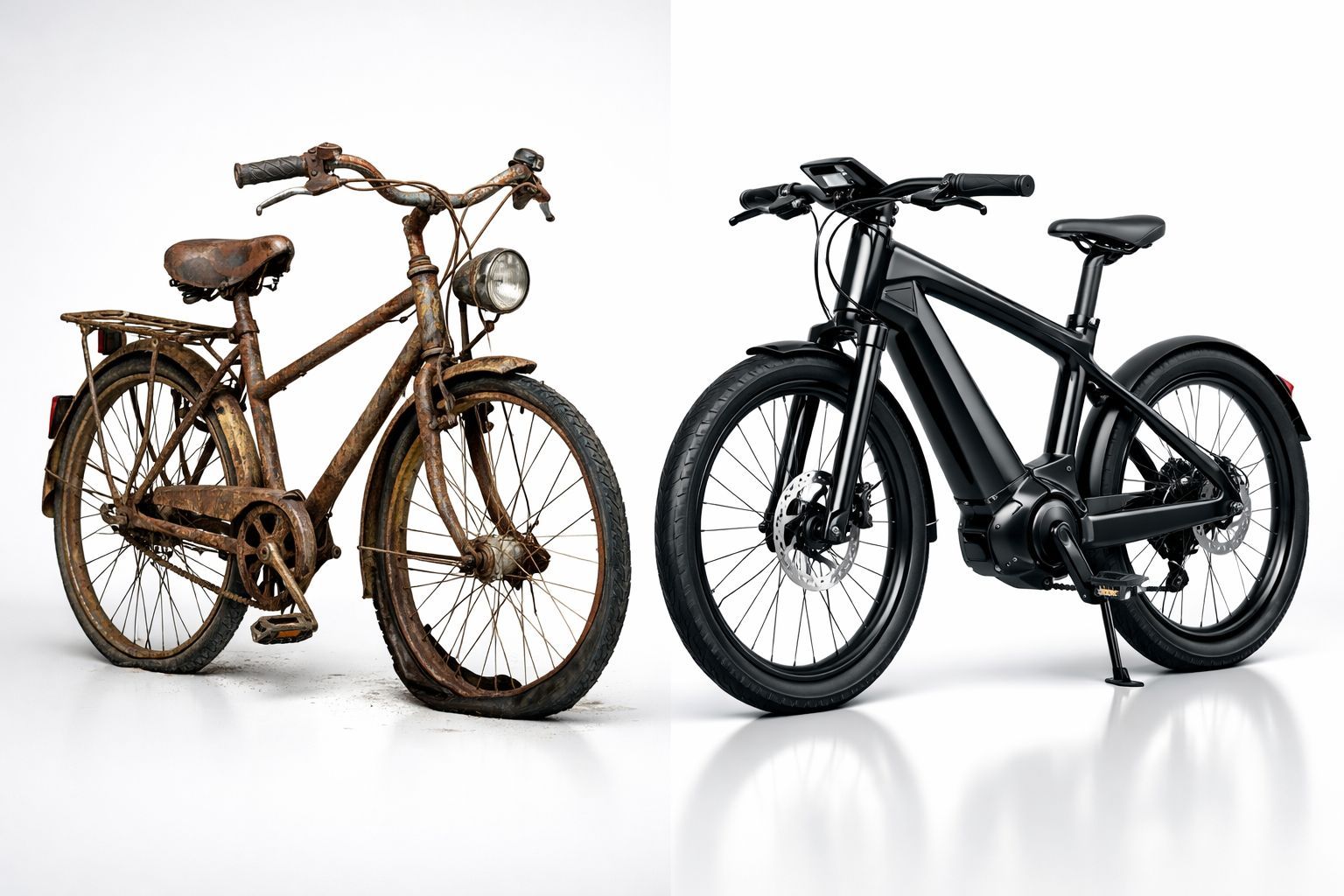
We also need to talk about equipment, because that’s often where it starts. Women are more likely to have no bike at all, or to be riding an old, entry-level model that doesn’t really make you want to get started. It’s a bit like with the poorest social classes: without decent equipment, people walk. The numbers don’t lie: walking accounts for 25.8% of women’s trips (compared to 21.5% for men), and public transportation makes up 14% of their trips (compared to 11.2% for men). Cycling? It tops out at 1.5% of women’s trips, while it reaches 4% among men.
There is a small glimmer of hope with electric-assist bicycles (e-bikes), where we’re nearly at parity with 47% of users being women. But beware of false hope… Access to this expensive technology remains highly unequal: low-income women have virtually no access to it. It’s a luxury, not a universal solution—at least for now.
Adolescence and Fear: Where It All Comes Down to

But why? It’s not genetic, for heaven’s sake. It all seems to come down to socialization—the way we raise girls and boys differently. In France, cycling still carries this image of a “guy’s sport,” one that requires effort, mechanical know-how, and risk-taking. Boys are encouraged to take risks, get hurt, and tinker with things.
Girls? They’re taught to be cautious. Adolescence is the final blow. That’s when gender expectations become stricter: you have to be “feminine.” Véronique, a 42-year-old educator, describes this very well when talking about a young girl: “She’s become a woman… Makeup, all that, and it’s true that she hasn’t really ridden a bike much anymore.” If you let go of the handlebars at that age, the likelihood of taking it up again as an adult plummets.
As a result, fear sets in during adulthood—fear of accidents, of speed, of traffic, or simply of not knowing how to fix a derailed chain. Women are much more likely to give up cycling for good after a fall or a simple scare, whereas a man might, out of pride or habit, be more inclined to get back on the bike.
Mental Load and Social Inequalities in the Saddle

There’s also real life—the one filled with errands and kids. Women still predominantly manage what are known as “complex travel chains.” It’s not just about getting to work: it’s dropping the little one off at school, stopping by the pharmacy for Grandma, going to work, and then doing the grocery shopping on the way home. With these domestic responsibilities, cycling quickly becomes a logistical nightmare. The arrival of a child is, in fact, often a reason for mothers to stop cycling—far more so than for fathers.
And be careful not to lump all women together. There’s a huge social divide. Women from the upper classes in cities are taking it up: it’s eco-friendly, it’s healthy, and it’s seen as prestigious. But for women from working-class backgrounds, or those from non-Western cultures where cycling is the preserve of men, it’s a whole different story. Whether due to a lack of money, a lack of awareness of the benefits, or simply not having learned to ride as a child… some have never learned. They remain dependent on walking or public transportation, held back by household chores and a lack of role models to look up to.
Hostile Public Spaces and the Myth of Liberation
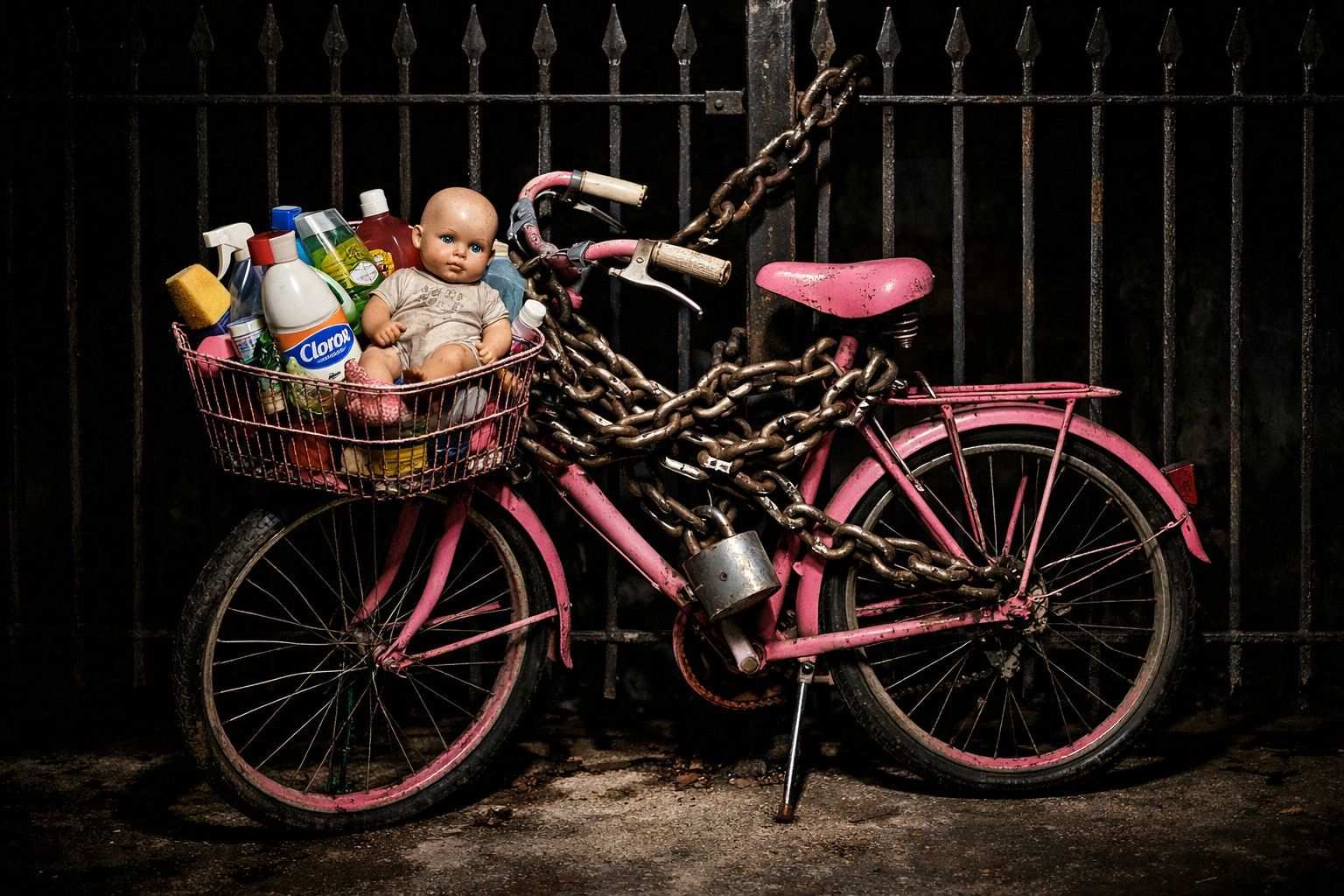
You might think that professional sports would help change attitudes, but that hasn’t happened. Yet physiology proves that women are endurance machines (they utilize fat more efficiently and are more resistant to fatigue during efforts lasting more than 6 hours!). But no, high-profile races for women are often half as long. We’ve come to accept the idea that women are less capable. And the equipment itself screams it at us: bikes for little girls have baskets and doll holders, while boys’ bikes are built for speed.
Add to that the clothing: skirts, heels, or religious garments like the hijab or niqab, which can hinder participation. Not to mention certain persistent myths among the less educated, such as the fear that a bike seat compromises virginity… It’s a heavy burden. And what about outside? The street isn’t a neutral space. It’s a space designed by and for men. Women face harassment and assault there. To protect themselves, they develop exhausting strategies: avoiding certain times of day, taking detours, dressing differently. This increases their mental load and often leads them to give up.
Finally, ironically, when women ride bikes, it’s not always to liberate themselves. While biking allows them to go faster, it’s often used… to maximize the time available for even more household chores. Instead of saving time for themselves, they end up intensifying their domestic workload. We’re a long way from the promised emancipation. To turn the tide, it won’t be enough to simply paint bike lanes; we’ll need to rethink the entire social structure, from the family to the street.
Why Is Cycling Still a Man’s World? (It’s Not Just About Sports)
This content was created with the help of AI.


