

Costa Rica paid landowners to restore forests and biodiversity: bioacoustic data confirm the success


Beyond Satellite Images: The Verdict of Sound

The Origins of a Pioneering Conservation Policy

Between the 1960s and 1980s, a large portion of Costa Rica’s rich forests was cleared to make way for agriculture and pastureland for livestock. In response to this loss, the country established the world’s very first Payment for Environmental Services (PES) program in 1996. This program directly compensates landowners for their participation in restoring forest cover.
“Today, the PSE program is widely regarded as a model program and an integral part of Costa Rica’s progress in protecting its natural heritage. Recognizing the link between ecological degradation and inequality, the program is based on the need to address the social challenges underlying large-scale environmental destruction,” write the authors of the new study.
A Unique Listening Experience on the Nicoya Peninsula
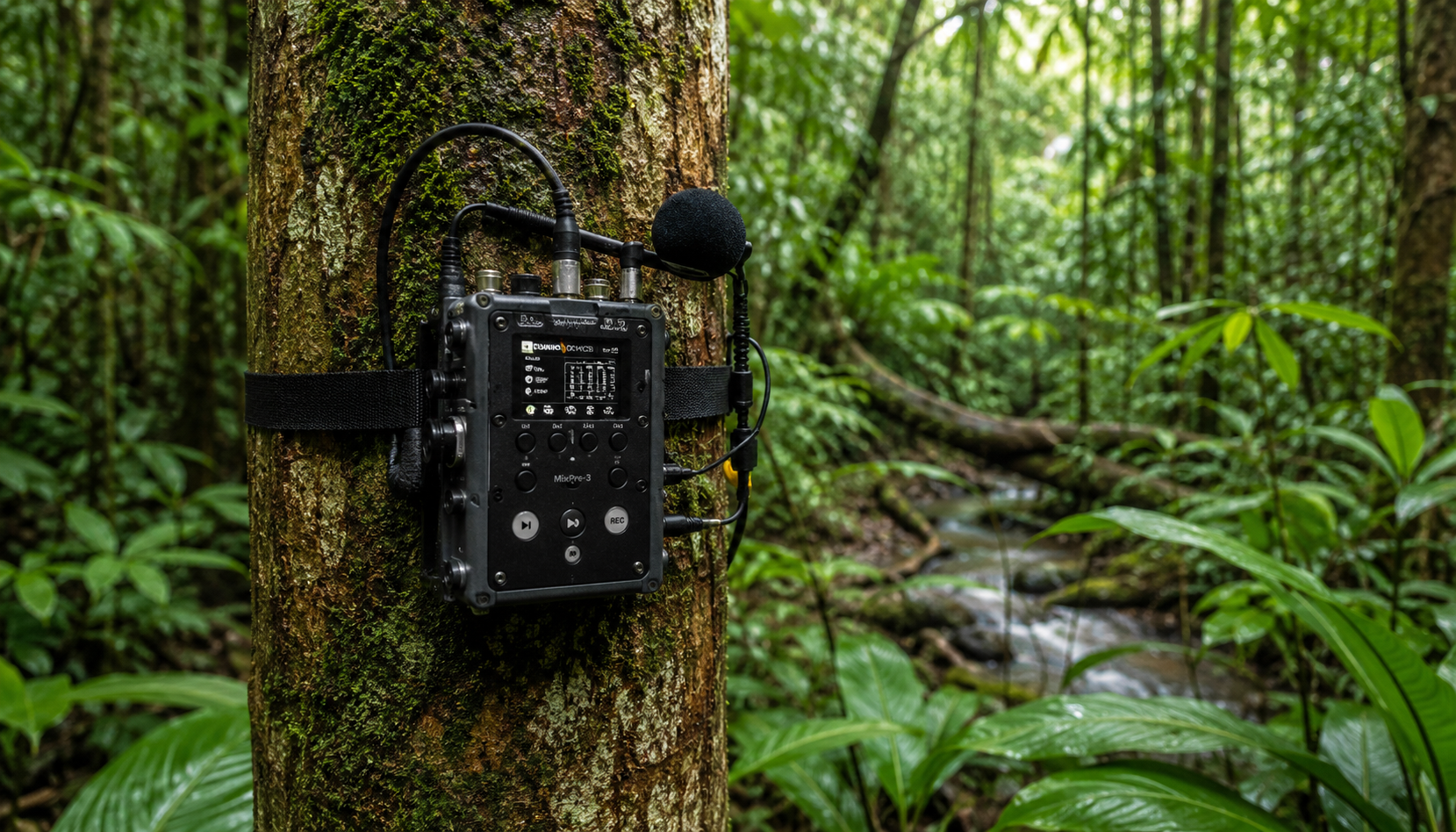
The monoculture plantations studied were typically timber plantations consisting of trees aged 7 to 20 years. In total, the team’s scientific equipment captured 16,658 hours of audio recordings across these different landscapes during the experiment.
Decoding the Soundscapes from Dawn to Dusk

The Zurich team used soundscape analysis to compare biodiversity across different land-use types. The researchers focused on biologically relevant time periods and frequencies associated with various animal groups or with sounds related to human activity. Particular attention was paid to the “dawn chorus,” between 5:00 and 6:30 a.m., as well as to dusk.
"Among the PSE sites, those undergoing natural regeneration shared significant acoustic characteristics with the reference forests. This was significantly greater than the similarities between the reference forests and pastures or between the reference forests and plantations. The similarities peaked in the early afternoon and particularly during the twilight chorus, when average similarity values consistently exceeded 0.90, indicating an almost complete acoustic overlap,” explain the study’s authors.
Social Equity as a Driver of Ecological Recovery

This fieldwork provides strong evidence that large-scale redistributive restoration leads to genuine ecological recovery. The study validates sound’s ability to serve as an accurate measurement tool for assessing biological diversity at the heart of a changing ecosystem.
"Weaknesses remain in the PSE program, and improvements are needed to achieve a truly equitable redistribution of wealth, but studies suggest that many program participants are experiencing significant socioeconomic benefits. Costa Rica’s attempt to distribute wealth directly to those who live in harmony with nature—through taxes on environmentally destructive behaviors and rewards for ecological management—represents a model that could be replicated and scaled up globally. “Learning from Costa Rica’s efforts to improve the PSE is particularly relevant given the increase in environmental degradation and economic inequality in the 21st century,” the researchers conclude.
Source: phys.org
Costa Rica paid landowners to restore forests and biodiversity: bioacoustic data confirm the success
