

An Environmental Dilemma and a New Controversial Approach
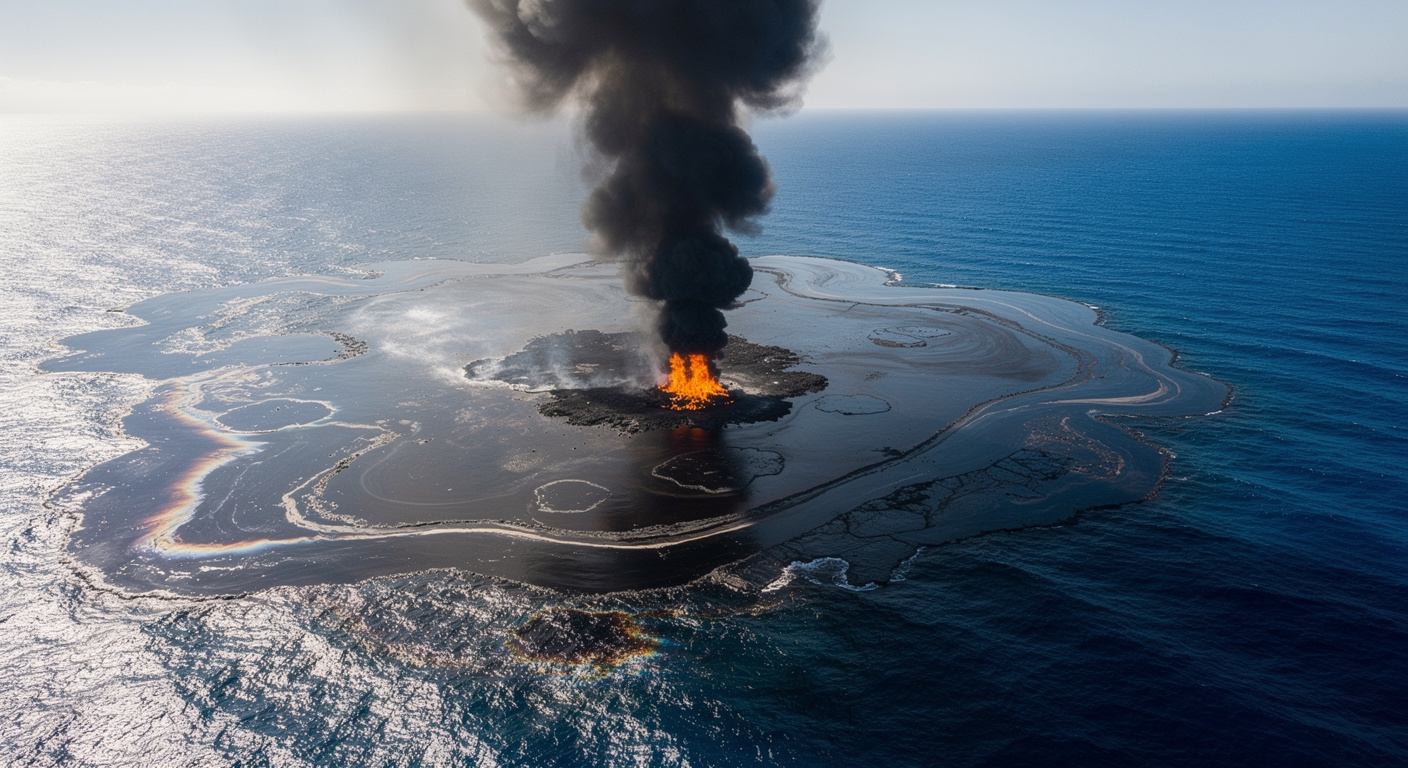
Traditional methods generate thick black smoke that darkens the sky and releases toxic soot into the atmosphere. Furthermore, they leave behind a sticky sludge that is difficult to clean up. However, a bold alternative could be a game-changer. Scientists have tested a new approach: instead of letting the oil burn in a flat sheet, they created giant rotating flames called “fire whirls.”
A Team of Experts for a World First
Dr. Oran, a professor of aerospace engineering in the College of Engineering, highlights the unprecedented nature of this approach: “This is the first time anyone has come up with the idea of using fire vortices to clean up oil spills, and this is really just the beginning.”
The team’s ambition goes beyond simple combustion. “Our goal is to harness the chaotic nature of fire vortices as a powerful and precise restoration tool to protect coastlines, marine ecosystems, and the environment as a whole,” explains Dr. Oran. This research aims to transform an often-destructive natural phenomenon into a controlled ally.
Lessons from Deepwater Horizon and the Urgency to Act
While traditional burning methods helped contain some of the spread, they also filled the sky with thick smoke. “We’re examining environmental disasters like oil spills and identifying ways to respond to them more quickly, more sustainably, and in a greener manner,” explains Dr. Oran.
Time is of the essence during such an event. Oil can travel long distances in a short time, endangering sensitive marine habitats and protected coastlines. “Fire whirls burn crude oil spills nearly twice as fast as in-situ fire ponds, potentially giving cleanup crews faster response and operational times to prevent the oil from spreading,” adds the researcher.
Vortex mechanics: a natural incinerator
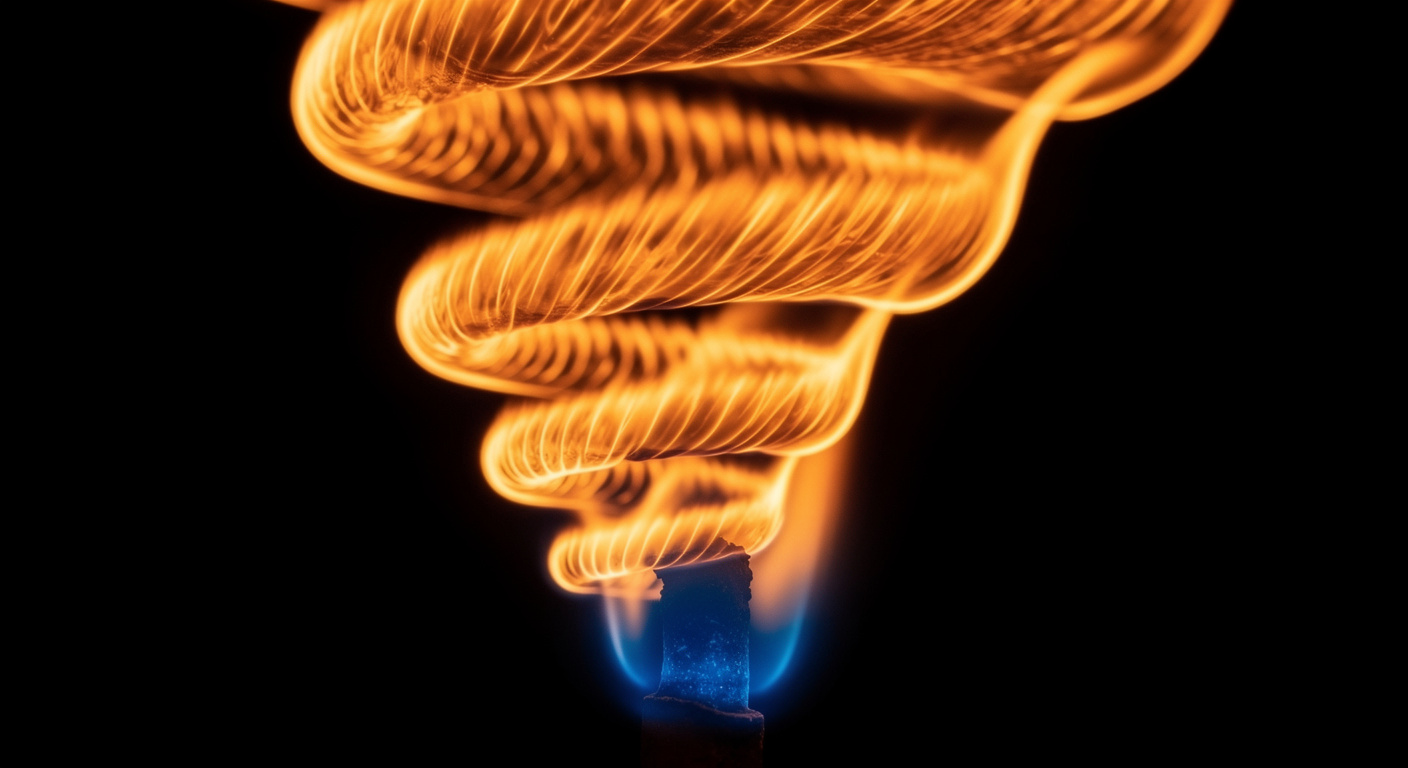
Dr. Oran highlights this crucial benefit for the air breathed by nearby communities: “One of the biggest challenges in burning oil spills is the sheer volume of smoke emitted. Our results show that fire vortices, compared to in-situ fires, significantly reduce overall emissions.”
The vortex acts like a giant incinerator. The intense rotating flame destroys much of the particulate matter that normally forms black smoke. Instead of leaving behind a heavy layer of tar on the ocean’s surface, the fire vortex vaporizes most of the oil.
A Monumental Experiment in Texas
To validate these theories, the team had to move beyond the laboratory. Scientists typically study these phenomena on a small scale, but cleaning up an ocean requires full-scale testing. “The scale of our experiment is one of the reasons our study is so unique, and what sets it apart as a first of its kind,” notes Dr. Oran.
The team built a structure consisting of three walls, each 16 feet (about 4.8 meters) high, arranged in a triangle. This configuration allowed for careful control of the airflow. In the center, a large pool of crude oil floated on the water’s surface.
When the researchers set the oil ablaze at the Texas A&M Engineering Extension Service’s Brayton Fire Training Field, a fire vortex nearly 17 feet (about 5.2 meters) high formed. The results were unequivocal: the swirling inferno burned hotter, faster, and cleaner than a normal surface fire.
The “Goldilocks” Zone: A Matter of Balance
Despite these successes, the technique requires extreme precision. “Fire whirls are incredibly powerful, and can be incredibly beneficial,” says Dr. Oran. “But they’re also sensitive and only achieve high efficiency when conditions are just right.”
Researchers call this balance the “Goldilocks zone.” Conditions must be perfectly calibrated to achieve maximum efficiency and prevent the phenomenon from becoming unstable.
Toward Universal Applications
“Our study has universal applications,” concludes Dr. Oran. “By understanding the physical laws that govern fire vortices, we can harness their power beyond the cleanup of oil spills.”
Source: earth.com
Fire tornadoes to clean up the oceans: the game-changing method


