

An End to the Anxiety of Screening?

Have you ever felt that knot in your stomach? The one that hits you when you’re sitting on an uncomfortable plastic chair in a crowded waiting room, dreading that someone will call your name a little too loudly. Getting tested for a sexually transmitted infection, or STI, has always been… let’s be honest, a ordeal. You have to call, find an appointment slot, go there in person, and then there’s that endless wait for the results. It’s a long process. It’s awkward. And I think many of us have put it off just to avoid the discomfort.
But now things are changing—and not just a little. Imagine being able to do all of this from the comfort of your own home, on a Sunday morning in your pajamas, without making eye contact with a single person. That’s exactly what new biotech companies are offering. It’s a small revolution, a bit like what we experienced during the pandemic, but applied to our most intimate matters. We’re talking about analyzing your own samples and—brace yourself—receiving treatment without even setting foot in a doctor’s office. It’s fascinating, isn’t it? But is it really that simple?
Cutting-edge technology making its way into your bathroom
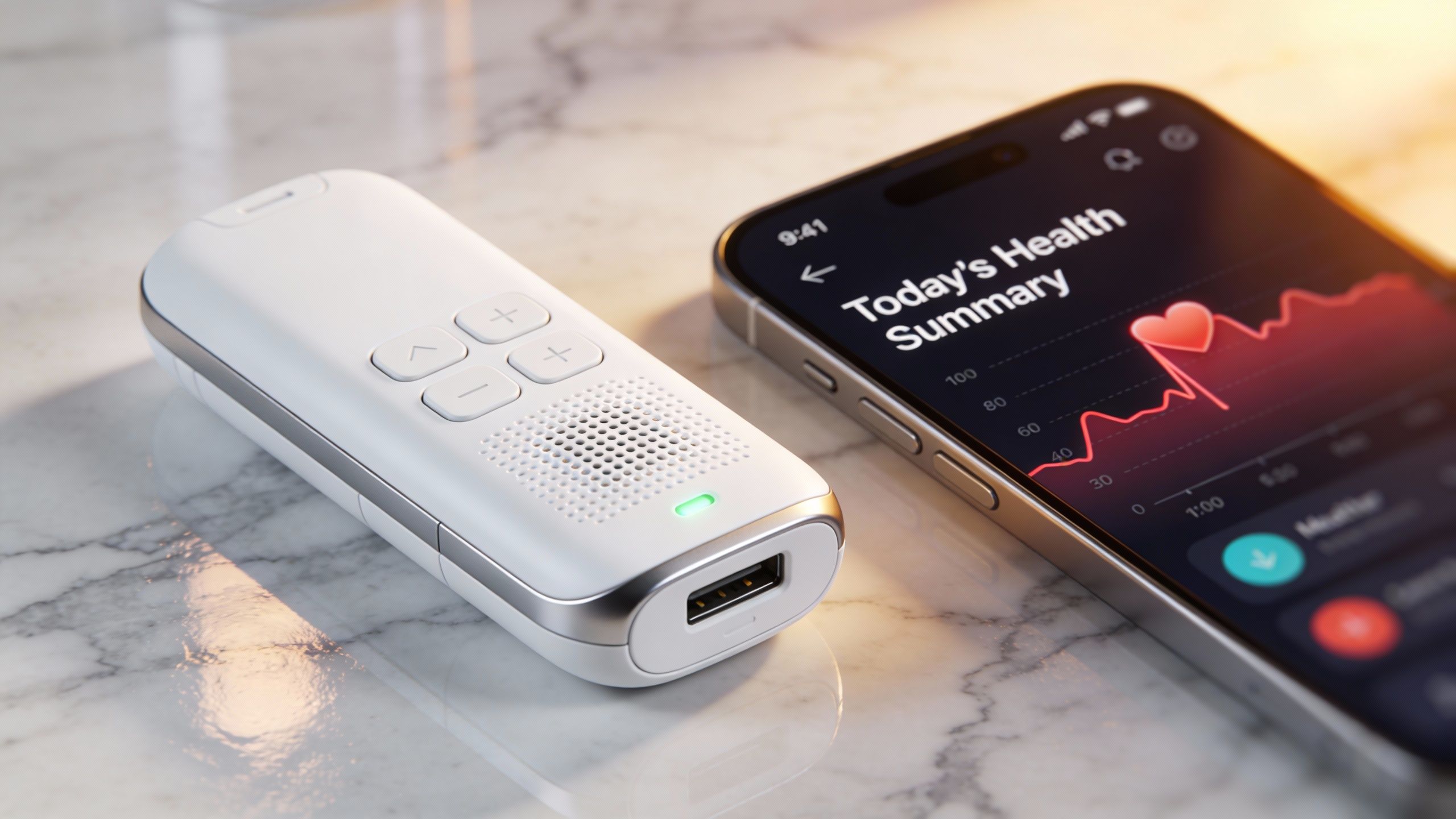
So, how does it actually work? This isn’t science fiction. The U.S. Food and Drug Administration (FDA) recently gave the green light to several of these kits. Take the one from Visby Medical, for example. It’s pretty impressive. This small device can detect three infections at once: chlamydia, gonorrhea, and trichomoniasis. The process is designed to be completely self-administered: the patient takes a vaginal swab herself—a procedure we’ve unfortunately become all too familiar with due to COVID, even if it’s a different area here!—and then uses a small diagnostic device provided with the kit.
Where it gets really interesting is the integration of digital technology. Once the test is done, you take a photo of the device using a mobile app, and presto—the results come back in just a few hours. If the result is positive, a telemedicine consultation is scheduled, and you can get a prescription for antibiotics immediately. Dr. Gary Schoolnik, who is chief medical officer at Visby and also a professor at Stanford, explains that this allows people to be treated much more quickly. Above all, it prevents patients from falling through the cracks—those so-called “lost to follow-up” patients who never come back to the lab to get their results.
And what about reliability? Apparently, there’s no need to worry. The test has an accuracy rate of over 98%, which is comparable to traditional lab tests. Along the same lines, there’s also Teal Health. They received approval last year for a human papillomavirus (HPV) screening test. The principle is similar: a vaginal swab taken at home, except in this case, it’s sent to a lab. All of this relies—as you might have guessed—on the technologies that were developed at breakneck speed for COVID-19 testing. It just goes to show that this difficult period has at least left us with a few useful tools.
Youth and Discretion: Responding to a Public Health Emergency

Let’s be honest: the current healthcare system has its limitations. For many people, having to share intimate details of their lives with a stranger in a white coat is a huge barrier. The fear of judgment, the stigma… it’s very real. Dr. Ina Park, a specialist at the University of California, San Francisco, emphasizes this point strongly: these tests finally offer the discretion and autonomy that patients have been asking for. If people can get tested at the first sign of doubt or after engaging in risky behavior—without it being an obstacle course—it could really reduce transmission.
And it’s urgent—believe me. A recent report from the Centers for Disease Control and Prevention (CDC) revealed some pretty alarming figures for 2023. Brace yourselves: young people aged 15 to 24 accounted for nearly half of all cases of chlamydia, gonorrhea, and syphilis. That’s a huge number. For this generation, which is practically glued to their smartphones, the ease of access to these new digital tests is a key advantage. According to an AP News article, this development would make testing not only faster but potentially more frequent. It makes sense, after all: the simpler it is, the more people do it.
Conclusion: The Cost of Healthcare and the Challenges Ahead

But be careful—it’s not all roses either. There’s a “but,” and it’s a big one: the price. The Visby test costs about $150. And the worst part? It isn’t covered by insurance. Suffice it to say that for low-income families or students with no money, it’s prohibitively expensive. We risk ending up with a two-tiered healthcare system: those who can pay for discretion and speed, and everyone else. If this advancement remains confined to the private sector, it could, paradoxically, exacerbate inequalities.
There’s also another concern—somewhat more technical, but vital: data. When you take the test at home, the results aren’t always reported to health authorities. As a result, we lose track of the outbreak, which complicates national surveillance. The report also mentions the Trump administration’s budget cuts to public health programs, which doesn’t help matters. It’s a bit ironic, isn’t it? We have incredible technological tools coming onto the scene, but without a real political will to make them accessible to everyone, they risk remaining gadgets for the privileged. Well… let’s hope the future proves us wrong.
No More Waiting Rooms? This At-Home Test Is a Game-Changer for Privacy
This content was created with the help of AI.


