

A Budget Cut That’s Not Going Over Well
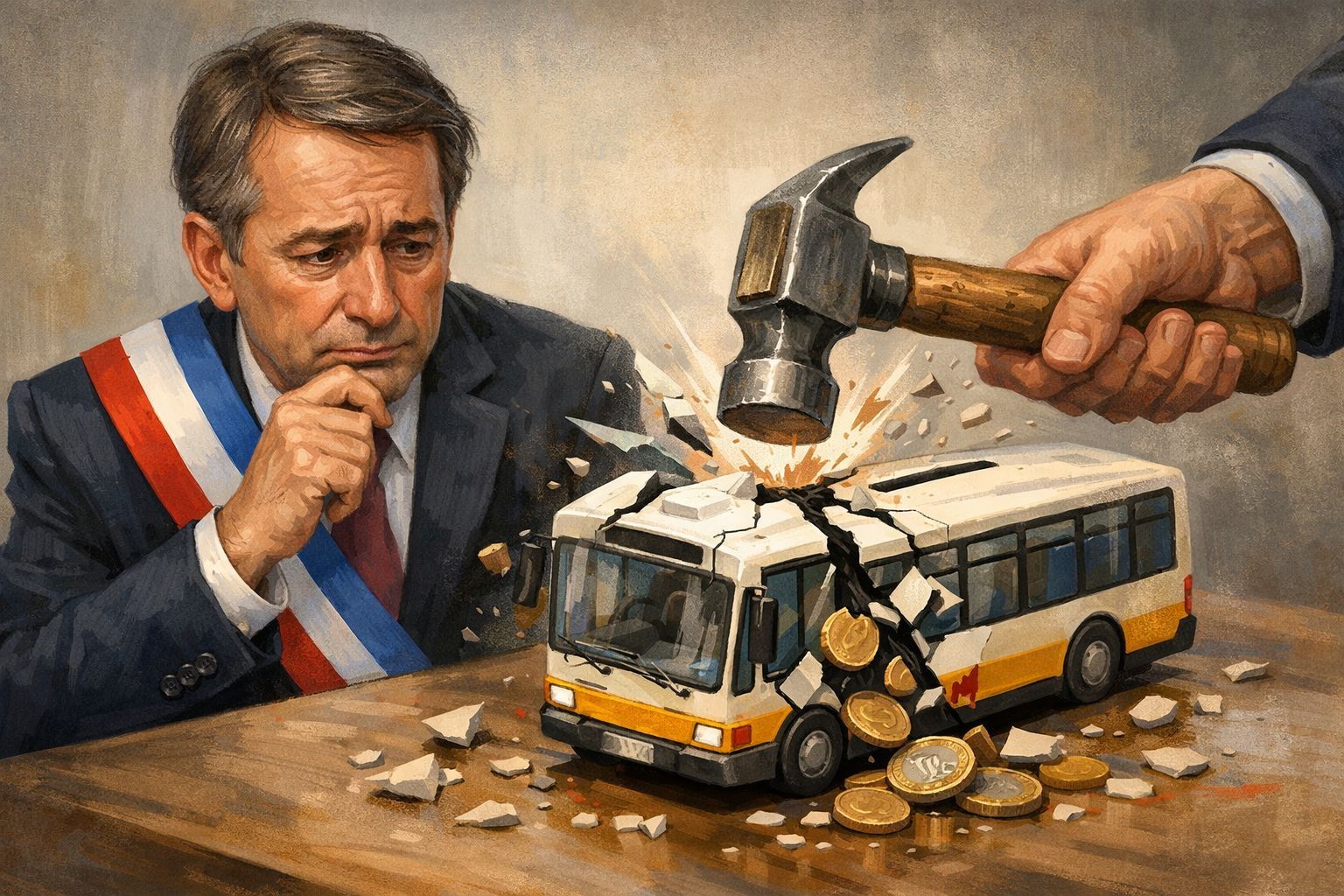
Imagine you’re planning your family budget, and then overnight, you’re told that your income is dropping drastically, without warning. That’s exactly what Quebec’s municipalities are going through right now. The Union of Quebec Municipalities (UMQ) has sounded the alarm after discovering a massive $200 million cut to the Public Transit Development Assistance Program (PADTC).
This program is the lifeblood of bus operations, especially outside major urban centers. In concrete terms, what’s the problem? The previous funding allocation (2022–2025) totaled $1.2 billion. A similar renewal was expected. Last November, the figure of 1.013 billion was circulating, but surprise: the organizations have only recently realized that the actual amount has shrunk to 998 million dollars. Guillaume Tremblay, president of the UMQ and mayor of Mascouche, makes no secret of his concern: in his view, it is the services provided directly to the public that are under threat.
In the regions, the bill is steep

While officials in Quebec City cite the “budgetary context” to justify these spending cuts, on the ground, it’s hurting. It’s hurting badly. Take the Gaspé Peninsula and the Magdalen Islands, for example. The Intermunicipal Authority (RÉGÎM) is projecting a net loss of $300,000 per year, retroactive to 2025. Daniel Côté, the mayor of Gaspé, illustrates this strikingly: that $300,000 is equivalent to all the money collected from ticket sales in an entire year.
The situation is much the same across the board. The Pierre-de-Sorel RCM expects to lose $402,000 in 2025, while the Montmagny RCM estimates a $120,000 shortfall in its budget. In the Bas-Saint-Laurent region, some MRCs even fear that their financial assistance will be cut by 21% compared to 2024. The problem? Demand isn’t falling. On the contrary, residents are calling for more buses, but elected officials find themselves forced to cut back on service.
Inflation, the Other Surprise Guest
Beyond the outright cuts, the value of money itself is the problem. The UMQ points to a detail that is anything but minor: the subsidies haven’t been indexed since 2019. Do the math: a $100,000 subsidy paid out six years ago is now worth only $70,000 in real purchasing power. It’s simple math, and it seriously complicates matters for cities that had to cover costs for a year while the government delayed renewing the program.
For its part, the Ministry of Transport and Sustainable Mobility is playing down the issue. It explains that the previous budget had been calculated for the post-pandemic recovery, at a time when buses were less crowded. According to the Quebec government, the new 2025–2029 budget allocation will be sufficient to pay out the planned grants. It remains to be seen whether this argument will be enough to reassure municipalities that, through Guillaume Tremblay, are calling for the outright restoration of the cut funds.
Public Transportation: The Surprise $200 Million Bill That’s Upsetting Cities
This content was created with the help of AI.


