

The mysterious “Third Man” who appears when humans are close to death: Scientists have a theory.


The Stranger Who Saves Your Life

Imagine this. You’re alone, lost, and exhausted. Your physical and mental reserves are depleted, and failure—or even worse—seems inevitable. It’s in moments like these, at the limits of human endurance, that “He” appears. Not as a ghost, but as a presence. An invisible hand that helps you endure the cold, that whispers that the summit is within reach, that offers you companionship in the midst of utter hardship. This recurring experience, known as
The “Third Man” Syndrome
This presence, invisible to the eye but tangible to the mind, has a name: the “Third Man” syndrome. This name is no coincidence: it evokes that famous imaginary companion, capable of saving lives. Polar explorer Ernest Shackleton described it in 1916. As he faced the hell of the Far South with his men—exhausted and frozen on a frail liferaft—several crew members were firmly convinced of the presence of a “fourth man” during their legendary crossing of South Georgia.
His account is not an isolated hallucination. Mountaineers on Everest, stranded solo sailors, and survivors of accidents or shipwrecks all describe the same phenomenon. It is not a terrifying vision, but a presence—a silent force that supports, encourages, and guides.
The partner our brain creates when all is lost
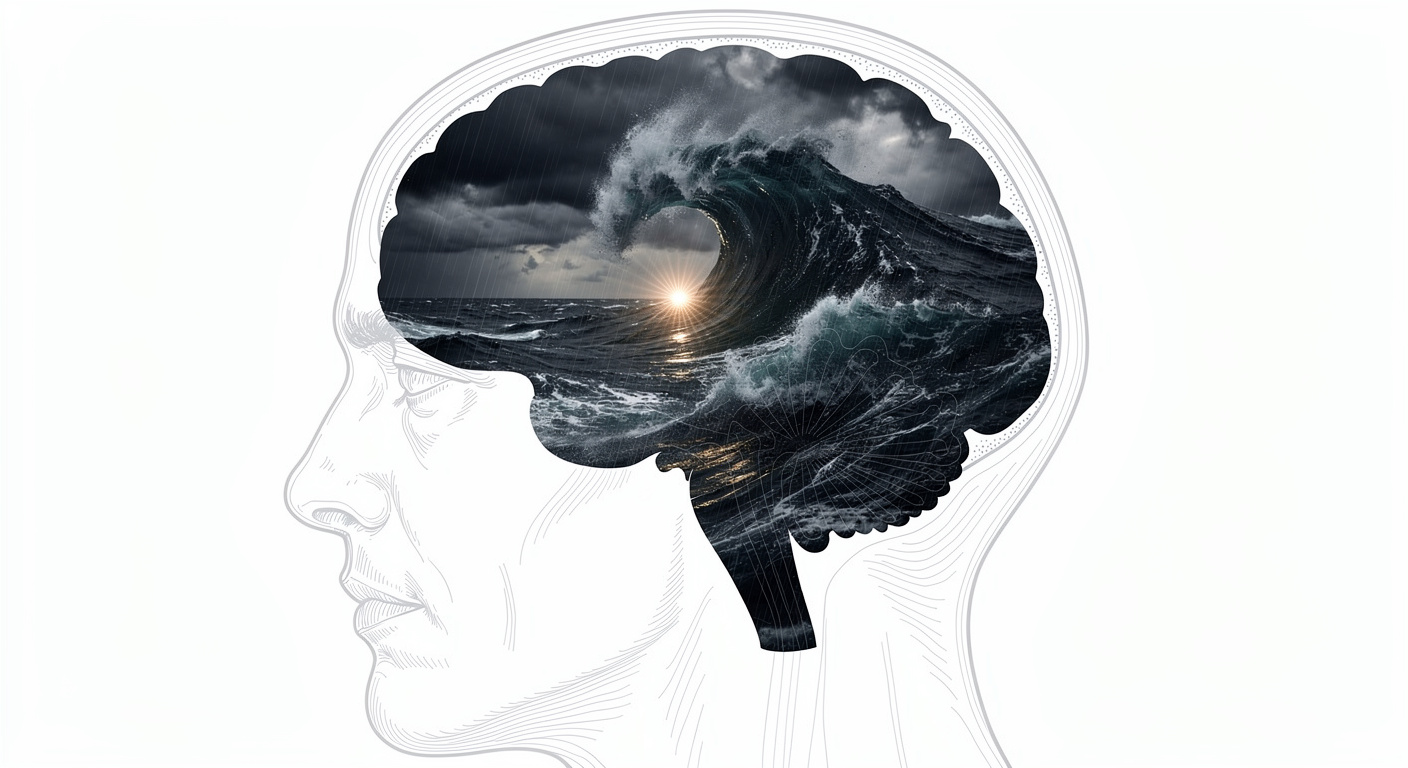
Researchers believe that on the brink of collapse, when individuality threatens to disintegrate in the face of despair, the mind creates an ally. It isn’t hallucinating—it’s summoning. This isn’t a mental disorder, but a deeply buried survival mechanism.
To remain lucid and effective, the brain creates this “externalized voice of reason.” This dissociative mechanism is not a sign of weakness. It is a resource. By generating a “rational” companion in extreme circumstances, the brain creates a partner to negotiate the inevitable. It is not a breakdown, but a strategy.
An illusion with very real effects

The effectiveness of this illusion is unsettling. It doesn’t cure, but it saves lives. Where reason—and reason alone—would give up, this presence restores a sense of hope and, above all, calms even the deepest-seated panic. It doesn’t act in your place, but it lends you a hand to take action.
Ultimately, it’s not just the body that wants to survive; it’s the entire mind that refuses absolute solitude in the face of adversity. And inventing a friend at the right moment can change everything.
Source: timesnownews.com
Created by humans, assisted by AI.
The mysterious “Third Man” who appears when humans are close to death: Scientists have a theory.
