

When Trauma Becomes Chronic
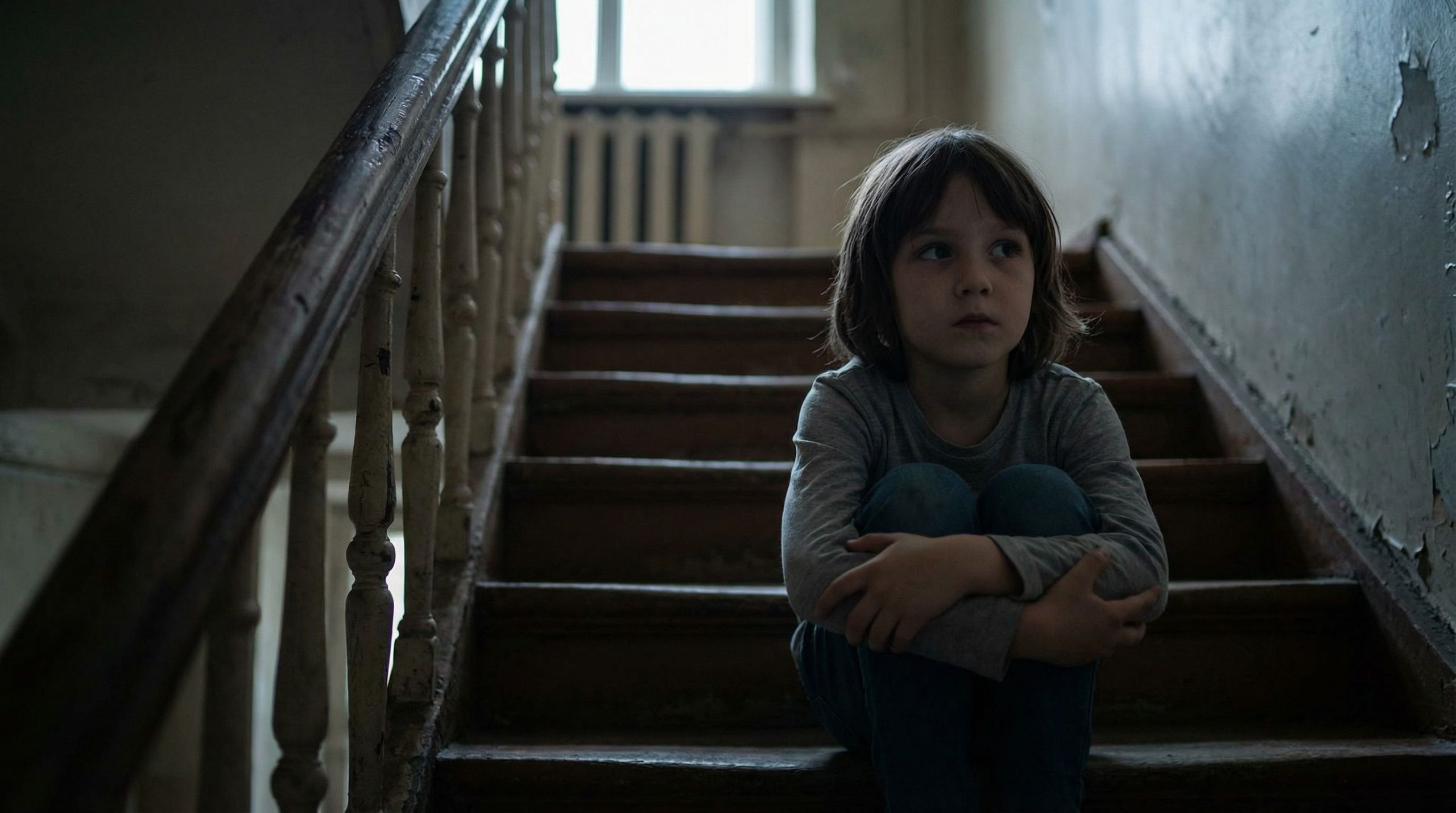
We often hear about post-traumatic stress following a sudden, traumatic event, such as a car accident or a terrorist attack. This is what’s known as “simple” trauma. But—and this is where it gets complicated—what happens when the threat never ends? Since the 1990s, researchers have been fighting to raise awareness of a much darker and more insidious reality: complex post-traumatic stress disorder.
This isn’t just a matter of vocabulary, believe me. It’s a vital distinction. Unlike classic stress, which occurs after a single traumatic event, this complex syndrome arises from repetition. I’m thinking here of victims of domestic violence, abused children, or people living in war zones. The consequences are… devastating, especially among the youngest. As Cyril Tarquinio, a professor at the University of Lorraine, explains, while the symptoms of a single traumatic event often fade within a few days, for some people, a return to normal never happens, and they slip into a pathological state.
A striking 2006 study actually put numbers on this scourge: among adolescents who had experienced repeated trauma, 61% suffered from this complex trauma, compared to only 16% for the simple form. That’s huge, isn’t it? Yet this disorder remains underdiagnosed, leaving thousands of people without adequate care.
Captivity and Fragmentation: The Pioneers of Research
To fully understand this, we need to take a step back. Classic post-traumatic stress disorder (PTSD) was defined in the 1980s with its well-known symptoms: nightmares, flashbacks, avoidance, guilt, hypervigilance… It’s debilitating, to be sure. But as early as the following decade, experts began to say, “Wait a minute—that’s not enough.”
That’s when research on “adverse childhood experiences” (ACEs) began to emerge. In the United States, prominent psychiatrists such as Judith Lewis Herman, Leonore Terr, and Bessel Van der Kolk began sounding the alarm. In 1992, Judith Herman published a seminal article describing symptoms that go far beyond typical stress. She spoke of profound changes in personality: a once-sociable victim who becomes completely withdrawn, who self-sabotages, or who feels they have lost their identity (“I’m not the same person anymore”).
Herman introduced a key concept: “captivity.” Complex trauma occurs when the victim cannot escape their abuser, whether within a family, a cult, or even at work. It is an oppressive system of control. To classify all of this, psychiatrist Lenore Terr proposed an interesting distinction in 1991: Type I (a single event) and Type II (repeated trauma, such as domestic violence). But wait, there’s worse… Type III, conceptualized by Eldra Solomon and Kathleen Heide. Here, we’re talking about abuse that begins in early childhood and lasts for years. The difference? Type II affects a personality that’s already formed, whereas Type III prevents the child from developing a coherent “self.” It’s terrifying when you think about it: the child believes they are “fundamentally defective.”
A Brain in Survival Mode and an Elusive Diagnosis
The impact on development is simply tragic. In 2013, psychologists Christine A. Courtois and Julian D. Ford proposed a consensus definition emphasizing that prolonged exposure to an abusive environment creates symptoms far more enduring than classic PTSD. Imagine a child whose brain, instead of learning and exploring, is stuck in “survival mode.”
Ford and Courtois explain that these children are constantly anticipating danger. Neurologically speaking, this is disastrous for learning. And if the perpetrator is a parent or a teacher—a trusted figure—self-esteem is shattered. The tragedy is that standard PTSD, designed for adults (often veterans), does not take these developmental aspects into account at all.
Healing these wounds is a colossal challenge. Therapy often lasts for years. There is even a phenomenon that is rarely discussed: “vicarious traumatization,” meaning the intense emotional impact on the therapist themselves. It’s a heavy, very heavy burden to bear. Despite all this, the famous DSM (the reference manual for mental disorders) is putting up resistance! Judith Herman proposed including complex PTSD in it. Bessel Van der Kolk proposed the concept of DESNOS (“unspecified extreme stress disorder”). The result? Nothing. Rejected. The authors of the DSM believe that we can simply “broaden” the definition of simple PTSD. An aberration for many clinicians.
Conclusion: A glimmer of hope for the classification?

So, are things finally moving forward? A little, I suppose. Bessel Van der Kolk and his team, dissatisfied with the status quo, attempted to introduce “Developmental Trauma Disorder” (DTD) for children—without official success so far, though it is advancing research.
There is some good news, though: the World Health Organization (WHO) included complex post-traumatic stress disorder in its ICD-11 classification in 2018. It’s a victory, but a mixed one. Why? Because their definition is a bit… oversimplified. They view it as a combination of classic PTSD plus relationship problems and a negative self-image. That’s a good start, but they’ve left out crucial symptoms like somatization (when the body speaks) and dissociation. It’s a shame, but it’s a start. Officially recognizing this specific form of suffering is the only way to finally provide victims with the care they truly deserve.
This little-known form of post-traumatic stress that damages the soul far more deeply
This content was created with the help of AI.


