Skip to content

A Detention at U.S. Customs

The handling of infectious agents is subject to strict regulations worldwide. A recent legal case in the United States highlights the consequences of failing to comply with these protocols, even for highly qualified professionals. U.S. health and judicial authorities have announced the indictment of two scientists specializing in virology.

The two researchers were returning from a scientific mission in Central Africa. Upon their arrival in the United States, a customs inspection revealed a highly sensitive shipment in their luggage. They are suspected of having brought samples related to the mpox virus into the country.

In total, authorities found 113 vials containing this biological material. According to the case file, this material was imported without complying with the regulatory procedures required for the handling and transport of this type of pathogen.

Modern Biosafety Requirements

The transport of biological samples containing viruses, bacteria, or other infectious agents is subject to strict international standards. Under no circumstances may these materials be transported as if they were standard medical specimens. Their transport requires specific prior authorizations issued by the competent authorities.

In addition to the purely administrative aspects, stringent physical requirements apply. Regulations mandate the use of secure packaging and the implementation of precise traceability, from the originating laboratory to the destination. Even when samples are inactivated and theoretically incapable of causing infection, their transport remains strictly regulated by law.

These procedures have been significantly strengthened over the past few decades, in the wake of several global epidemics. Health institutions have a twofold objective: to protect the professionals who handle these substances on a daily basis and to absolutely prevent any infectious agent from being accidentally released outside its secure environment.

The Global Spread of the Mpox Virus

The pathogen at the center of this incident is the subject of intense scrutiny by global health authorities. The term “mpox” is, in fact, the new name officially endorsed by international bodies to refer to the disease formerly known as “monkeypox.”

This virus belongs to the same family as the smallpox virus. Long considered a rare disease confined exclusively to certain regions of Africa, the infection gained unprecedented visibility during a widespread global outbreak observed in 2022.

Since then, international surveillance agencies have been closely monitoring its geographic spread. Official health data report that tens of thousands of confirmed cases have been recorded worldwide in recent years.

Clinical Symptoms and Transmission Routes

Medically, the disease manifests through several distinct clinical signs. Affected patients typically develop a fever, severe fatigue, and characteristic swelling of the lymph nodes. The appearance of specific skin lesions on the body is also one of the major and visible symptoms of the infection.

The virus is transmitted primarily through close contact with an infected person. Direct contact with the patient’s skin lesions, or with certain objects recently contaminated by the patient, are among the main modes of transmission identified by epidemiologists.

While the vast majority of infected individuals recover spontaneously and without long-term effects, the virus requires medical monitoring. Severe forms of the disease can indeed occur, with serious complications affecting, in particular, patients with underlying health conditions or those who are immunocompromised.

Scientific research under strict supervision
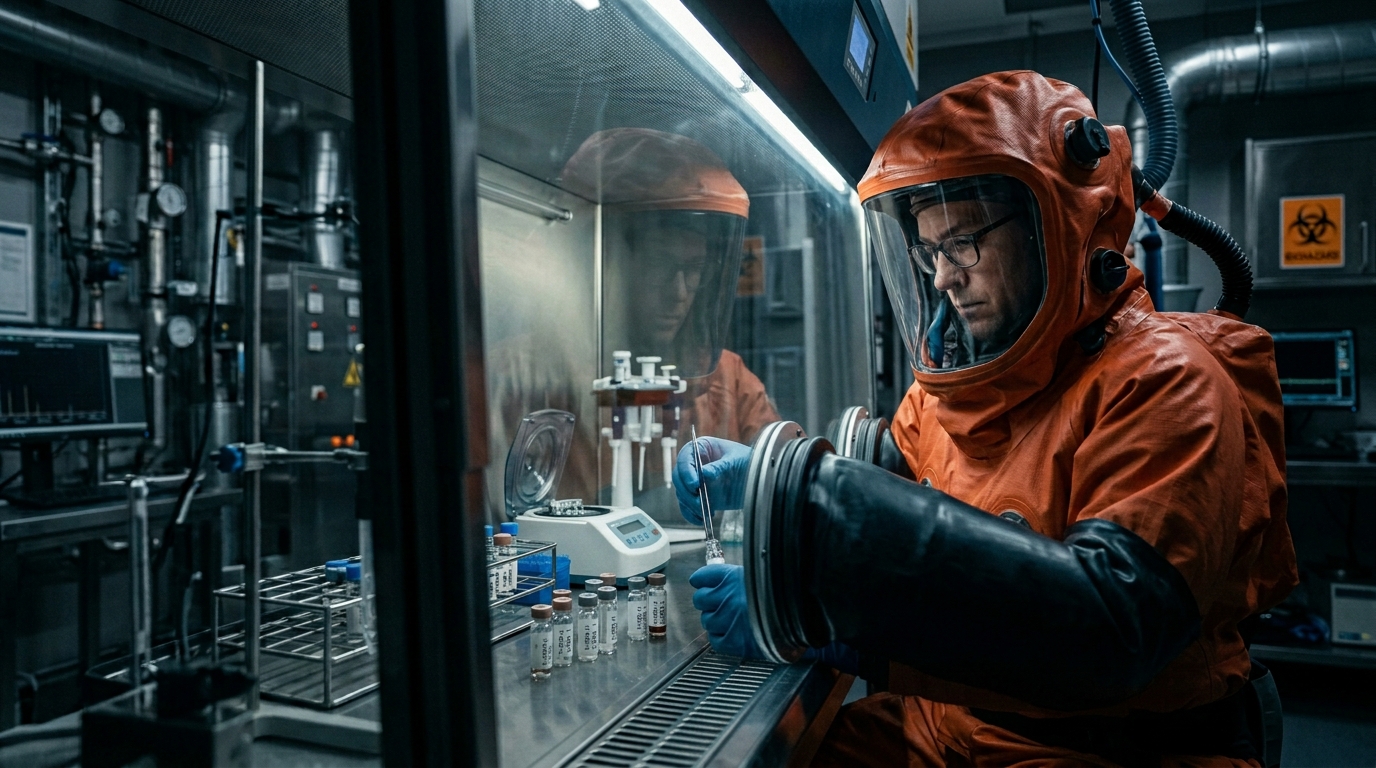
Currently, health authorities believe that the global spread of the virus is better controlled than it was at the height of recent outbreaks. Nevertheless, the virus continues to circulate endemically in several countries, justifying the maintenance of continuous and coordinated international surveillance.

Experts regularly emphasize that virological research remains essential for anticipating and countering future health threats. Scientists must study these infectious agents to understand their inner workings, develop effective treatments, and optimize large-scale prevention strategies.

However, this case of illegal importation into the United States serves as a reminder that prevention does not rely exclusively on the development of vaccines or medications. Above all, it requires complete transparency regarding the movement of biological materials and unconditional adherence to the rules governing scientific research.

Source: passeportsante.net

Two Researchers Carrying the Mpox Virus Charged in the United States

This content was created with the help of AI.

facebook icon twitter icon linkedin icon
Copied!

Commentaires

0 0 votes
Article Rating
Subscribe
Notify of
guest
0 Comments
Newest
Oldest Most Voted
Inline Feedbacks
View all comments
More Content