

Farewell to Tranquility
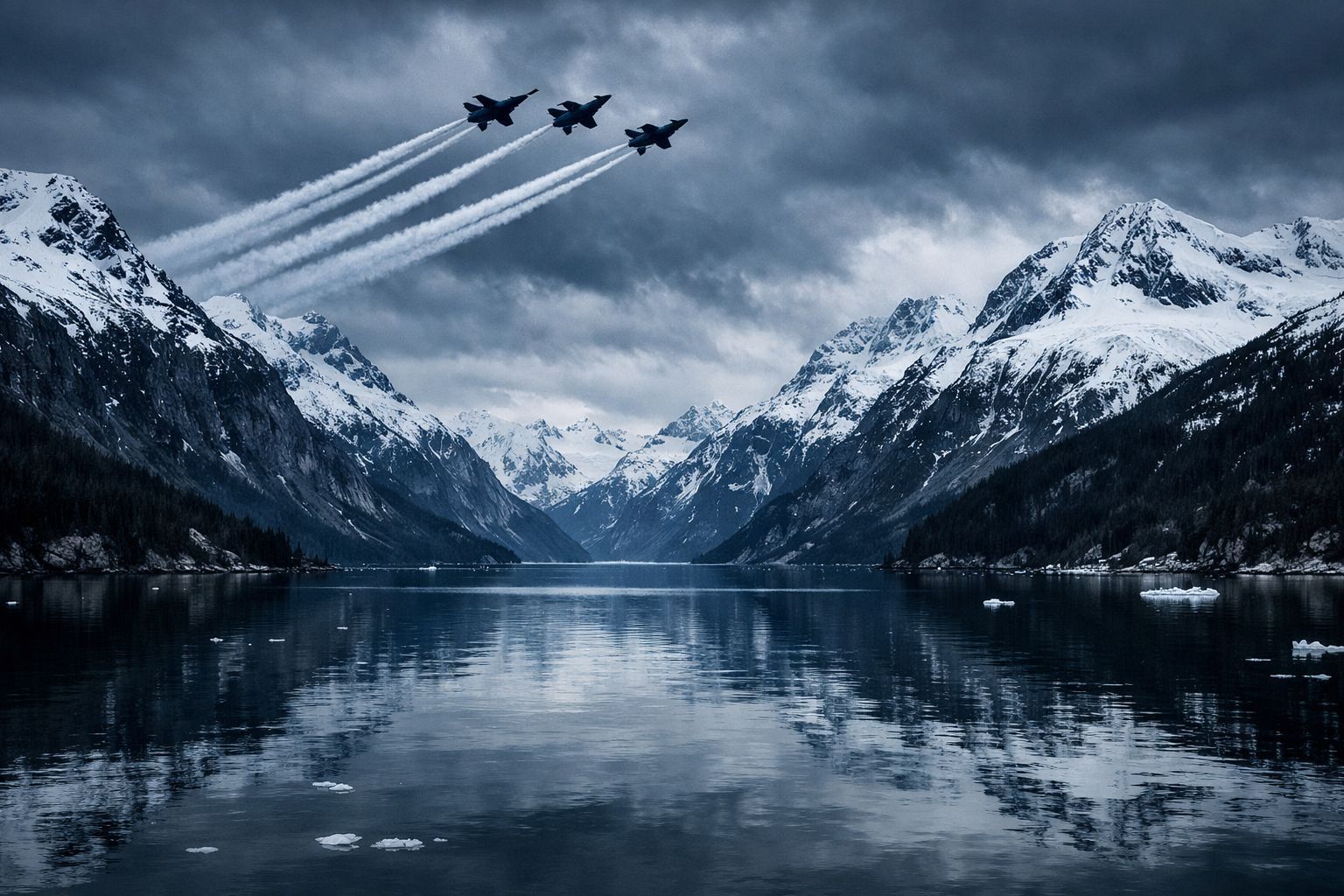
For me, Alaska has always been a vague fantasy. The smell of a campfire, the strumming of a guitar, and, inevitably, that old Beau Dommage song that sticks in your head: “Take me, take me somewhere in Alaska.” You picture a bored seal, the sun slowly setting over a glacier… it’s romantic, a little melancholic. But the reality of Whittier is something else entirely. It’s raw.
Imagine an entire town—or at least what’s left of it—with barely 250 residents, all crammed into a single building. Outside, there’s the silence of the forest, the glaciers, total isolation. It had been their sanctuary for 55 years. I say “was” because something has been shattered. For months now, that vast sky has been streaked by the roar of military planes. They thought they’d found peace, but now, despite themselves, they find themselves on an invisible front line caught between Trump’s and Putin’s war games.
A tunnel, a violet light, and ghosts of war
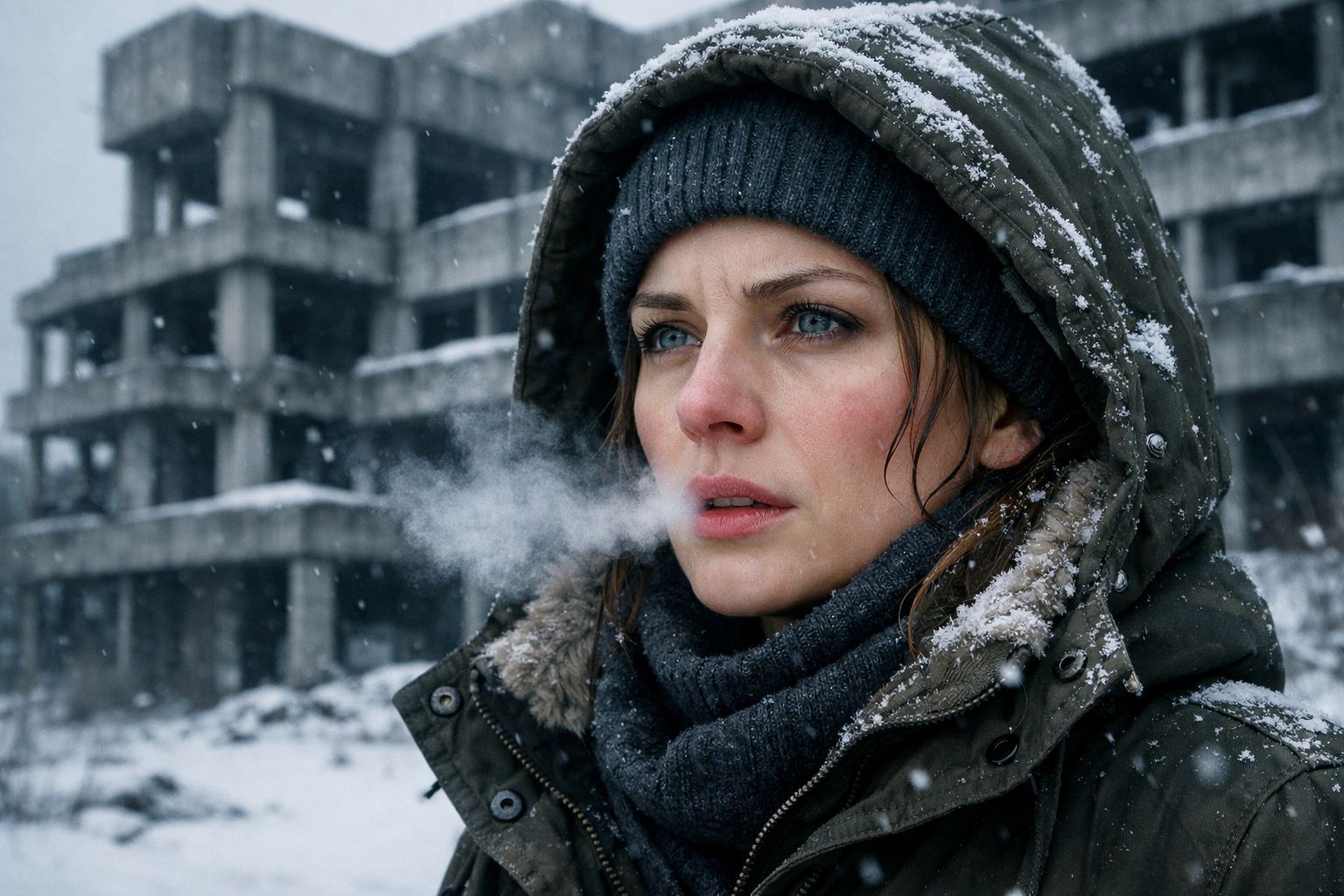
You have to be tough to live here. Jamie Loan, our guide, explains this to us with a smile that stands in stark contrast to the biting cold. From September to March, the sun? Forget it. There isn’t any. The morning is nothing but a long, pale twilight—a whitish rift above the mountains. But there are those few hours in the afternoon when the sky bursts into pastel hues. They call it “alpine incandescence.” It paints the mountains purple and pink, and it’s breathtakingly beautiful.
Jamie, on the other hand, is from Florida. She’s 37, has a husband and kids, and she traded the heat for this giant freezer. She tells us about the pure water, the fresh fish at the dock, the whales dancing in the bay… It’s her little paradise. But getting there is a challenge. Whittier is a former secret military base, born of paranoia following the attack on Pearl Harbor in December 1941. To enter, you have to travel through a narrow, five-kilometer tunnel dug beneath the mountain. It’s a bottleneck: it opens only a few times a day, for just five minutes in each direction. At night? Locked tight.
Military history is evident everywhere. After the Japanese in ’42, it was the Soviet threat. In 1953, the army built a massive concrete block for the troops—a structure that, paradoxically, looks Soviet and is now falling into ruin. We stopped in front of it with photographer Ivanoh Demers. Jamie posed there, without a coat, in -32 degrees Celsius. “I hate the cold—you get used to it,” she told us defiantly, as the wind whipped our faces.
Life in the Vertical World of Begich Tower
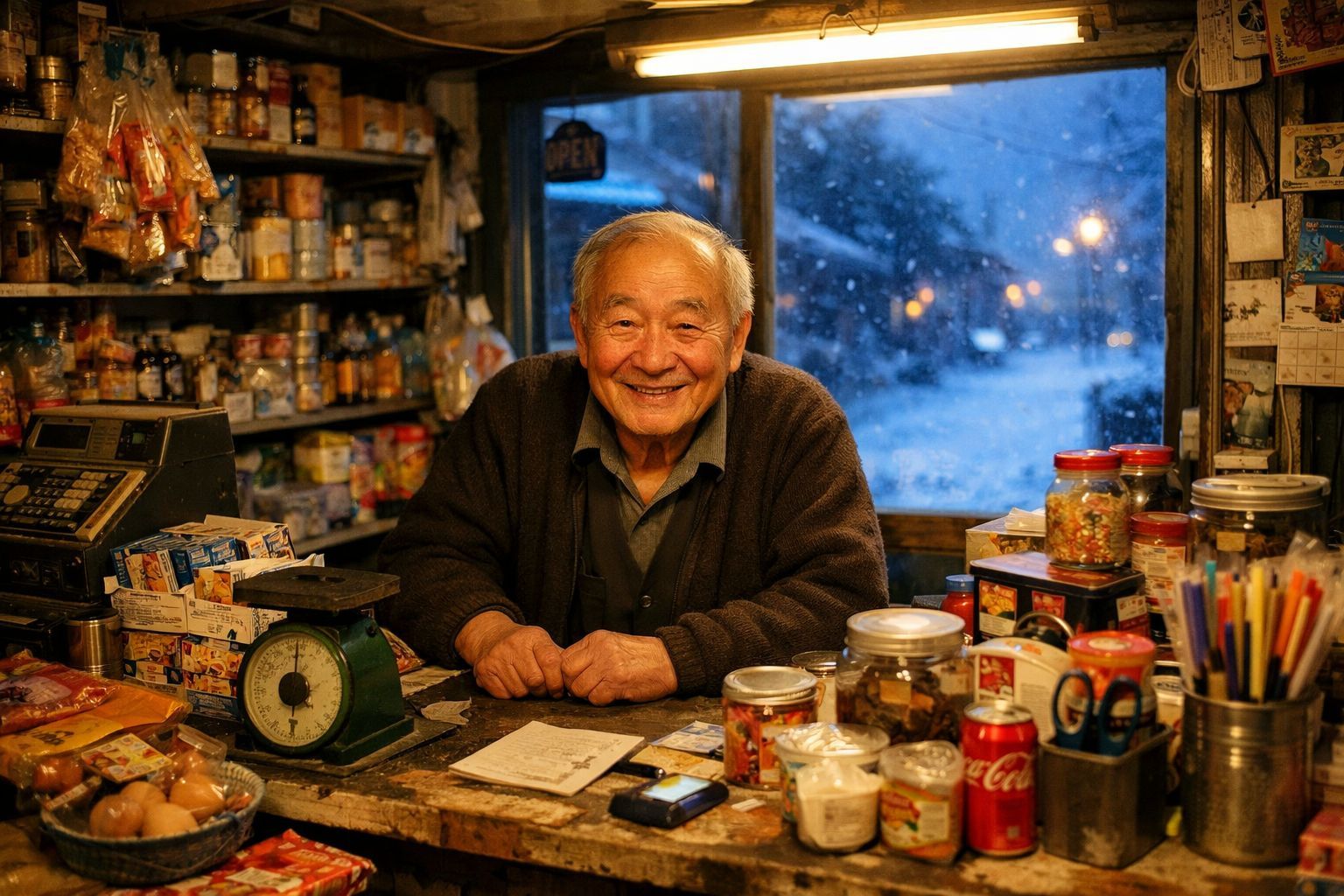
Right next to the ruins stands the true heart of Whittier: Begich Tower. This is where almost all the residents live. Built in 1957, this building is a vertical village. It has everything. A small grocery store, a church, the post office… even the school is connected by a tunnel so the kids don’t have to go out in the blizzard. Jamie tells us, delighted, that the kids get a free breakfast every morning. It’s a sense of community you don’t see anywhere else anymore.
Originally, it was built for military dependents. When the soldiers left in the late ’60s, the place filled up with outsiders, artists, and people who just wanted to… disappear for a while. Today, in this tower, it’s almost a social utopia. “Nothing is perfect, but we’re almost there,” Jamie tells us. In a divided America, here, we have no choice but to get along. When we all live under the same roof, we’re forced to resolve conflicts. It’s a forced but sincere harmony that often moves tourists.
We went to see Joe Shen. He owns the grocery store, the motel, and the only restaurant open in the winter. He arrived from Taiwan in 1979 and has never left. At 73, he’s proud to be the longest-time resident. “Everyone knows me, and I know everyone,” he says with a laugh. He explains his unyielding logic: when he arrived, he saw that the water in the bay never froze. He figured it must be less cold here than elsewhere in Alaska. He still laughs at his own naivety as the wind whistles through the poorly insulated windows.
The Return of the Guns and the Giant Destroyer
But the fact that the water doesn’t freeze isn’t just a weather detail. It’s strategic. That’s why the military was here during the Cold War, and that’s why it’s coming back. As we were leaving the tower, a fighter jet pierced the silence. Jamie looked up, her expression suddenly weary. “War games,” she sighed. These are the aircraft of Operation Northern Edge 2025, a massive joint exercise between the United States and Canada. Whittier, the capital of forgotten wars, is once again becoming an outpost.
This isn’t paranoia—far from it. With the ice melting, Russia and China are eyeing the new Arctic sea routes. Gregory Guillot, the head of NORAD, confirmed it in January: the incursions are more frequent and more coordinated. Jamie’s bubble is about to burst.
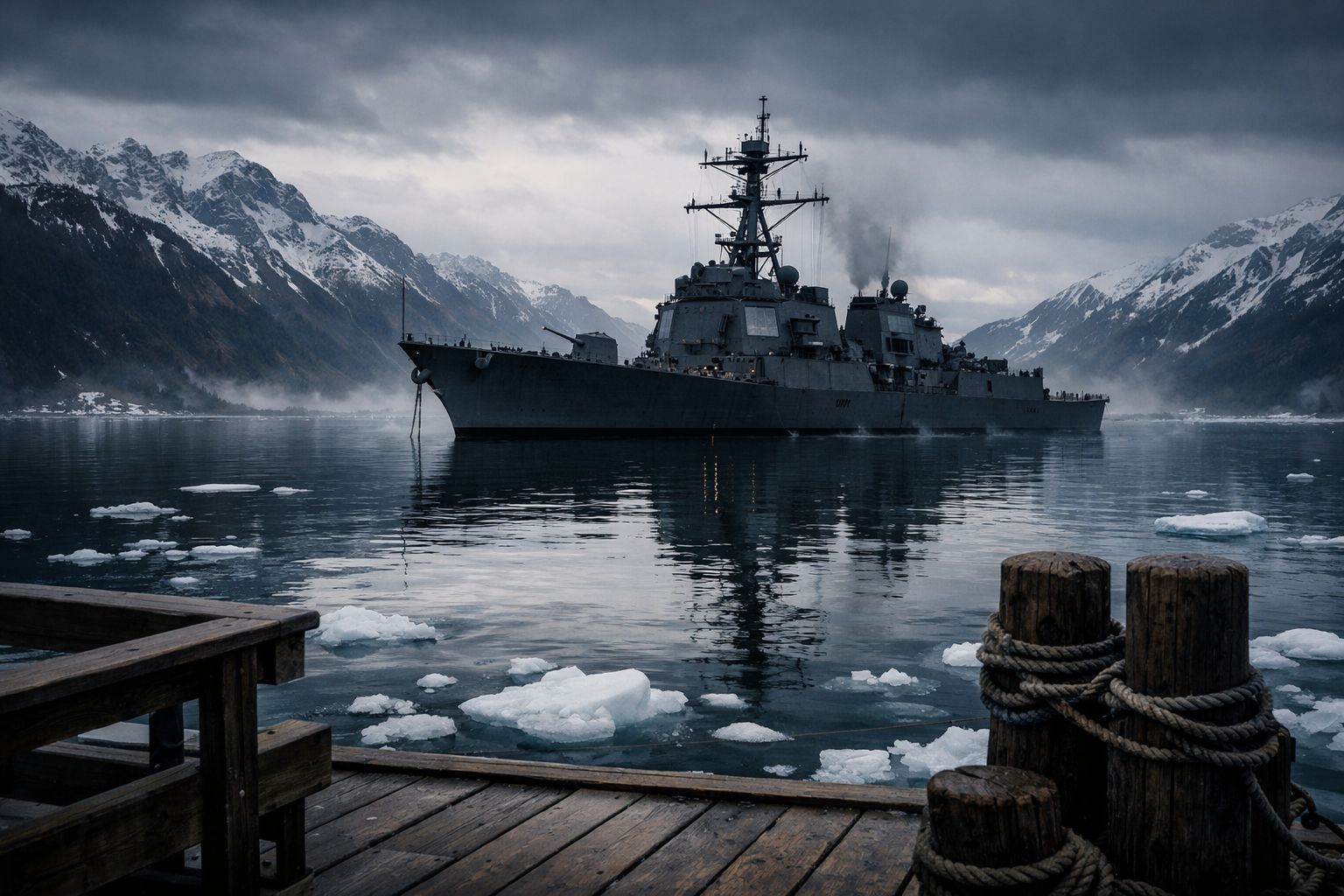
And the final blow comes next October. Jamie dropped the news on us at the very end, like a weight on the heart. The U.S. Navy is going to station a brand-new missile destroyer right in their bay: the USS Ted Stevens. This isn’t a rowboat. The monster is 160 meters long—imagine the Eiffel Tower laid on its side—weighs 9,500 metric tons, and carries 300 sailors. It’s a war machine capable of land strikes and anti-submarine warfare.
Conclusion: The End of a World?
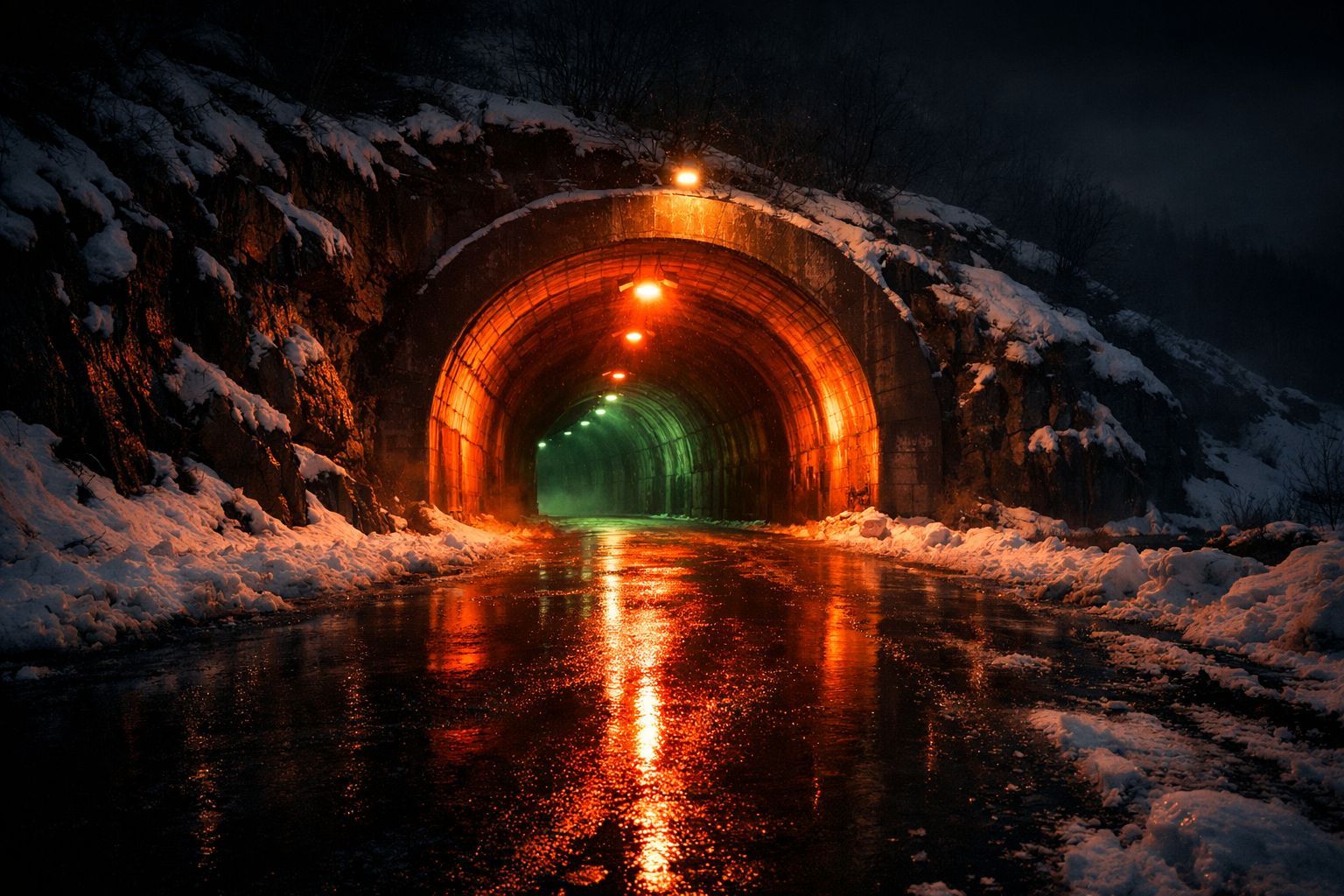
As the purple light turns midnight blue over the glacier, you can really feel that something is coming to an end. Whittier was an anomaly, an enchanted interlude where political differences faded in the face of the need to live together in a single concrete block. Today, the shadow of the USS Ted Stevens already looms over the fjord. We head back through the tunnel, aware that we’ve witnessed the final moments of a bygone era.
Whittier: Silence Is Broken in the Building at the End of the World
This content was created with the help of AI.


